Blab Tech
NASA Tests 15-Foot Composite Wing, Finds It Withstands 127% of Design Load
NASA’s latest test of a 15‑foot composite wing has proved it can shrug off forces far beyond what a pilot would ever see in flight.
The SWEET‑15 (Structural Wing Experiment Evaluating Truss‑Bracing) was evaluated by the Langley Research Center and the Armstrong Flight Research Center. Engineers wanted to confirm that the wing’s performance under simulated flight loads matched predictions from NASA’s computer models and to gauge how new manufacturing techniques hold up under stress.
SWEET‑15 is a scaled‑down version of NASA’s earlier Transonic Truss‑Braced Wing concept. Its long, narrow planform is supported by a primary aerodynamic strut and a secondary jury strut. Five advanced composite manufacturing methods were used, including the Integrated Structural Assembly of Advanced Composites (ISAAC) robot that Langley employs to produce lightweight, high‑strength structures.
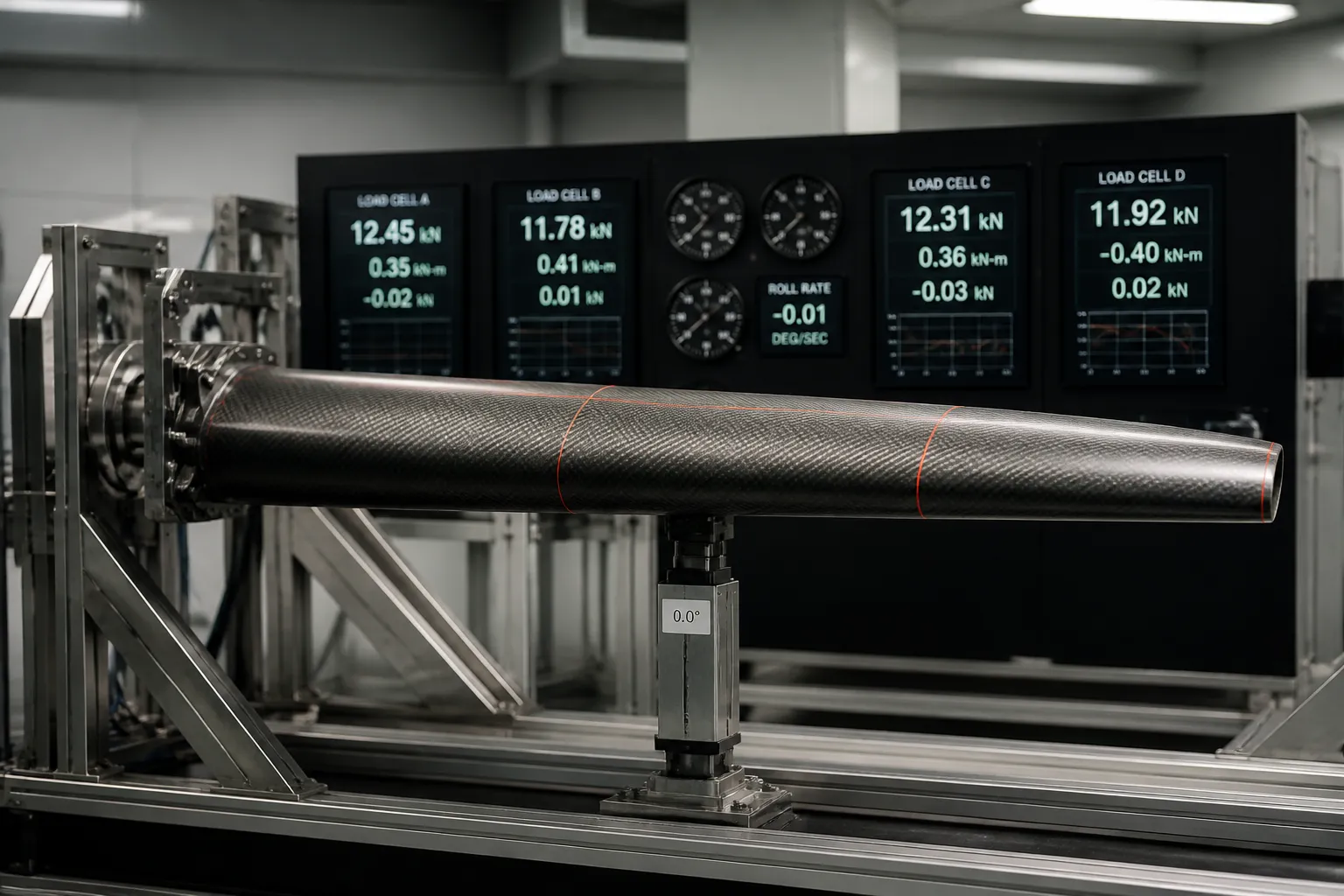
Construction began in Hampton, Virginia, and the finished article was shipped to Edwards, California. There, engineers mounted the wing in the Flight Loads Laboratory and fitted it with a network of strain and load sensors, among them fiber‑optic strain gauges that record data in real time as forces are applied.
During the initial phase of the test, the wing was gradually bent until the measured forces approached the limits predicted by NASA’s models. The sensor data tracked the simulations closely, confirming that the wing could withstand the expected in‑flight loads without structural failure. That agreement between simulation and physical testing bolstered confidence in the composite construction methods and joint designs used in SWEET‑15.
Once the nominal performance was verified, the team conducted a deliberate test‑to‑failure. Loads were pushed beyond the design limit to observe how the structure behaved under extreme conditions. The wing ultimately failed at about 127 % of its design load. Visible damage appeared near the rear edge of the wing and in the upper wing cover, exposing how the joints connecting the wing to the main strut and the jury strut respond to forces beyond the anticipated flight envelope.
This evaluation marks the first time a representative composite truss‑braced wing configuration has undergone such a comprehensive structural assessment. The results provide valuable insight into the safety margins of the design and inform future iterations that could be used in commercial airliners.
The test is part of NASA’s Subsonic Flight Demonstrator project, overseen by the agency’s Research Technology Mission Directorate. The project’s goal is to develop ultra‑efficient aircraft that could reduce fuel consumption and emissions. SWEET‑15’s performance demonstrates that a truss‑braced wing can be built with advanced composites while still meeting structural requirements.
Researchers will analyze the full data set from the test to refine models, improve joint designs, and evaluate the potential for scaling the concept to larger aircraft. The findings will also feed into ongoing studies of the Transonic Truss‑Braced Wing, a configuration that has been explored by Boeing and other industry partners.
In short, the combination of advanced composites, precise manufacturing, and distributed fiber‑optic sensing produced a wing that is both lightweight and robust. If the design can be scaled, it could offer significant fuel savings for future commercial aircraft.
At present, the wing remains a research prototype. NASA has not announced a commercial deployment schedule, but the data will guide the next phase of development. The agency will continue to evaluate the design’s performance in larger‑scale models and eventually in flight tests.
The SWEET‑15 test confirms that NASA’s truss‑braced wing concept can survive loads well beyond its nominal limits, supporting the broader goal of creating more efficient, lower‑emission aircraft.
The SWEET‑15 (Structural Wing Experiment Evaluating Truss‑Bracing) was evaluated by the Langley Research Center and the Armstrong Flight Research Center. Engineers wanted to confirm that the wing’s performance under simulated flight loads matched predictions from NASA’s computer models and to gauge how new manufacturing techniques hold up under stress.
SWEET‑15 is a scaled‑down version of NASA’s earlier Transonic Truss‑Braced Wing concept. Its long, narrow planform is supported by a primary aerodynamic strut and a secondary jury strut. Five advanced composite manufacturing methods were used, including the Integrated Structural Assembly of Advanced Composites (ISAAC) robot that Langley employs to produce lightweight, high‑strength structures.
Construction began in Hampton, Virginia, and the finished article was shipped to Edwards, California. There, engineers mounted the wing in the Flight Loads Laboratory and fitted it with a network of strain and load sensors, among them fiber‑optic strain gauges that record data in real time as forces are applied.
During the initial phase of the test, the wing was gradually bent until the measured forces approached the limits predicted by NASA’s models. The sensor data tracked the simulations closely, confirming that the wing could withstand the expected in‑flight loads without structural failure. That agreement between simulation and physical testing bolstered confidence in the composite construction methods and joint designs used in SWEET‑15.
Once the nominal performance was verified, the team conducted a deliberate test‑to‑failure. Loads were pushed beyond the design limit to observe how the structure behaved under extreme conditions. The wing ultimately failed at about 127 % of its design load. Visible damage appeared near the rear edge of the wing and in the upper wing cover, exposing how the joints connecting the wing to the main strut and the jury strut respond to forces beyond the anticipated flight envelope.
This evaluation marks the first time a representative composite truss‑braced wing configuration has undergone such a comprehensive structural assessment. The results provide valuable insight into the safety margins of the design and inform future iterations that could be used in commercial airliners.
The test is part of NASA’s Subsonic Flight Demonstrator project, overseen by the agency’s Research Technology Mission Directorate. The project’s goal is to develop ultra‑efficient aircraft that could reduce fuel consumption and emissions. SWEET‑15’s performance demonstrates that a truss‑braced wing can be built with advanced composites while still meeting structural requirements.
Researchers will analyze the full data set from the test to refine models, improve joint designs, and evaluate the potential for scaling the concept to larger aircraft. The findings will also feed into ongoing studies of the Transonic Truss‑Braced Wing, a configuration that has been explored by Boeing and other industry partners.
In short, the combination of advanced composites, precise manufacturing, and distributed fiber‑optic sensing produced a wing that is both lightweight and robust. If the design can be scaled, it could offer significant fuel savings for future commercial aircraft.
At present, the wing remains a research prototype. NASA has not announced a commercial deployment schedule, but the data will guide the next phase of development. The agency will continue to evaluate the design’s performance in larger‑scale models and eventually in flight tests.
The SWEET‑15 test confirms that NASA’s truss‑braced wing concept can survive loads well beyond its nominal limits, supporting the broader goal of creating more efficient, lower‑emission aircraft.








