Blab Tech
China Launches Global AI Collaboration Initiative at WAIC 2026
On Friday, July 17 2026, President Xi Jinping opened the World Artificial Intelligence Conference (WAIC) in Shanghai, declaring that the future of AI should be a shared global endeavor. In a speech that blended ambition with caution, Xi called for human wisdom to guide the technology and for international consensus to shape its trajectory.
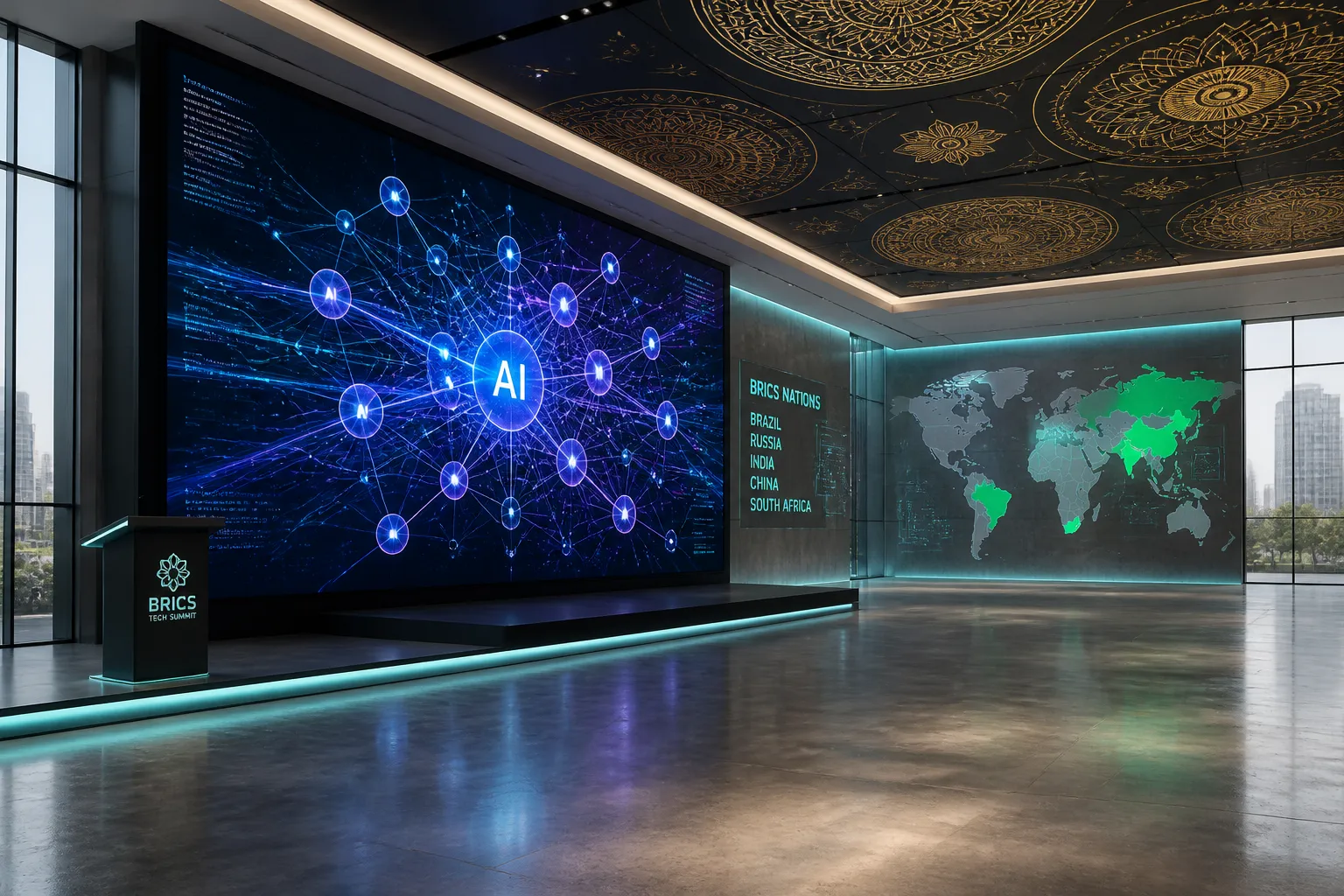
During the opening address, Xi announced a pledge that China will fund 5,000 AI research projects for developing‑country partners over the next five years. The projects will focus on members of the Association of Southeast Asian Nations, the Arab League, the Shanghai Cooperation Organisation, the African Union, Latin America, and the BRICS group. The announcement, reported by the Hong Kong‑based South China Morning Post, also mentioned plans to provide training, seminar programmes, and to set up “cooperation centres” that will nurture AI capabilities in those regions.
The conference also served as the signing venue for the World Artificial Intelligence Cooperation Organisation (WAICO). Representatives from 29 countries—including Kazakhstan, Laos, Pakistan, Russia, and Indonesia—took part in the ceremony on Thursday, July 16. According to Xinhua, WAICO will be an independent intergovernmental organisation headquartered in Shanghai. The United Nations Secretary‑General, António Guterres, was present, underscoring the event’s global significance.
WAICO’s charter, signed by the founding members, commits the organisation to uphold the principles of the UN Charter, to pursue extensive consultation, joint contribution for shared benefit, and a people‑centred approach. The members pledged to collaborate on AI policy, research standards, and ethical guidelines. Analysts note that China’s push for AI leadership follows a broader strategy that has already positioned it as a world leader in electric‑vehicle production and battery technology. State support, a large domestic market, strong manufacturing capacity, and a sizeable engineering workforce have driven rapid progress in AI, according to experts. The government’s 2025 policy documents emphasize the need for advanced computing infrastructure, semiconductor development, and talent cultivation.
The initiative comes amid intensified competition between China and the United States, the European Union, South Korea, and Japan. U.S. export controls on advanced AI chips have limited China’s access to certain technologies, prompting Beijing to invest heavily in domestic semiconductor supply chains. WAIC 2026 is the largest annual AI industry event in China, featuring plenary sessions, specialised forums, exhibitions, and technology demonstrations. Its expanded English title—World AI Conference and High‑Level Meeting on Global AI Governance—signals its growing international focus. In the coming months, China will roll out the announced research projects and cooperation centres, while WAICO will begin to develop its governance framework. The organisation’s first activities are expected to focus on establishing common technical standards and sharing best practices among member states. The current situation places China as a key player in AI, EV, and battery sectors, while it seeks to broaden its influence through international collaboration. The WAICO agreement and the 5,000‑project pledge represent concrete steps toward a more coordinated global AI ecosystem, though the long‑term impact of these initiatives will unfold over the next several years.
During the opening address, Xi announced a pledge that China will fund 5,000 AI research projects for developing‑country partners over the next five years. The projects will focus on members of the Association of Southeast Asian Nations, the Arab League, the Shanghai Cooperation Organisation, the African Union, Latin America, and the BRICS group. The announcement, reported by the Hong Kong‑based South China Morning Post, also mentioned plans to provide training, seminar programmes, and to set up “cooperation centres” that will nurture AI capabilities in those regions.
The conference also served as the signing venue for the World Artificial Intelligence Cooperation Organisation (WAICO). Representatives from 29 countries—including Kazakhstan, Laos, Pakistan, Russia, and Indonesia—took part in the ceremony on Thursday, July 16. According to Xinhua, WAICO will be an independent intergovernmental organisation headquartered in Shanghai. The United Nations Secretary‑General, António Guterres, was present, underscoring the event’s global significance.
WAICO’s charter, signed by the founding members, commits the organisation to uphold the principles of the UN Charter, to pursue extensive consultation, joint contribution for shared benefit, and a people‑centred approach. The members pledged to collaborate on AI policy, research standards, and ethical guidelines. Analysts note that China’s push for AI leadership follows a broader strategy that has already positioned it as a world leader in electric‑vehicle production and battery technology. State support, a large domestic market, strong manufacturing capacity, and a sizeable engineering workforce have driven rapid progress in AI, according to experts. The government’s 2025 policy documents emphasize the need for advanced computing infrastructure, semiconductor development, and talent cultivation.
The initiative comes amid intensified competition between China and the United States, the European Union, South Korea, and Japan. U.S. export controls on advanced AI chips have limited China’s access to certain technologies, prompting Beijing to invest heavily in domestic semiconductor supply chains. WAIC 2026 is the largest annual AI industry event in China, featuring plenary sessions, specialised forums, exhibitions, and technology demonstrations. Its expanded English title—World AI Conference and High‑Level Meeting on Global AI Governance—signals its growing international focus. In the coming months, China will roll out the announced research projects and cooperation centres, while WAICO will begin to develop its governance framework. The organisation’s first activities are expected to focus on establishing common technical standards and sharing best practices among member states. The current situation places China as a key player in AI, EV, and battery sectors, while it seeks to broaden its influence through international collaboration. The WAICO agreement and the 5,000‑project pledge represent concrete steps toward a more coordinated global AI ecosystem, though the long‑term impact of these initiatives will unfold over the next several years.