Blab Tech
Electric School Buses Feed Power Back to Grid, Alleviating Heat-Wave Strain
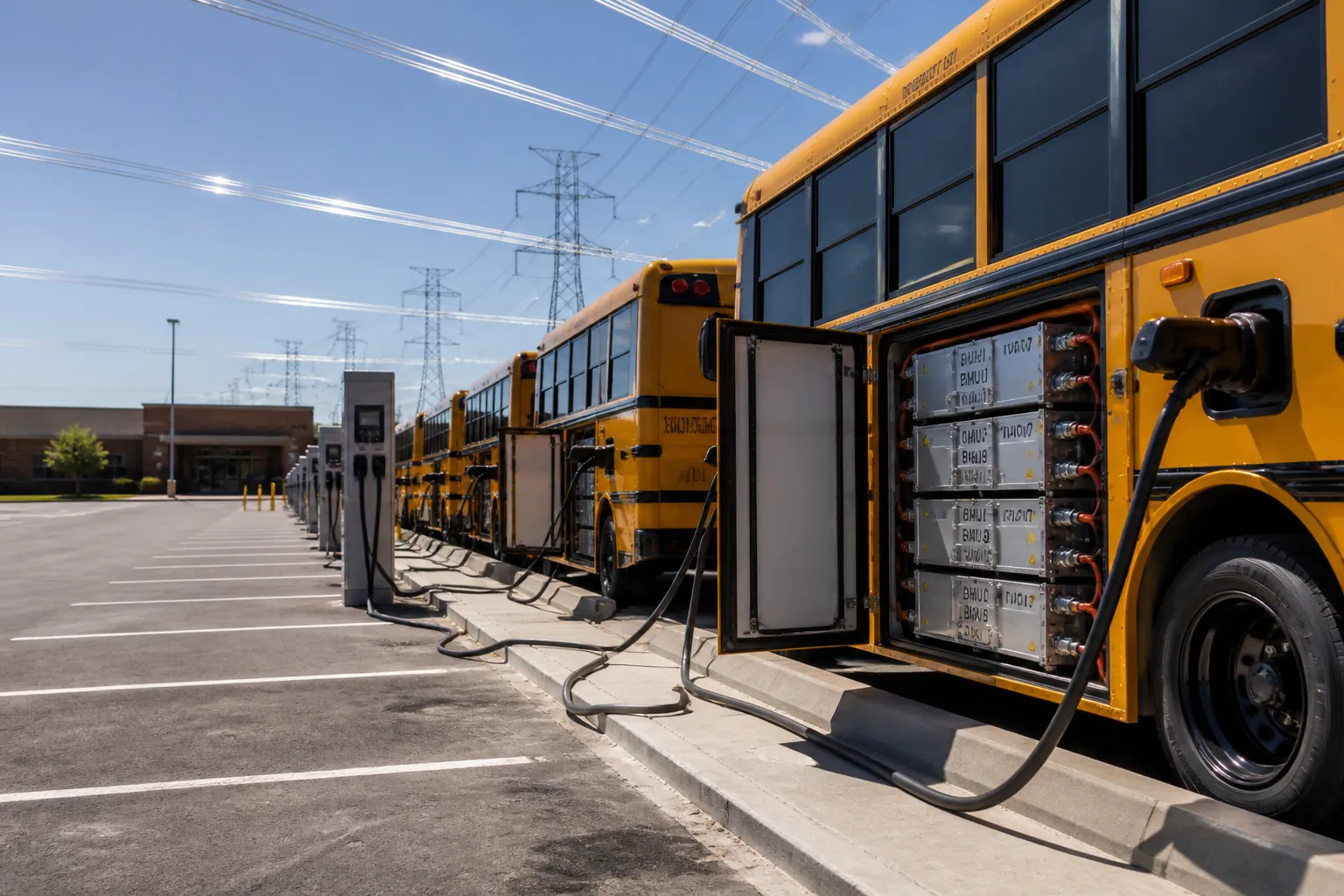
During last week’s blistering heat wave, power grids across the United States struggled to meet demand. Instead of adding strain, a growing number of electric school buses turned the tables, feeding electricity back into the grid and helping utilities keep the lights on.
According to the World Resources Institute’s (WRI) Electric School Bus Initiative, a handful of fully deployed vehicle‑to‑grid (V2G) projects now operate with 230 electric school buses that can supply 8 MWh of power at any given time. That amount is enough to power roughly 1,600 typical U.S. homes for up to four hours, delivering a measurable reduction in peak load for the utilities that serve those districts.
California leads the country in V2G school bus programs. The Oakland Unified School District (OUSD) operates a fleet of 74 buses that, based on the district’s own data, return an estimated 2.1 GWh of clean energy to the state’s grid each year. The project uses bidirectional chargers managed through an AI‑enabled virtual power plant, allowing the buses to discharge during periods of high demand.
The current deployments are only the beginning. If half of the roughly 6,700 electric school buses already in service across the United States were equipped for V2G, the fleet could deliver well over 100 MWh of flexible, off‑peak energy during peak periods. Analysts say that such flexibility can reduce the need for utilities to purchase expensive peak power on the wholesale market, lower transmission and delivery costs, and ultimately lower rates for consumers.
The ability to tap into battery‑stored power also has emergency benefits. "If we have a hurricane, and God forbid we do, but if we do and there’s no power in the community, we can bring our buses to specified locations and the community can charge their phones," says Angie White‑Banda, transportation supervisor for Florida’s Glades County School District. "They can charge their devices. They can come in with, and sit down for a little while and cool off with cold AC."
Looking ahead, the San Francisco Unified School District (SFUSD) plans to launch a new electric school bus project next month that will exceed the Oakland program. The initial fleet of 104 buses is expected to return about 3 GWh of energy annually during peak hours, and the district has announced plans to double the fleet to more than 238 buses by 2028.
These developments illustrate how electric school buses can serve as mobile battery storage that supports grid stability, reduces consumer costs, and provides backup power during emergencies. The WRI Electric School Bus Initiative continues to track lessons learned from projects across the country, noting that the technology is still in its early stages but shows significant promise.
At present, the V2G programs in California and other states are operating at pilot scale. No federal regulations specifically mandate V2G participation for school buses, but state energy commissions are monitoring the projects for potential policy guidance. Utilities that partner with school districts are evaluating the long‑term financial and technical implications of integrating bus batteries into their grid management strategies.
In the coming months, additional districts are expected to announce V2G deployments, and the existing programs will likely expand their fleets and energy contributions. The next phase will involve assessing the cumulative impact on grid reliability, consumer rates, and the broader adoption of electric school buses across the United States.
According to the World Resources Institute’s (WRI) Electric School Bus Initiative, a handful of fully deployed vehicle‑to‑grid (V2G) projects now operate with 230 electric school buses that can supply 8 MWh of power at any given time. That amount is enough to power roughly 1,600 typical U.S. homes for up to four hours, delivering a measurable reduction in peak load for the utilities that serve those districts.
California leads the country in V2G school bus programs. The Oakland Unified School District (OUSD) operates a fleet of 74 buses that, based on the district’s own data, return an estimated 2.1 GWh of clean energy to the state’s grid each year. The project uses bidirectional chargers managed through an AI‑enabled virtual power plant, allowing the buses to discharge during periods of high demand.
The current deployments are only the beginning. If half of the roughly 6,700 electric school buses already in service across the United States were equipped for V2G, the fleet could deliver well over 100 MWh of flexible, off‑peak energy during peak periods. Analysts say that such flexibility can reduce the need for utilities to purchase expensive peak power on the wholesale market, lower transmission and delivery costs, and ultimately lower rates for consumers.
The ability to tap into battery‑stored power also has emergency benefits. "If we have a hurricane, and God forbid we do, but if we do and there’s no power in the community, we can bring our buses to specified locations and the community can charge their phones," says Angie White‑Banda, transportation supervisor for Florida’s Glades County School District. "They can charge their devices. They can come in with, and sit down for a little while and cool off with cold AC."
Looking ahead, the San Francisco Unified School District (SFUSD) plans to launch a new electric school bus project next month that will exceed the Oakland program. The initial fleet of 104 buses is expected to return about 3 GWh of energy annually during peak hours, and the district has announced plans to double the fleet to more than 238 buses by 2028.
These developments illustrate how electric school buses can serve as mobile battery storage that supports grid stability, reduces consumer costs, and provides backup power during emergencies. The WRI Electric School Bus Initiative continues to track lessons learned from projects across the country, noting that the technology is still in its early stages but shows significant promise.
At present, the V2G programs in California and other states are operating at pilot scale. No federal regulations specifically mandate V2G participation for school buses, but state energy commissions are monitoring the projects for potential policy guidance. Utilities that partner with school districts are evaluating the long‑term financial and technical implications of integrating bus batteries into their grid management strategies.
In the coming months, additional districts are expected to announce V2G deployments, and the existing programs will likely expand their fleets and energy contributions. The next phase will involve assessing the cumulative impact on grid reliability, consumer rates, and the broader adoption of electric school buses across the United States.








