Blab Tech
Japan Launches First Commercial Floating Wind Farm, Plans Largest Turbine Yet
On January 5, 2026, Japan marked a historic milestone when the Goto Floating Wind Farm began delivering electricity to the grid, becoming the nation’s first commercial floating offshore wind facility.
Japan’s coast drops sharply into deep water within just a few kilometres of shore, a feature that makes the fixed‑foundation turbines common in Europe impractical. Floating turbines rely on mooring lines instead of concrete piles, allowing them to operate in depths that would otherwise be out of reach.
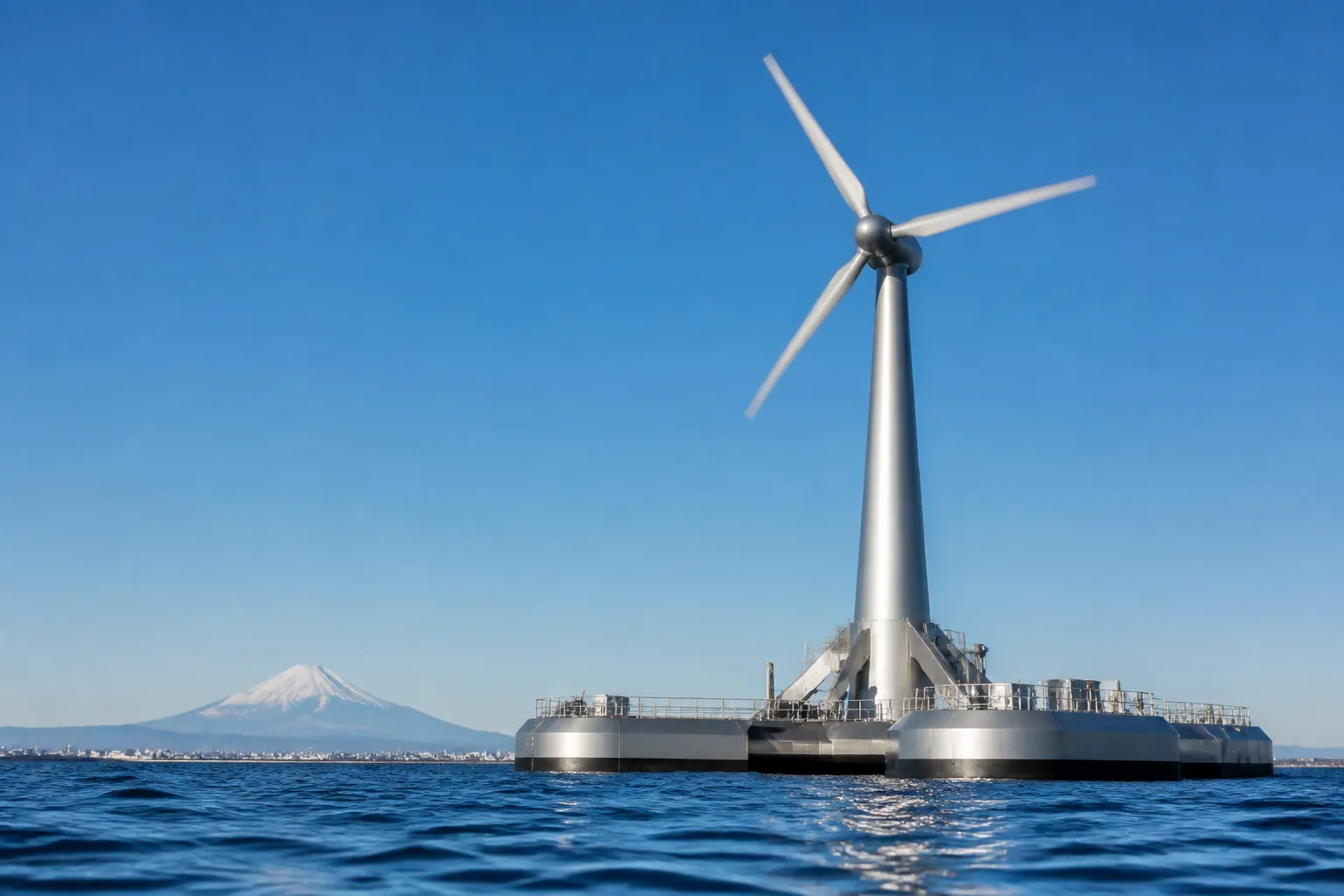
The Goto project, driven by a consortium led by Marubeni Corporation, installed a 2 MW downwind turbine on a four‑column semi‑submersible platform off Fukushima. The turbine’s hybrid design reduces structural load and improves stability amid the region’s rough seas.
Shortly after the farm’s commercial launch, Tokyo Gas Co. announced a 21 % stake in the Wind Float Atlantic Project in Portugal—the first floating wind farm in Europe—underscoring its broader interest in the technology.
Back in Japan, Tokyo Gas partnered with Sinobuyama Fukushima Power Co. to study a 30 MW floating wind project off Fukushima’s coast. The study is part of a wider effort by the Ministry of Economy, Trade & Industry to back experimental offshore floating wind projects.
The government has also unveiled plans for the world’s largest floating wind turbine. The proposed structure would rise 104 m tall and house three 80 m turbines, engineered to withstand extreme waves and even tsunamis as part of a three‑turbine initiative.
Japan’s offshore wind potential is substantial. Wind power statistics indicate that offshore capacity could reach 608 GW, yet only 5.2 GW had been installed by the end of 2023. The government has set a target of 45 GW by 2040, a goal that hinges on floating technology to access deeper waters.
Floating turbines also help address visual and environmental concerns. By positioning turbines farther from shore, Japan can reduce the visual impact on coastal communities and lessen interference with fishing and shipping lanes.
The industry faces financial hurdles. Japan has conducted three rounds of offshore wind auctions; the sole bidder from the first round withdrew, and winners of the second and third rounds are now encountering financial difficulties.
Globally, floating wind farms remain in the early stages of deployment. As of October 2024, 245 MW of floating wind capacity was operational worldwide, with a projected pipeline of 266 GW. Norway’s Hywind Tampen, which began operating in August 2023, remains the world’s largest floating offshore wind farm.
Japan’s entry into floating wind aligns with a worldwide push for renewable energy. The technology’s ability to tap higher, more consistent wind speeds in deeper waters offers the potential for larger capacity factors and reduced visual impact compared to onshore wind.
In 2027, Japan plans to establish a floating wind test centre in collaboration with the European Marine Energy Centre (EMEC) in Scotland and the Norwegian Marine Energy Test Centre (METCentre). The centre will provide a platform for testing and validating new floating wind technologies.
While Japan’s floating wind sector is still in its infancy, the commercial operation of the Goto farm and the government’s investment in large‑scale turbines signal a clear commitment to expanding offshore wind generation.
The outcomes of these projects will shape Japan’s ability to meet its 2040 offshore wind target and could set a precedent for other island nations with similar coastal profiles.
Industry observers will keep a close eye on the Goto farm’s performance, the progress of the 30 MW study, and the development of the 104 m turbine. Regulatory approvals, financing structures, and technological breakthroughs will ultimately determine how quickly Japan can scale floating wind to meet its renewable energy goals.
Japan’s coast drops sharply into deep water within just a few kilometres of shore, a feature that makes the fixed‑foundation turbines common in Europe impractical. Floating turbines rely on mooring lines instead of concrete piles, allowing them to operate in depths that would otherwise be out of reach.
The Goto project, driven by a consortium led by Marubeni Corporation, installed a 2 MW downwind turbine on a four‑column semi‑submersible platform off Fukushima. The turbine’s hybrid design reduces structural load and improves stability amid the region’s rough seas.
Shortly after the farm’s commercial launch, Tokyo Gas Co. announced a 21 % stake in the Wind Float Atlantic Project in Portugal—the first floating wind farm in Europe—underscoring its broader interest in the technology.
Back in Japan, Tokyo Gas partnered with Sinobuyama Fukushima Power Co. to study a 30 MW floating wind project off Fukushima’s coast. The study is part of a wider effort by the Ministry of Economy, Trade & Industry to back experimental offshore floating wind projects.
The government has also unveiled plans for the world’s largest floating wind turbine. The proposed structure would rise 104 m tall and house three 80 m turbines, engineered to withstand extreme waves and even tsunamis as part of a three‑turbine initiative.
Japan’s offshore wind potential is substantial. Wind power statistics indicate that offshore capacity could reach 608 GW, yet only 5.2 GW had been installed by the end of 2023. The government has set a target of 45 GW by 2040, a goal that hinges on floating technology to access deeper waters.
Floating turbines also help address visual and environmental concerns. By positioning turbines farther from shore, Japan can reduce the visual impact on coastal communities and lessen interference with fishing and shipping lanes.
The industry faces financial hurdles. Japan has conducted three rounds of offshore wind auctions; the sole bidder from the first round withdrew, and winners of the second and third rounds are now encountering financial difficulties.
Globally, floating wind farms remain in the early stages of deployment. As of October 2024, 245 MW of floating wind capacity was operational worldwide, with a projected pipeline of 266 GW. Norway’s Hywind Tampen, which began operating in August 2023, remains the world’s largest floating offshore wind farm.
Japan’s entry into floating wind aligns with a worldwide push for renewable energy. The technology’s ability to tap higher, more consistent wind speeds in deeper waters offers the potential for larger capacity factors and reduced visual impact compared to onshore wind.
In 2027, Japan plans to establish a floating wind test centre in collaboration with the European Marine Energy Centre (EMEC) in Scotland and the Norwegian Marine Energy Test Centre (METCentre). The centre will provide a platform for testing and validating new floating wind technologies.
While Japan’s floating wind sector is still in its infancy, the commercial operation of the Goto farm and the government’s investment in large‑scale turbines signal a clear commitment to expanding offshore wind generation.
The outcomes of these projects will shape Japan’s ability to meet its 2040 offshore wind target and could set a precedent for other island nations with similar coastal profiles.
Industry observers will keep a close eye on the Goto farm’s performance, the progress of the 30 MW study, and the development of the 104 m turbine. Regulatory approvals, financing structures, and technological breakthroughs will ultimately determine how quickly Japan can scale floating wind to meet its renewable energy goals.








