Blab Tech
South Korea to Merge Army, Navy, Air Force Academies into New Daejeon Campus
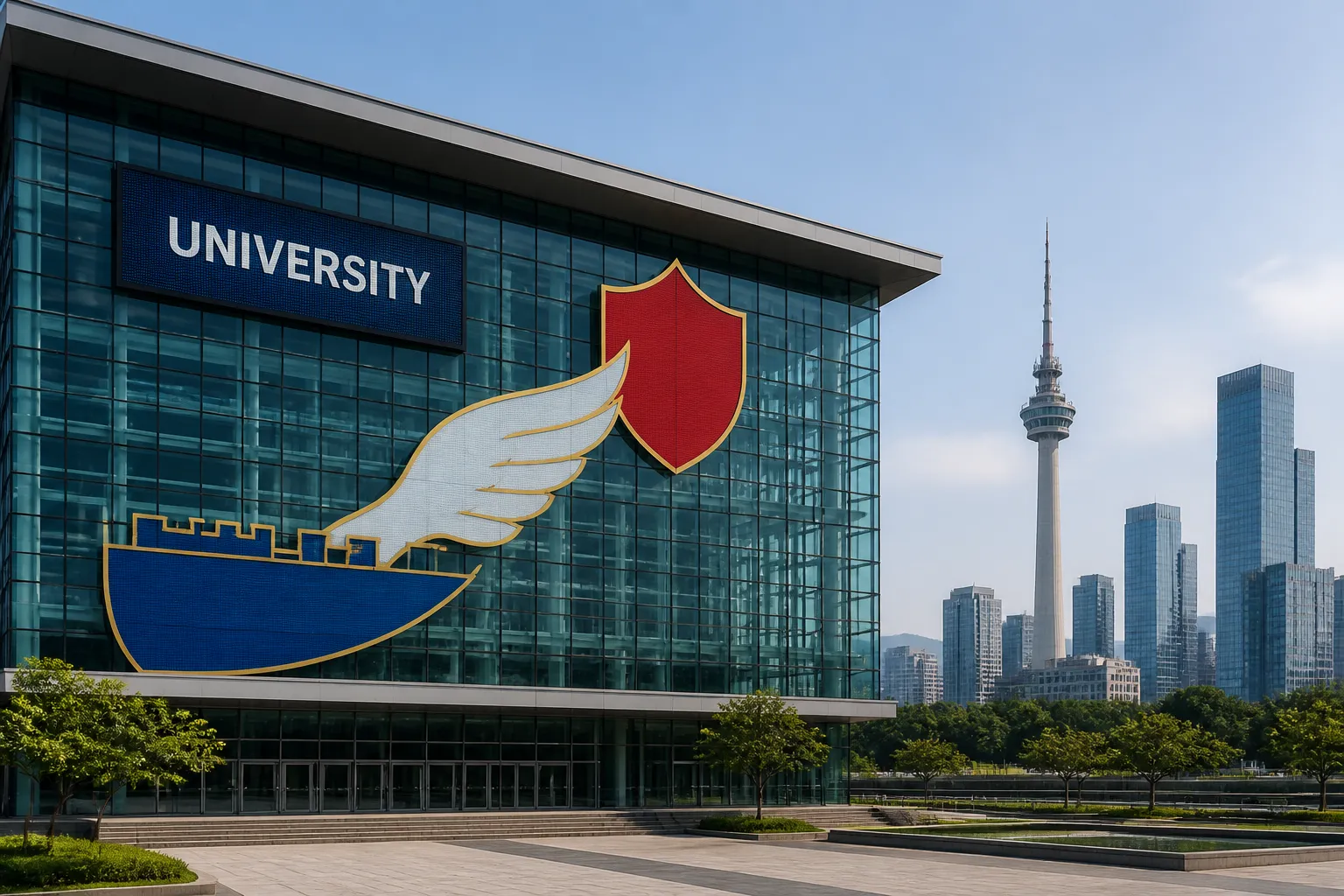
On July 16, 2026, South Korea’s Defense Minister Ahn Gyu‑back announced a sweeping reorganization of its military education system: the Army, Navy and Air Force academies will consolidate into a single four‑year institution at the Jaundae military compound in Daejeon. The move, unveiled during a briefing before the National Assembly, is aimed at producing officers ready for artificial‑intelligence‑driven, all‑domain warfare and easing the handover of wartime operational control to the United States.
Jaundae was chosen for its proximity to a cluster of research powerhouses—KAIST, the Agency for Defense Development, the Korea Aerospace Research Institute, the Korea Astronomy and Space Science Institute, the Electronics and Telecommunications Research Institute and the Korea Atomic Energy Research Institute. Minister Ahn said the new campus would become a “smart campus,” fusing the three services and tapping local expertise.
Curriculum reforms will center on AI, space, cyber, and electromagnetic spectrum operations. Ahn explained that modern conflict extends beyond traditional land, sea and air domains, and officers must be prepared to lead multidomain battles. While the core training will emphasize AI‑enabled operations, each branch will retain specialized courses.
Today’s academies are scattered: the Army academy sits in Seoul, the Navy academy in South Gyeongsang Province, and the Air Force academy in North Chungcheong Province. Together they employ seven generals—three three‑star generals serving as superintendents—and roughly 3,000 support staff. Each academy enrolls between 700 and 1,000 cadets, totaling about 2,900 students. Ahn highlighted that training such a large cohort with that many staff creates a structural inefficiency the merger seeks to eliminate.
Looking ahead, the Ministry of National Defense plans to expand the new institution into a national defense education hub. The vision includes incorporating the Armed Forces Nursing Academy, advanced high‑tech academies, and programs such as the Reserve Officers’ Training Corps (ROTC) and the Officer Candidate School.
Details of the merger will be released in October, and the ruling Democratic Party of Korea (DPK) has pledged to pass the necessary legislation swiftly, streamlining the approval process.
The announcement sparked criticism from a coalition of alumni representing the three academies. The group described the merger as a politically motivated effort that would erase each institution’s history and identity. They argued that moving the academies inland would compromise training quality—especially for the Navy, which would lose access to sea‑based exercises, and for the Air Force, which would lose runway access and an unobstructed view of the sky.
Thus, the plan has generated both institutional support and opposition. The government stresses the need for a unified, technologically advanced officer corps, while alumni groups emphasize preserving each service’s distinct traditions and operational environments.
At present, the Ministry of National Defense is finalizing the October announcement. The DPK’s legislative backing is expected to accelerate the process, but alumni resistance remains a significant political hurdle. The outcome will shape how South Korea trains its future officers for an increasingly complex multidomain battlefield.
Jaundae was chosen for its proximity to a cluster of research powerhouses—KAIST, the Agency for Defense Development, the Korea Aerospace Research Institute, the Korea Astronomy and Space Science Institute, the Electronics and Telecommunications Research Institute and the Korea Atomic Energy Research Institute. Minister Ahn said the new campus would become a “smart campus,” fusing the three services and tapping local expertise.
Curriculum reforms will center on AI, space, cyber, and electromagnetic spectrum operations. Ahn explained that modern conflict extends beyond traditional land, sea and air domains, and officers must be prepared to lead multidomain battles. While the core training will emphasize AI‑enabled operations, each branch will retain specialized courses.
Today’s academies are scattered: the Army academy sits in Seoul, the Navy academy in South Gyeongsang Province, and the Air Force academy in North Chungcheong Province. Together they employ seven generals—three three‑star generals serving as superintendents—and roughly 3,000 support staff. Each academy enrolls between 700 and 1,000 cadets, totaling about 2,900 students. Ahn highlighted that training such a large cohort with that many staff creates a structural inefficiency the merger seeks to eliminate.
Looking ahead, the Ministry of National Defense plans to expand the new institution into a national defense education hub. The vision includes incorporating the Armed Forces Nursing Academy, advanced high‑tech academies, and programs such as the Reserve Officers’ Training Corps (ROTC) and the Officer Candidate School.
Details of the merger will be released in October, and the ruling Democratic Party of Korea (DPK) has pledged to pass the necessary legislation swiftly, streamlining the approval process.
The announcement sparked criticism from a coalition of alumni representing the three academies. The group described the merger as a politically motivated effort that would erase each institution’s history and identity. They argued that moving the academies inland would compromise training quality—especially for the Navy, which would lose access to sea‑based exercises, and for the Air Force, which would lose runway access and an unobstructed view of the sky.
Thus, the plan has generated both institutional support and opposition. The government stresses the need for a unified, technologically advanced officer corps, while alumni groups emphasize preserving each service’s distinct traditions and operational environments.
At present, the Ministry of National Defense is finalizing the October announcement. The DPK’s legislative backing is expected to accelerate the process, but alumni resistance remains a significant political hurdle. The outcome will shape how South Korea trains its future officers for an increasingly complex multidomain battlefield.