Blab Tech
Webuy Global Unveils NFC-Enabled Smart Travel Card to Streamline Journeys with AI-Driven Assistance
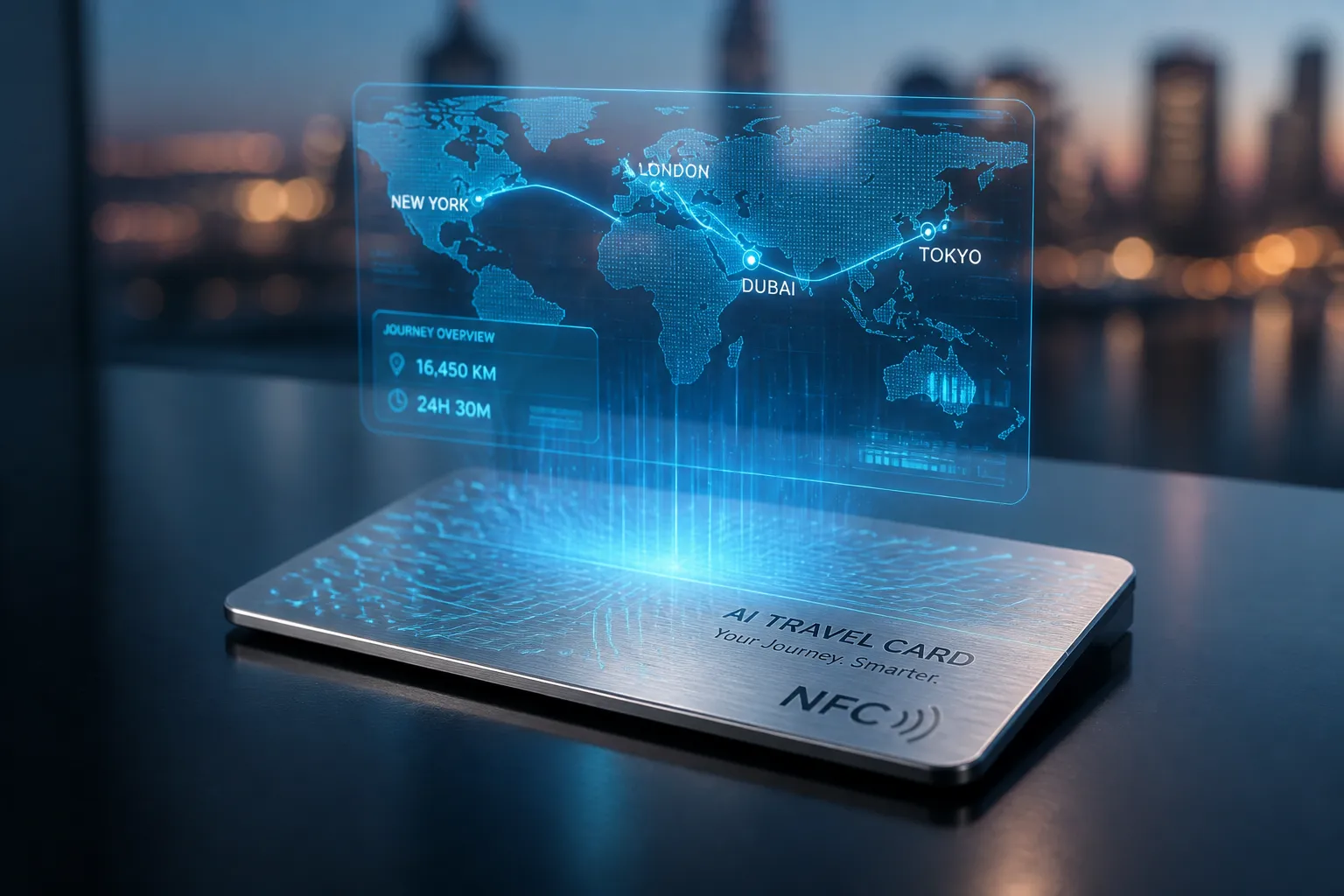
Webuy Global Ltd. (Nasdaq: WBUY), a Southeast‑Asian travel platform, announced a new product called the Smart Travel Card on 13 July 2026. The card combines a near‑field communication (NFC) chip with a web‑based interface built on HTML5 (H5) to give travelers a single, app‑free portal for flight details, departure countdowns, itineraries, and on‑the‑ground support.
The Smart Travel Card is designed to address the fragmentation that currently characterises many travel workflows. According to Webuy, customers often juggle multiple messages, documents, and offline services from pre‑departure planning to on‑site assistance. The card’s NFC chip can be tapped by any NFC‑enabled device, instantly loading the traveler’s journey data into the H5 interface. Users can view meeting‑point guidance, contact local guides or drivers, and access emergency support without installing a dedicated app.
A key feature of the platform is its use of AI Agents. The system combines AI‑assisted decision‑making, structured journey context, location‑based detection, rules‑based workflows, and backend system integrations. For example, when a traveler is within roughly 300 metres of a relevant attraction, the card automatically displays attraction information and offers AI‑generated audio commentary. The traveler can choose whether to play the content. The H5 interface also provides bilingual support and daily itineraries.
Webuy’s CEO, Vincent Xue, said the card “is designed to help understand where the traveler is in the journey and support timely, relevant services from Webuy.” He added that the proximity‑based attraction feature “can improve the travel experience by supporting a more connected and personalized journey from beginning to end.” Xue further explained that the data generated through these interactions could feed back into Webuy’s AI Agents, allowing the company to refine its products and services over time.
The Smart Travel Card fits into Webuy’s broader strategy to deploy AI Agents across its travel operations. The company has previously introduced AI‑powered travel products, including a wearable device and a smart travel guide. The new card expands the company’s footprint in the travel‑tech market, which is increasingly moving toward integrated, AI‑driven customer experiences.
From a technical perspective, the card’s NFC functionality aligns with industry standards for contactless communication. The H5 interface is built on HTML5, ensuring compatibility across a wide range of devices without the need for native app development. The location‑based detection relies on GPS data and proximity thresholds to trigger content delivery.
Industry analysts note that Webuy’s approach addresses a growing demand for seamless, end‑to‑end travel solutions. The travel sector has long struggled with disjointed services, and AI‑enabled platforms that can deliver context‑aware assistance are gaining traction. Webuy’s focus on Southeast Asia, where cross‑border tourism is expanding, positions the company to capture a significant share of the regional market.
Regulatory implications are minimal at this stage. The card does not involve payment processing; it functions as a data‑access and information‑delivery tool. Webuy’s existing compliance framework for travel services in Indonesia, Singapore, and other markets should cover the new product.
In summary, Webuy Global’s Smart Travel Card offers travelers a unified, NFC‑enabled interface that delivers flight and itinerary information, location‑based attraction content, and direct access to local support services. By integrating AI Agents into the customer journey, Webuy aims to create a continuous feedback loop that can improve its travel offerings over time. The company’s next steps will likely involve expanding the card’s availability across additional markets and integrating further AI‑driven features.
The Smart Travel Card is designed to address the fragmentation that currently characterises many travel workflows. According to Webuy, customers often juggle multiple messages, documents, and offline services from pre‑departure planning to on‑site assistance. The card’s NFC chip can be tapped by any NFC‑enabled device, instantly loading the traveler’s journey data into the H5 interface. Users can view meeting‑point guidance, contact local guides or drivers, and access emergency support without installing a dedicated app.
A key feature of the platform is its use of AI Agents. The system combines AI‑assisted decision‑making, structured journey context, location‑based detection, rules‑based workflows, and backend system integrations. For example, when a traveler is within roughly 300 metres of a relevant attraction, the card automatically displays attraction information and offers AI‑generated audio commentary. The traveler can choose whether to play the content. The H5 interface also provides bilingual support and daily itineraries.
Webuy’s CEO, Vincent Xue, said the card “is designed to help understand where the traveler is in the journey and support timely, relevant services from Webuy.” He added that the proximity‑based attraction feature “can improve the travel experience by supporting a more connected and personalized journey from beginning to end.” Xue further explained that the data generated through these interactions could feed back into Webuy’s AI Agents, allowing the company to refine its products and services over time.
The Smart Travel Card fits into Webuy’s broader strategy to deploy AI Agents across its travel operations. The company has previously introduced AI‑powered travel products, including a wearable device and a smart travel guide. The new card expands the company’s footprint in the travel‑tech market, which is increasingly moving toward integrated, AI‑driven customer experiences.
From a technical perspective, the card’s NFC functionality aligns with industry standards for contactless communication. The H5 interface is built on HTML5, ensuring compatibility across a wide range of devices without the need for native app development. The location‑based detection relies on GPS data and proximity thresholds to trigger content delivery.
Industry analysts note that Webuy’s approach addresses a growing demand for seamless, end‑to‑end travel solutions. The travel sector has long struggled with disjointed services, and AI‑enabled platforms that can deliver context‑aware assistance are gaining traction. Webuy’s focus on Southeast Asia, where cross‑border tourism is expanding, positions the company to capture a significant share of the regional market.
Regulatory implications are minimal at this stage. The card does not involve payment processing; it functions as a data‑access and information‑delivery tool. Webuy’s existing compliance framework for travel services in Indonesia, Singapore, and other markets should cover the new product.
In summary, Webuy Global’s Smart Travel Card offers travelers a unified, NFC‑enabled interface that delivers flight and itinerary information, location‑based attraction content, and direct access to local support services. By integrating AI Agents into the customer journey, Webuy aims to create a continuous feedback loop that can improve its travel offerings over time. The company’s next steps will likely involve expanding the card’s availability across additional markets and integrating further AI‑driven features.








