Blab Tech
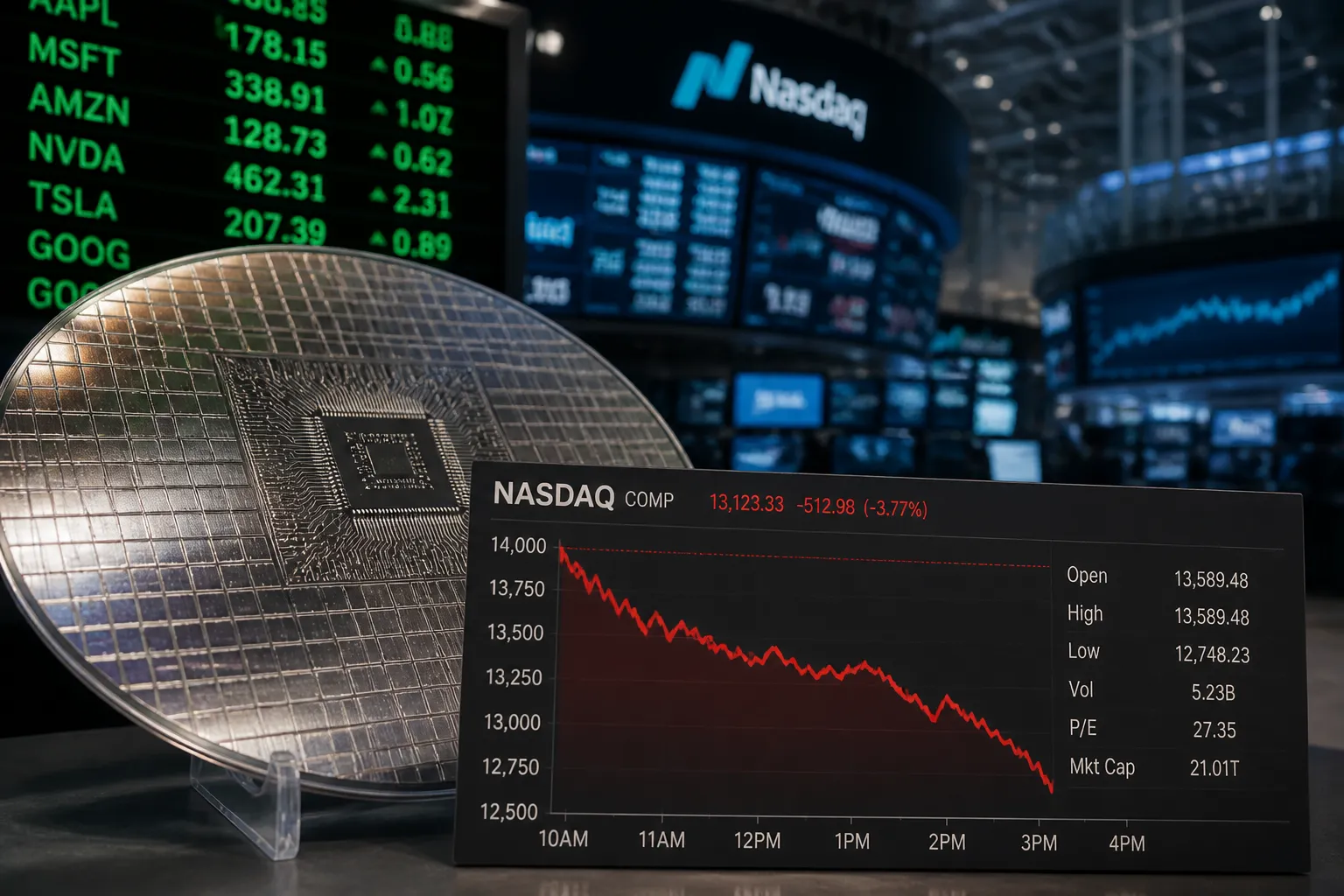
SK Hynix Shares Drop 15% After Nasdaq Debut as Investors Book Profits
SK Hynix Inc. (SKHY) saw its shares fall more than 15% on Monday, a sharp reversal from the strong debut of its American Depositary Receipts (ADRs) on the Nasdaq. The drop followed a 12.8% gain on the first trading day and a wave of profit‑booking by investors in South Korea.
The South Korean memory‑chip maker raised $26.5 billion in its largest foreign listing ever by selling 17.79 million ADRs at $149 each. The ADRs opened at $170, a 14% premium to the offering price, and closed the day at $170.30, according to Reuters. The listing was part of a broader strategy to tap U.S. capital markets amid a surge in demand for AI‑related memory.
After the debut, many Korean investors sold shares to lock in gains. The sell‑off spread beyond SK Hynix, pulling down Samsung Electronics and contributing to a 9% fall in the Kospi index. The market volatility triggered a 20‑minute trading halt before trading resumed, but Korean stocks remained pressured for the rest of the session.
The decline came despite a recent announcement from President Lee Jae‑Myung that the South Korean government would back three major projects focused on semiconductors, AI data centres and physical AI. The policy statement was intended to support the domestic chip industry, yet investor sentiment stayed weak because concerns about future earnings growth outweighed the positive policy news.
Morningstar director Lorraine Tan said the current memory‑chip cycle has outperformed expectations, but she warned that earnings growth could return to more normal levels, limiting upside. She added that while AI adoption continues to grow, companies developing AI technologies still face challenges in turning that demand into sustainable profits. Rising reliance on debt and equity funding has also raised concerns about whether current spending levels can continue.
Analysts also highlighted worries about SK Hynix’s second‑quarter earnings. A senior analyst at NH Investment & Securities noted that investors had expected shipments of the company’s latest HBM4 memory chips to rise during the quarter, but that increase did not materialise on a large scale. The analyst added that SK Hynix’s exposure to the high‑bandwidth memory (HBM) market is greater than Samsung’s, meaning it may benefit less from the recent rise in prices of conventional DRAM chips.
After the Monday sell‑off, SK Hynix’s ADRs continued to trade at a significant premium to its Korean shares. Market strategist James Ooi of Tiger Brokers explained that companies listed in both the U.S. and their home markets often command higher valuations in the U.S. because of broader investor access, stronger liquidity and better valuation support. He also noted that converting Korean shares into ADRs is not straightforward, limiting opportunities for arbitrage between the two markets.
Despite the share‑price decline, SK Hynix remains the global leader in high‑bandwidth memory. Counterpoint Research reported that the company held a 58% revenue share of the HBM market in the first quarter, compared with 21% each for Samsung Electronics and Micron Technology. HBM chips are widely used in AI systems by major technology companies such as Nvidia and Google.
The market reaction illustrates the sensitivity of semiconductor stocks to earnings expectations and the broader AI‑chip boom. SK Hynix’s next quarterly earnings report will be closely watched for guidance on HBM shipments and overall revenue growth. Meanwhile, the Korean market will monitor how the government’s support measures influence investor confidence.
In summary, SK Hynix’s shares fell over 15% after a strong Nasdaq debut as investors booked profits and reassessed earnings prospects. The decline affected the broader Korean market, triggered a trading halt, and highlighted concerns about the sustainability of the AI‑chip boom. The company’s ADRs remain premium to domestic shares, and its leadership in the HBM market persists. Investors will look to the upcoming earnings release for clarity on shipment volumes and revenue outlook.
The South Korean memory‑chip maker raised $26.5 billion in its largest foreign listing ever by selling 17.79 million ADRs at $149 each. The ADRs opened at $170, a 14% premium to the offering price, and closed the day at $170.30, according to Reuters. The listing was part of a broader strategy to tap U.S. capital markets amid a surge in demand for AI‑related memory.
After the debut, many Korean investors sold shares to lock in gains. The sell‑off spread beyond SK Hynix, pulling down Samsung Electronics and contributing to a 9% fall in the Kospi index. The market volatility triggered a 20‑minute trading halt before trading resumed, but Korean stocks remained pressured for the rest of the session.
The decline came despite a recent announcement from President Lee Jae‑Myung that the South Korean government would back three major projects focused on semiconductors, AI data centres and physical AI. The policy statement was intended to support the domestic chip industry, yet investor sentiment stayed weak because concerns about future earnings growth outweighed the positive policy news.
Morningstar director Lorraine Tan said the current memory‑chip cycle has outperformed expectations, but she warned that earnings growth could return to more normal levels, limiting upside. She added that while AI adoption continues to grow, companies developing AI technologies still face challenges in turning that demand into sustainable profits. Rising reliance on debt and equity funding has also raised concerns about whether current spending levels can continue.
Analysts also highlighted worries about SK Hynix’s second‑quarter earnings. A senior analyst at NH Investment & Securities noted that investors had expected shipments of the company’s latest HBM4 memory chips to rise during the quarter, but that increase did not materialise on a large scale. The analyst added that SK Hynix’s exposure to the high‑bandwidth memory (HBM) market is greater than Samsung’s, meaning it may benefit less from the recent rise in prices of conventional DRAM chips.
After the Monday sell‑off, SK Hynix’s ADRs continued to trade at a significant premium to its Korean shares. Market strategist James Ooi of Tiger Brokers explained that companies listed in both the U.S. and their home markets often command higher valuations in the U.S. because of broader investor access, stronger liquidity and better valuation support. He also noted that converting Korean shares into ADRs is not straightforward, limiting opportunities for arbitrage between the two markets.
Despite the share‑price decline, SK Hynix remains the global leader in high‑bandwidth memory. Counterpoint Research reported that the company held a 58% revenue share of the HBM market in the first quarter, compared with 21% each for Samsung Electronics and Micron Technology. HBM chips are widely used in AI systems by major technology companies such as Nvidia and Google.
The market reaction illustrates the sensitivity of semiconductor stocks to earnings expectations and the broader AI‑chip boom. SK Hynix’s next quarterly earnings report will be closely watched for guidance on HBM shipments and overall revenue growth. Meanwhile, the Korean market will monitor how the government’s support measures influence investor confidence.
In summary, SK Hynix’s shares fell over 15% after a strong Nasdaq debut as investors booked profits and reassessed earnings prospects. The decline affected the broader Korean market, triggered a trading halt, and highlighted concerns about the sustainability of the AI‑chip boom. The company’s ADRs remain premium to domestic shares, and its leadership in the HBM market persists. Investors will look to the upcoming earnings release for clarity on shipment volumes and revenue outlook.