Blab Tech
BobiHealth Wins Pitch Competition at HITLAB Innovation World Cup, Highlights Maternal Health App Innovation
Utah Valley University (UVU) hosted the HITLAB Innovation World Cup on June 17‑18, 2026, drawing 1,277 applicants for a $96,000 prize pool. The event’s pitch competition was won by Dave Esra’s maternal‑health startup, BobiHealth, which earned a place among the top ten finalists.
Esra, a retired Army officer who previously served as a firefighter and EMT, began developing BobiHealth after a consulting role with Predistry, a company that conducts pregnancy‑related drug safety research. According to the source, Esra noted that Predistry’s data collection relied on surveys every six to twelve weeks, a method he described as “not good enough.” He argued that pregnancy is a continuous process and that episodic data collection leaves complications hidden.
In 2023, the World Health Organization reported approximately 260,000 maternal deaths worldwide, more than 700 per day. Esra’s MIT capstone project focused on predictive analytics for adverse pregnancy outcomes; the team reported a model that achieved roughly 95% accuracy within their research dataset.
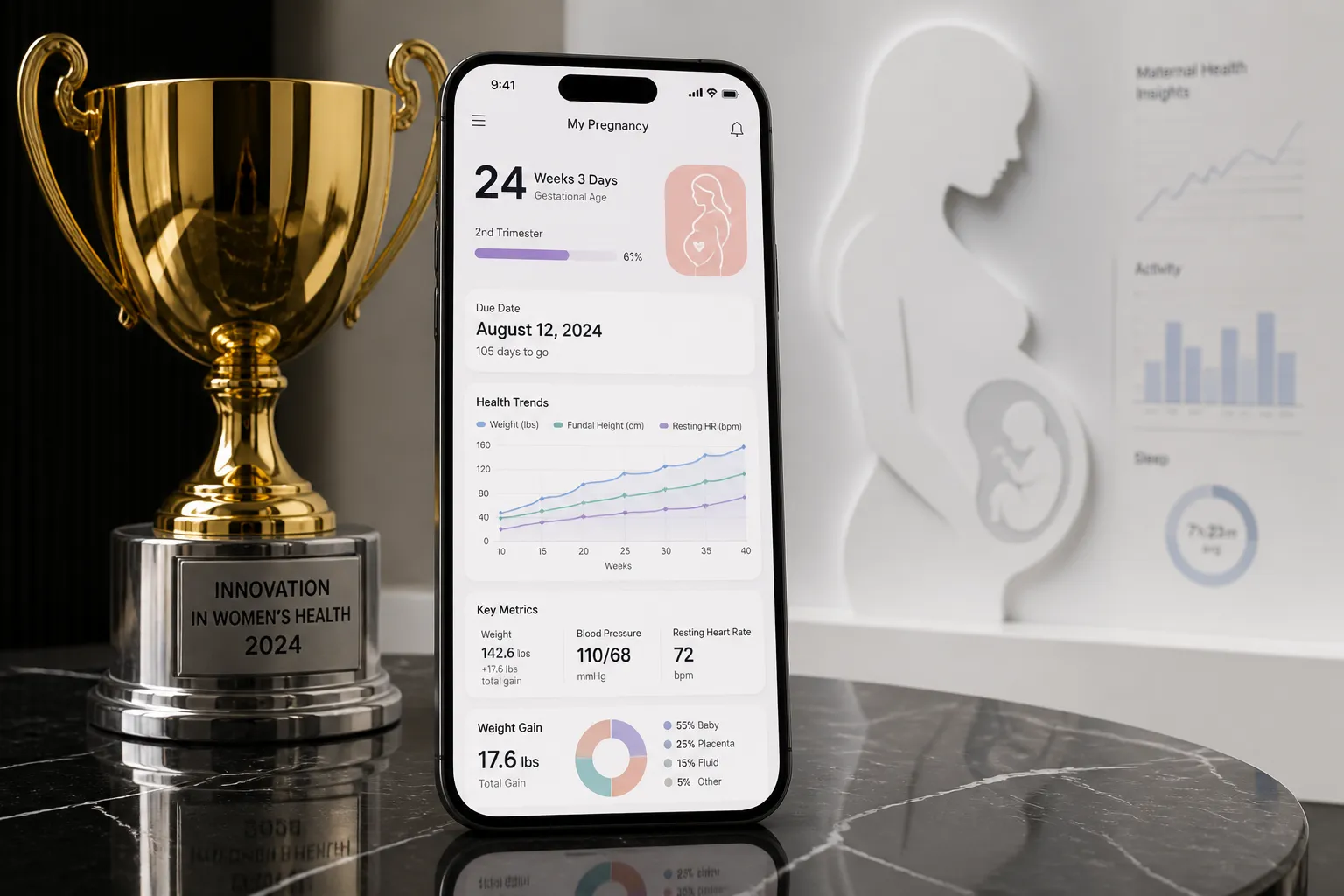
BobiHealth launched on app stores in January 2026. Within six weeks, the app had 30,000 downloads, largely from users in India, the Philippines, the United States, and Costa Rica, according to the source. The platform collects biometric data—symptoms, kick counts, medication use, mood—and uses a green, yellow, red triage system adapted from clinical tools. A chatbot, described as “doula‑inspired,” provides guidance during the night and is trained on provider‑approved materials. The app also offers mental‑health screening, with user consent, and can connect users to clinics that receive reimbursement for the intervention.
The company’s business case centers on Medicaid, which covers half of all U.S. pregnancies. Reducing neonatal intensive care unit stays, emergency department visits, and readmissions could generate real cost savings. To secure Medicaid contracts, BobiHealth must conduct clinical pilots and collect outcome data. The team is currently identifying clinic partners and has shifted focus to employer‑benefits platforms that allow self‑insured employers to offer BobiHealth as a benefit.
The hackathon portion of the HITLAB event attracted 337 participants who built solutions for bounties submitted by sponsors. Teams from the Utah‑based community Just Build and the healthcare startup Heal Access USA won the top Halda Bounty, each receiving $5,000. The Just Build team, composed of Josh Gimenes, Callahan Larson, Jonathan Wagstaff, and Jens Shumway, emphasized early planning and a demo‑first approach. Heal Access USA’s team—software engineers from the company—developed a student‑facing college‑application tool that auto‑fills forms using AI.
HITLAB’s Innovation World Cup is part of a broader effort to bring evidence‑first, patient‑focused digital health solutions to market. The event’s promotional video has amassed 1.1 million views on YouTube, and the organization has a history of supporting startups that later scale.
Esra’s path to the competition was not straightforward. He had previously declined a pitch‑competition invitation but later accepted after a $100,000 startup competition win in San Francisco. He described the experience as “a huge win when we needed it most.”
At the time of writing, BobiHealth is still pre‑revenue and is seeking clinical pilot partners to validate its outcomes. The company has received unsolicited interest from doctors in Africa and plans to use Medicaid contract revenue to fund global expansion.
The HITLAB Innovation World Cup will return for a hackathon on November 15, 2026, with details still being finalized.
The event’s outcomes, including the success of hackathon teams and the pitch‑competition winner, underscore the growing interest in digital health solutions that address maternal health gaps and leverage predictive analytics.
Esra, a retired Army officer who previously served as a firefighter and EMT, began developing BobiHealth after a consulting role with Predistry, a company that conducts pregnancy‑related drug safety research. According to the source, Esra noted that Predistry’s data collection relied on surveys every six to twelve weeks, a method he described as “not good enough.” He argued that pregnancy is a continuous process and that episodic data collection leaves complications hidden.
In 2023, the World Health Organization reported approximately 260,000 maternal deaths worldwide, more than 700 per day. Esra’s MIT capstone project focused on predictive analytics for adverse pregnancy outcomes; the team reported a model that achieved roughly 95% accuracy within their research dataset.
BobiHealth launched on app stores in January 2026. Within six weeks, the app had 30,000 downloads, largely from users in India, the Philippines, the United States, and Costa Rica, according to the source. The platform collects biometric data—symptoms, kick counts, medication use, mood—and uses a green, yellow, red triage system adapted from clinical tools. A chatbot, described as “doula‑inspired,” provides guidance during the night and is trained on provider‑approved materials. The app also offers mental‑health screening, with user consent, and can connect users to clinics that receive reimbursement for the intervention.
The company’s business case centers on Medicaid, which covers half of all U.S. pregnancies. Reducing neonatal intensive care unit stays, emergency department visits, and readmissions could generate real cost savings. To secure Medicaid contracts, BobiHealth must conduct clinical pilots and collect outcome data. The team is currently identifying clinic partners and has shifted focus to employer‑benefits platforms that allow self‑insured employers to offer BobiHealth as a benefit.
The hackathon portion of the HITLAB event attracted 337 participants who built solutions for bounties submitted by sponsors. Teams from the Utah‑based community Just Build and the healthcare startup Heal Access USA won the top Halda Bounty, each receiving $5,000. The Just Build team, composed of Josh Gimenes, Callahan Larson, Jonathan Wagstaff, and Jens Shumway, emphasized early planning and a demo‑first approach. Heal Access USA’s team—software engineers from the company—developed a student‑facing college‑application tool that auto‑fills forms using AI.
HITLAB’s Innovation World Cup is part of a broader effort to bring evidence‑first, patient‑focused digital health solutions to market. The event’s promotional video has amassed 1.1 million views on YouTube, and the organization has a history of supporting startups that later scale.
Esra’s path to the competition was not straightforward. He had previously declined a pitch‑competition invitation but later accepted after a $100,000 startup competition win in San Francisco. He described the experience as “a huge win when we needed it most.”
At the time of writing, BobiHealth is still pre‑revenue and is seeking clinical pilot partners to validate its outcomes. The company has received unsolicited interest from doctors in Africa and plans to use Medicaid contract revenue to fund global expansion.
The HITLAB Innovation World Cup will return for a hackathon on November 15, 2026, with details still being finalized.
The event’s outcomes, including the success of hackathon teams and the pitch‑competition winner, underscore the growing interest in digital health solutions that address maternal health gaps and leverage predictive analytics.