Blab Tech
Indonesia Expands Waste-to-Energy and Pyrolysis Projects to Convert 22% of National Waste into Energy
Indonesia is turning its growing municipal waste stream into power and fuel. The government has unveiled a coordinated push to expand waste‑to‑energy (WtE) plants and pyrolysis facilities, with a goal of converting roughly 22 % of the country’s trash into electricity and renewable diesel‑equivalent fuel.
The initiative follows the swift implementation of Presidential Regulation No. 109/2025, which has already accelerated the construction of 13 WtE plants. Among them is a new facility in Palembang, slated to start operations in October 2026. The regulation also cleared the way for additional projects across the archipelago.
In a statement released in Jakarta on Sunday, Minister Hasan explained that the capacity of the newly built WtE plants is insufficient to handle all waste generated nationwide. “In addition to WtE plant development, the government is also promoting the use of pyrolysis technology, so that more waste can be converted into energy,” he said. The regulation has enabled rapid deployment of WtE facilities, but the Ministry estimates that these plants will process only about 22 % of the total waste stream. The remaining 78 % will need complementary technologies, such as pyrolysis, to meet national waste‑management goals.
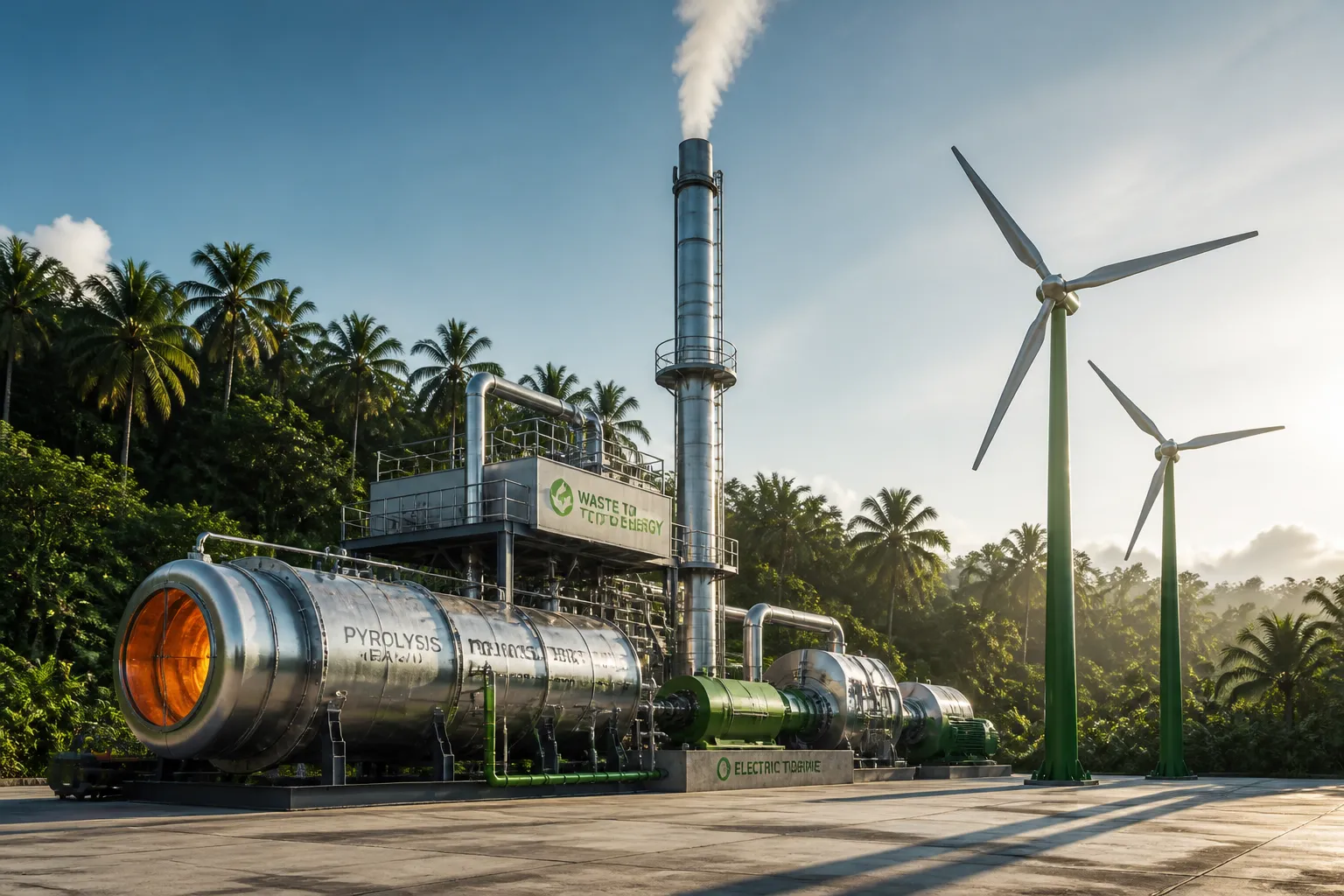
Pyrolysis, a thermochemical process that decomposes organic material in the absence of oxygen, can produce a liquid fuel that is chemically similar to diesel. The government projects that widespread adoption of pyrolysis could address roughly 20 % of the national waste problem. Hasan highlighted that the technology is being developed in collaboration with the Indonesian Army and local governments. Pilot projects are currently operating in Bogor City, Bogor District, Semarang City, Bekasi City, and Jakarta, where the Army’s logistical expertise is being leveraged to scale the technology.
The dual strategy of expanding WtE and pyrolysis facilities is part of Indonesia’s broader effort to reduce landfill volumes and mitigate the heightened risk of fires during dry seasons. “We want to not only resolve the waste issue, but also generate economic and energy benefits for the community. Through swift, collaborative effort, we can achieve this target,” Hasan added. The Ministry’s approach aligns with recent reports that Indonesia is planning to build up to 34 WtE projects across the country, with 33 projects announced by Danantara and additional initiatives in Bali aimed at cutting emissions and creating jobs.
While the 13 WtE plants under Presidential Regulation No. 109/2025 represent a significant step, experts note that the technology’s environmental performance depends on stringent emissions controls. The Ministry has indicated that each plant will be equipped with advanced pollution‑control systems to manage dioxins and furans, a common concern with incineration‑based WtE. The pyrolysis pilot sites are also expected to incorporate gas‑cleaning units to ensure that the produced fuel meets quality standards for diesel substitution.
As Indonesia moves toward a more circular economy, the government’s focus on energy recovery from waste is expected to influence both local and national policy. The upcoming operational start of the Palembang plant in October 2026 will serve as a benchmark for the scalability of the WtE model. Meanwhile, the Army‑led pyrolysis pilots will provide data on the feasibility of converting mixed municipal waste into renewable fuel at a commercial scale. The combined effort aims to reduce landfill dependence, lower greenhouse‑gas emissions, and create new economic opportunities across the archipelago.
The article is sourced from ANTARA News, 2026, with additional context drawn from recent government announcements and industry reports. The Ministry’s plans remain subject to regulatory approvals and environmental assessments, and further details on plant capacities and fuel specifications are expected in the coming months.
The initiative follows the swift implementation of Presidential Regulation No. 109/2025, which has already accelerated the construction of 13 WtE plants. Among them is a new facility in Palembang, slated to start operations in October 2026. The regulation also cleared the way for additional projects across the archipelago.
In a statement released in Jakarta on Sunday, Minister Hasan explained that the capacity of the newly built WtE plants is insufficient to handle all waste generated nationwide. “In addition to WtE plant development, the government is also promoting the use of pyrolysis technology, so that more waste can be converted into energy,” he said. The regulation has enabled rapid deployment of WtE facilities, but the Ministry estimates that these plants will process only about 22 % of the total waste stream. The remaining 78 % will need complementary technologies, such as pyrolysis, to meet national waste‑management goals.
Pyrolysis, a thermochemical process that decomposes organic material in the absence of oxygen, can produce a liquid fuel that is chemically similar to diesel. The government projects that widespread adoption of pyrolysis could address roughly 20 % of the national waste problem. Hasan highlighted that the technology is being developed in collaboration with the Indonesian Army and local governments. Pilot projects are currently operating in Bogor City, Bogor District, Semarang City, Bekasi City, and Jakarta, where the Army’s logistical expertise is being leveraged to scale the technology.
The dual strategy of expanding WtE and pyrolysis facilities is part of Indonesia’s broader effort to reduce landfill volumes and mitigate the heightened risk of fires during dry seasons. “We want to not only resolve the waste issue, but also generate economic and energy benefits for the community. Through swift, collaborative effort, we can achieve this target,” Hasan added. The Ministry’s approach aligns with recent reports that Indonesia is planning to build up to 34 WtE projects across the country, with 33 projects announced by Danantara and additional initiatives in Bali aimed at cutting emissions and creating jobs.
While the 13 WtE plants under Presidential Regulation No. 109/2025 represent a significant step, experts note that the technology’s environmental performance depends on stringent emissions controls. The Ministry has indicated that each plant will be equipped with advanced pollution‑control systems to manage dioxins and furans, a common concern with incineration‑based WtE. The pyrolysis pilot sites are also expected to incorporate gas‑cleaning units to ensure that the produced fuel meets quality standards for diesel substitution.
As Indonesia moves toward a more circular economy, the government’s focus on energy recovery from waste is expected to influence both local and national policy. The upcoming operational start of the Palembang plant in October 2026 will serve as a benchmark for the scalability of the WtE model. Meanwhile, the Army‑led pyrolysis pilots will provide data on the feasibility of converting mixed municipal waste into renewable fuel at a commercial scale. The combined effort aims to reduce landfill dependence, lower greenhouse‑gas emissions, and create new economic opportunities across the archipelago.
The article is sourced from ANTARA News, 2026, with additional context drawn from recent government announcements and industry reports. The Ministry’s plans remain subject to regulatory approvals and environmental assessments, and further details on plant capacities and fuel specifications are expected in the coming months.








