Blab Tech
Chinese Bionic Fish Demonstrates Biomimetic Propulsion at 2026 CIFTIS Fair
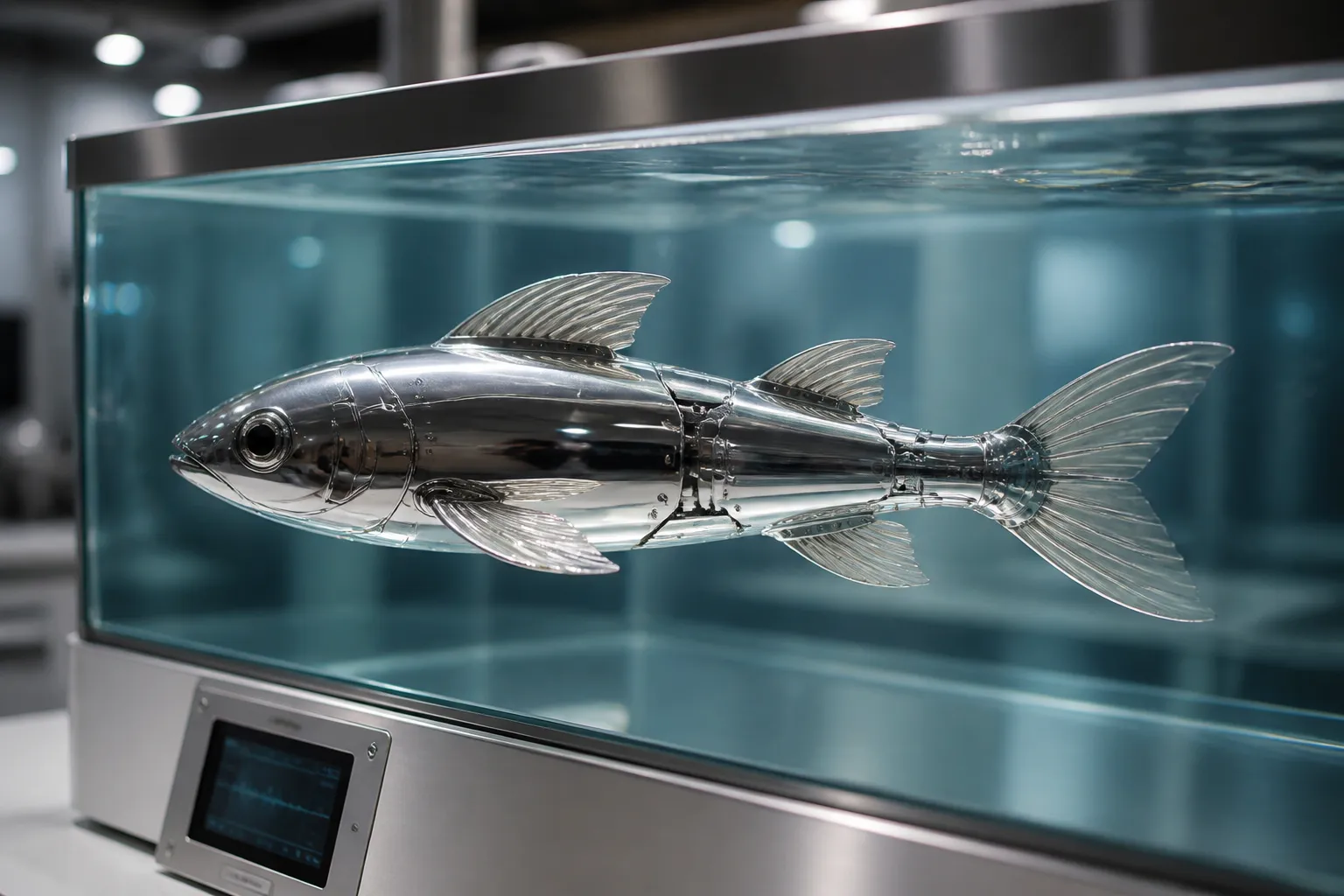
When a fish‑shaped robot glided silently through a tank at Beijing’s China International Fair for Trade in Services (CIFTIS), it turned heads and raised questions about the future of underwater robotics.
CIFTIS opened on September 9 in Shougang Park and ran through September 13, drawing more than 1,830 enterprises and representatives from over 90 countries and international organisations. The fair’s theme, "Embrace Intelligent Technologies, Empower Trade in Services," reflected Beijing’s push to broaden the services market. Amidst finance, tourism and education stalls, the bionic fish stood out for its eye‑catching, propeller‑free swimming.
The robot, showcased by a staff member during the event, relies on biomimetic propulsion that mimics the body‑caudal fin (BCF) motion of real fish. A head‑mounted sonar array scans the surrounding water in real time, enabling the device to adjust its trajectory and speed automatically. A journalist’s video, posted online during the fair, captured the robot moving smoothly through the water, underscoring the effectiveness of the design.
Biomimetic propulsion has been a focus of Chinese robotics research for more than a decade. Studies from researchers such as Rui Wang of the Institute of Automation, Chinese Academy of Sciences, and colleagues have shown that a body‑fin system can generate thrust while reducing noise and drag compared with conventional propellers. The technology also offers improved maneuverability in confined or complex aquatic environments, a feature that could benefit environmental monitoring, underwater inspection and other applications.
The demonstration highlighted robotics’ growing role in China’s services sector. While the fair traditionally centers on finance, tourism and education, the inclusion of advanced robotics signals how intelligent sensing and biomimetic locomotion can support new service offerings. Chinese companies such as Unitree Robotics, known for their quadruped and wheel‑legged robots, have also been active in the biomimetic field, though the bionic fish was not identified as a product of a specific firm.
Visitors and industry observers noted the robot’s natural swimming motion. Researchers who have studied biomimetic propulsion point out that the technology’s potential extends beyond entertainment; it could enable quieter, more efficient underwater drones for scientific research or commercial inspection. No official statement from a manufacturer was released during the fair.
CIFTIS is one of China’s four major national‑level trade fairs, alongside the Canton Fair, the China International Import Expo and the China International Consumer Products Expo. The 2026 edition added a dedicated zone for enterprise globalization services, reflecting Beijing’s strategy to open the services market to foreign investment. The bionic fish exhibit fits within this broader narrative of showcasing Chinese innovation to attract international partners.
As the fair continues, exhibitors are expected to unveil additional robotics prototypes and software solutions. The bionic fish remains on display in the aquatic exhibit area, and organizers have not announced a commercial launch date. The event’s closing ceremony on September 13 will likely feature further announcements on China’s services trade agenda.
CIFTIS opened on September 9 in Shougang Park and ran through September 13, drawing more than 1,830 enterprises and representatives from over 90 countries and international organisations. The fair’s theme, "Embrace Intelligent Technologies, Empower Trade in Services," reflected Beijing’s push to broaden the services market. Amidst finance, tourism and education stalls, the bionic fish stood out for its eye‑catching, propeller‑free swimming.
The robot, showcased by a staff member during the event, relies on biomimetic propulsion that mimics the body‑caudal fin (BCF) motion of real fish. A head‑mounted sonar array scans the surrounding water in real time, enabling the device to adjust its trajectory and speed automatically. A journalist’s video, posted online during the fair, captured the robot moving smoothly through the water, underscoring the effectiveness of the design.
Biomimetic propulsion has been a focus of Chinese robotics research for more than a decade. Studies from researchers such as Rui Wang of the Institute of Automation, Chinese Academy of Sciences, and colleagues have shown that a body‑fin system can generate thrust while reducing noise and drag compared with conventional propellers. The technology also offers improved maneuverability in confined or complex aquatic environments, a feature that could benefit environmental monitoring, underwater inspection and other applications.
The demonstration highlighted robotics’ growing role in China’s services sector. While the fair traditionally centers on finance, tourism and education, the inclusion of advanced robotics signals how intelligent sensing and biomimetic locomotion can support new service offerings. Chinese companies such as Unitree Robotics, known for their quadruped and wheel‑legged robots, have also been active in the biomimetic field, though the bionic fish was not identified as a product of a specific firm.
Visitors and industry observers noted the robot’s natural swimming motion. Researchers who have studied biomimetic propulsion point out that the technology’s potential extends beyond entertainment; it could enable quieter, more efficient underwater drones for scientific research or commercial inspection. No official statement from a manufacturer was released during the fair.
CIFTIS is one of China’s four major national‑level trade fairs, alongside the Canton Fair, the China International Import Expo and the China International Consumer Products Expo. The 2026 edition added a dedicated zone for enterprise globalization services, reflecting Beijing’s strategy to open the services market to foreign investment. The bionic fish exhibit fits within this broader narrative of showcasing Chinese innovation to attract international partners.
As the fair continues, exhibitors are expected to unveil additional robotics prototypes and software solutions. The bionic fish remains on display in the aquatic exhibit area, and organizers have not announced a commercial launch date. The event’s closing ceremony on September 13 will likely feature further announcements on China’s services trade agenda.