Blab Tech
US Army Tests Ukraine-Inspired Drone Tactics in German Saber Junction Exercise
In the shadow of Bavaria’s rolling hills, the U.S. Army staged a high‑stakes test of drone tactics at its annual Saber Junction exercise. From late August to early September 2026, the 173rd Airborne Brigade deployed almost 1,900 unmanned aerial vehicles—UAVs—across company‑level units, turning the German training grounds into a living laboratory for modern warfare.
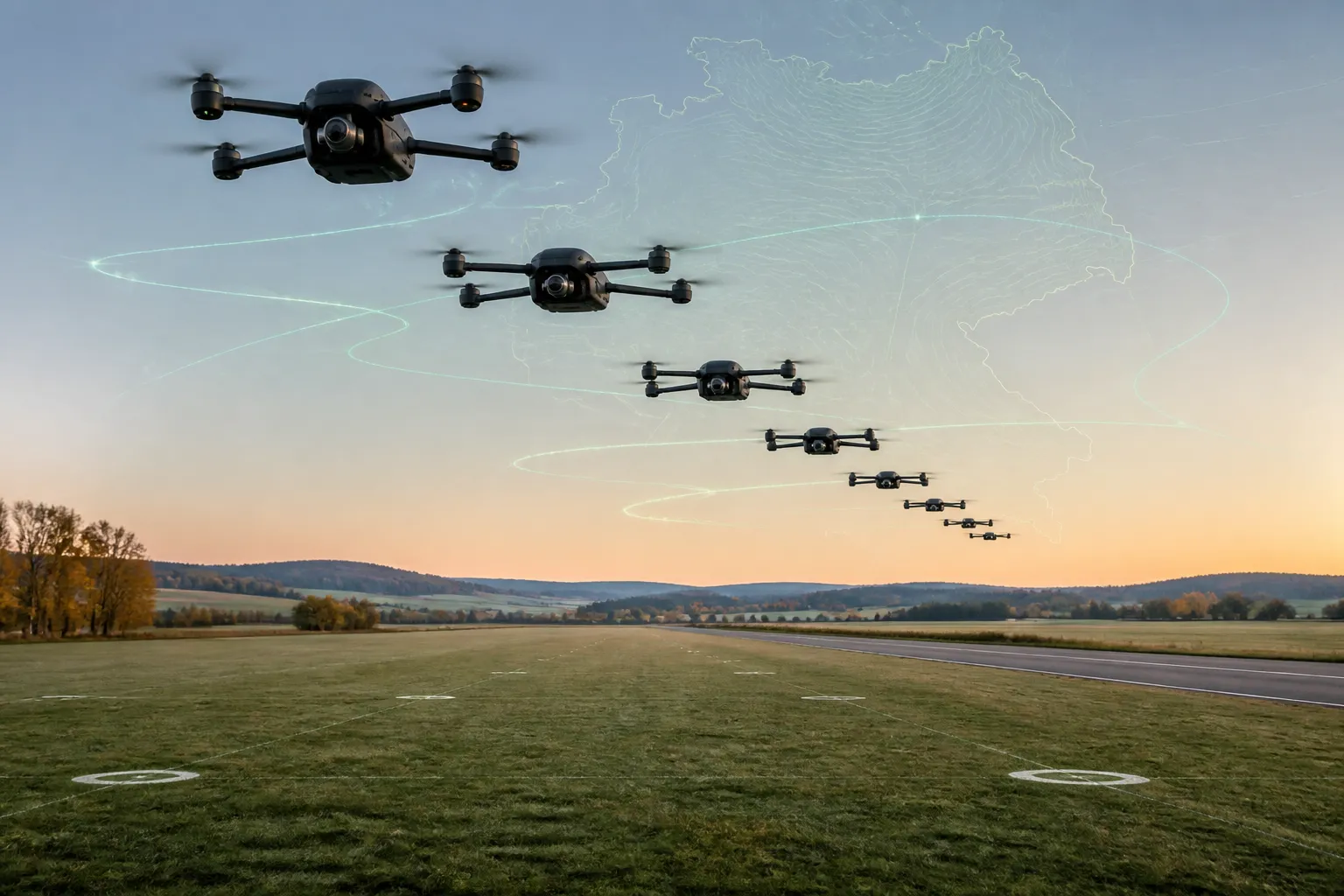
The drills began with soldiers launching small drones from a dusty road in the Bavarian foothills, a moment the Army highlighted as a concrete illustration of how drones can support ground operations. According to the Army, roughly half of the brigade’s engagements with opposing forces started with drone contact, underscoring the growing importance of aerial surveillance and strike capabilities.
A distinctive element of the exercise was the presence of a dozen Ukrainian military personnel. Embedded with U.S. units, the Ukrainians offered real‑time advice on electronic warfare, drone tactics, and lessons drawn from active combat. Earlier that year, members of the 173rd had flown to Ukraine to observe Ukrainian forces, which have pioneered drone warfare since Russia’s invasion in February 2022.
The exercise fed into an ongoing debate within the Army about how to weave drones into future combat formations. An Army official, speaking on condition of anonymity, said there is broad agreement that drones must be built into the force, but leaders still need to decide how to organize ground units for drone‑centric warfare. The official noted that one‑way attack drones are being integrated down to company level, yet simply adding drones to an infantry battalion is not sufficient.
Leadership changes have added complexity to the discussion. In April, Defense Secretary Pete Hegseth replaced Army Chief of Staff Gen. Randy George with Gen. Christopher LaNeve. Army Secretary Dan Driscoll, a supporter of rapid drone integration, departed earlier this month, and Acting Secretary Adam Telle has since overseen Army operations.
In August, LaNeve ordered the 173rd’s Unmanned Assault Battalion—a 600‑soldier unit formed in November 2024—to return to traditional infantry duties. The Army said the shift was always part of the plan, although earlier leadership had expected the battalion to continue its drone work. The official acknowledged that the end of the specialized unit may look like a setback, but it was never certain that such formations would be the long‑term answer.
Ukrainian practice has heavily influenced the Army’s approach. Ukraine created a separate Unmanned Systems Forces branch two years ago, but drones are now employed across all units for surveillance and strikes, often in conjunction with artillery and other conventional weapons. Anthony Miller, the Army’s chief technology officer, explained that the Army has resisted forming a single drone corps because centralizing the capability would limit the ability to scale learning throughout the force.
Miller also highlighted that the 173rd’s performance in the German drills demonstrated that spreading drone integration across the brigade—and the broader Army—was the right move. The Army’s official emphasized that the brigade’s work and ongoing exchanges with Ukrainian forces are not about copying Ukraine, but about helping the U.S. Army determine how to use its own drone‑based formations in a way that aligns with American military doctrine.
The Saber Junction exercise concluded with the Unmanned Assault Battalion disbanded and the brigade’s soldiers returning to conventional airborne infantry roles. The Army continues to conduct training and refine its doctrine, but no final decision has yet been made on how drones will be organized within future combat units. Next steps will likely involve further exercises, additional collaboration with Ukrainian partners, and a reassessment of the force structure to accommodate the growing role of unmanned systems.
The exercise underscored the Army’s rapid learning curve and the unresolved questions about embedding drone capabilities into the U.S. Army’s future warfighting architecture. As the service moves forward, the balance between specialized drone units and integrated, company‑level deployment will remain a central issue for its modernization agenda.
The drills began with soldiers launching small drones from a dusty road in the Bavarian foothills, a moment the Army highlighted as a concrete illustration of how drones can support ground operations. According to the Army, roughly half of the brigade’s engagements with opposing forces started with drone contact, underscoring the growing importance of aerial surveillance and strike capabilities.
A distinctive element of the exercise was the presence of a dozen Ukrainian military personnel. Embedded with U.S. units, the Ukrainians offered real‑time advice on electronic warfare, drone tactics, and lessons drawn from active combat. Earlier that year, members of the 173rd had flown to Ukraine to observe Ukrainian forces, which have pioneered drone warfare since Russia’s invasion in February 2022.
The exercise fed into an ongoing debate within the Army about how to weave drones into future combat formations. An Army official, speaking on condition of anonymity, said there is broad agreement that drones must be built into the force, but leaders still need to decide how to organize ground units for drone‑centric warfare. The official noted that one‑way attack drones are being integrated down to company level, yet simply adding drones to an infantry battalion is not sufficient.
Leadership changes have added complexity to the discussion. In April, Defense Secretary Pete Hegseth replaced Army Chief of Staff Gen. Randy George with Gen. Christopher LaNeve. Army Secretary Dan Driscoll, a supporter of rapid drone integration, departed earlier this month, and Acting Secretary Adam Telle has since overseen Army operations.
In August, LaNeve ordered the 173rd’s Unmanned Assault Battalion—a 600‑soldier unit formed in November 2024—to return to traditional infantry duties. The Army said the shift was always part of the plan, although earlier leadership had expected the battalion to continue its drone work. The official acknowledged that the end of the specialized unit may look like a setback, but it was never certain that such formations would be the long‑term answer.
Ukrainian practice has heavily influenced the Army’s approach. Ukraine created a separate Unmanned Systems Forces branch two years ago, but drones are now employed across all units for surveillance and strikes, often in conjunction with artillery and other conventional weapons. Anthony Miller, the Army’s chief technology officer, explained that the Army has resisted forming a single drone corps because centralizing the capability would limit the ability to scale learning throughout the force.
Miller also highlighted that the 173rd’s performance in the German drills demonstrated that spreading drone integration across the brigade—and the broader Army—was the right move. The Army’s official emphasized that the brigade’s work and ongoing exchanges with Ukrainian forces are not about copying Ukraine, but about helping the U.S. Army determine how to use its own drone‑based formations in a way that aligns with American military doctrine.
The Saber Junction exercise concluded with the Unmanned Assault Battalion disbanded and the brigade’s soldiers returning to conventional airborne infantry roles. The Army continues to conduct training and refine its doctrine, but no final decision has yet been made on how drones will be organized within future combat units. Next steps will likely involve further exercises, additional collaboration with Ukrainian partners, and a reassessment of the force structure to accommodate the growing role of unmanned systems.
The exercise underscored the Army’s rapid learning curve and the unresolved questions about embedding drone capabilities into the U.S. Army’s future warfighting architecture. As the service moves forward, the balance between specialized drone units and integrated, company‑level deployment will remain a central issue for its modernization agenda.