Blab Tech
San Marinos Quiet Fintech Evolution: Digital Banking, Regulation and Global Reach
San Marino, the world’s fifth‑smallest country, is quietly reshaping its economy. In the last twenty years it has moved from a reliance on traditional banking and tourism to a digitally driven financial system that serves businesses, attracts investment and pulls the microstate deeper into European markets.
With roughly 34,000 residents and a land area of 61 square kilometres, San Marino is one of Europe’s smallest economies. Manufacturing—particularly machinery, ceramics, electronics, pharmaceuticals and other specialised industrial goods—has long been a key export driver. Tourism remains a major employer, while financial services sit alongside retail and professional services. The International Monetary Fund reports that San Marino’s GDP per capita exceeds $60,000, placing it among the continent’s wealthiest economies.
Two decades of global pressure for tax transparency, anti‑money‑laundering standards and stronger financial supervision have forced San Marino to tighten its regulatory framework. The Central Bank of the Republic of San Marino (BCSM) has taken the lead in modernising financial supervision, supporting payment infrastructure, safeguarding financial stability and steering digital transformation—all while maintaining high supervisory standards.
Digital banking is the linchpin of San Marino’s fintech strategy. Unlike many emerging markets that focus on financial inclusion, the republic already enjoys widespread bank account ownership and robust digital infrastructure. Instead, its innovation agenda targets customer experience, cost efficiency and the modernization of services. Retail and business clients now access online banking, mobile apps, electronic payments and remote customer support, aligning with consumer expectations in neighbouring Italy and the broader European Union.
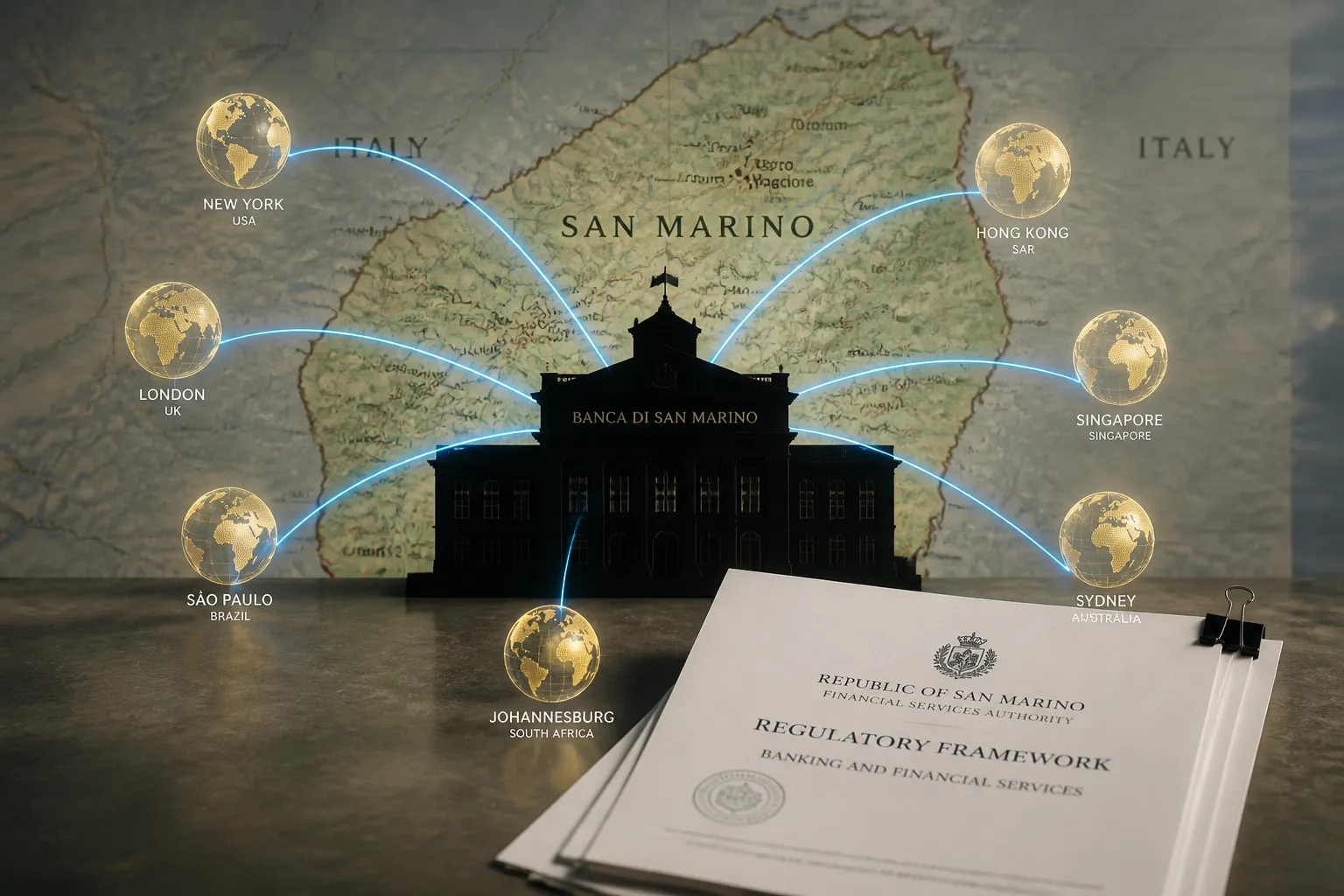
The domestic fintech ecosystem remains modest, but it is powered by a handful of key players. BKN301 Group, headquartered in San Marino, is a leading Banking‑as‑a‑Service (BaaS) and payments company. It offers embedded finance, digital payments, API banking and BaaS solutions across Europe, Africa and the Middle East, demonstrating how a San Marino‑based fintech can operate on a global scale.
Local banks have also accelerated their digital initiatives. CARISP and Banca di San Marino have expanded their online banking capabilities, while payment‑technology providers from Italy serve Sammarinese merchants, enabling modern payment acceptance with minimal friction.
Regulatory alignment with European standards is essential. Although San Marino is not an EU member, its geography makes European regulation unavoidable. Open banking under PSD2, instant payments, digital identity and embedded finance shape customer expectations within the microstate. Ongoing negotiations for closer EU association have heightened focus on regulatory alignment in financial services, lowering barriers for fintech firms and enhancing San Marino’s appeal as a specialised financial hub.
The BCSM’s role extends beyond prudential regulation. It has championed payment modernisation, financial stability and digital transformation while preserving high supervisory standards. For a jurisdiction whose international reputation is paramount, robust regulation has become a competitive asset rather than a compliance burden.
Looking forward, San Marino is unlikely to rival London, Berlin or Milan as a European fintech hub. Its strength lies in becoming a highly specialised financial jurisdiction where modern regulation, digital banking and internationally focused fintech firms coexist within a stable business environment. The republic’s strategy reflects a measured evolution rather than a disruptive overhaul, ensuring that centuries of financial and commercial history remain relevant in an increasingly digital European economy.
In sum, San Marino’s fintech trajectory is defined by regulatory rigor, digital banking adoption and the strategic use of firms like BKN301 to serve global markets. The country’s focus on efficiency, technology and regulatory credibility positions it as a niche player in the European financial landscape, offering a model for other microstates seeking to stay competitive in the digital age.
With roughly 34,000 residents and a land area of 61 square kilometres, San Marino is one of Europe’s smallest economies. Manufacturing—particularly machinery, ceramics, electronics, pharmaceuticals and other specialised industrial goods—has long been a key export driver. Tourism remains a major employer, while financial services sit alongside retail and professional services. The International Monetary Fund reports that San Marino’s GDP per capita exceeds $60,000, placing it among the continent’s wealthiest economies.
Two decades of global pressure for tax transparency, anti‑money‑laundering standards and stronger financial supervision have forced San Marino to tighten its regulatory framework. The Central Bank of the Republic of San Marino (BCSM) has taken the lead in modernising financial supervision, supporting payment infrastructure, safeguarding financial stability and steering digital transformation—all while maintaining high supervisory standards.
Digital banking is the linchpin of San Marino’s fintech strategy. Unlike many emerging markets that focus on financial inclusion, the republic already enjoys widespread bank account ownership and robust digital infrastructure. Instead, its innovation agenda targets customer experience, cost efficiency and the modernization of services. Retail and business clients now access online banking, mobile apps, electronic payments and remote customer support, aligning with consumer expectations in neighbouring Italy and the broader European Union.
The domestic fintech ecosystem remains modest, but it is powered by a handful of key players. BKN301 Group, headquartered in San Marino, is a leading Banking‑as‑a‑Service (BaaS) and payments company. It offers embedded finance, digital payments, API banking and BaaS solutions across Europe, Africa and the Middle East, demonstrating how a San Marino‑based fintech can operate on a global scale.
Local banks have also accelerated their digital initiatives. CARISP and Banca di San Marino have expanded their online banking capabilities, while payment‑technology providers from Italy serve Sammarinese merchants, enabling modern payment acceptance with minimal friction.
Regulatory alignment with European standards is essential. Although San Marino is not an EU member, its geography makes European regulation unavoidable. Open banking under PSD2, instant payments, digital identity and embedded finance shape customer expectations within the microstate. Ongoing negotiations for closer EU association have heightened focus on regulatory alignment in financial services, lowering barriers for fintech firms and enhancing San Marino’s appeal as a specialised financial hub.
The BCSM’s role extends beyond prudential regulation. It has championed payment modernisation, financial stability and digital transformation while preserving high supervisory standards. For a jurisdiction whose international reputation is paramount, robust regulation has become a competitive asset rather than a compliance burden.
Looking forward, San Marino is unlikely to rival London, Berlin or Milan as a European fintech hub. Its strength lies in becoming a highly specialised financial jurisdiction where modern regulation, digital banking and internationally focused fintech firms coexist within a stable business environment. The republic’s strategy reflects a measured evolution rather than a disruptive overhaul, ensuring that centuries of financial and commercial history remain relevant in an increasingly digital European economy.
In sum, San Marino’s fintech trajectory is defined by regulatory rigor, digital banking adoption and the strategic use of firms like BKN301 to serve global markets. The country’s focus on efficiency, technology and regulatory credibility positions it as a niche player in the European financial landscape, offering a model for other microstates seeking to stay competitive in the digital age.