What Is EPTLS? Understanding the Electronic Product Tag Labelling Scheme and the Future of Digital Product Information
As consumer electronics become increasingly sophisticated, governments, manufacturers, and technology companies face a growing challenge: how do you provide detailed product information without overwhelming packaging, increasing costs, or creating mountains of printed documentation?
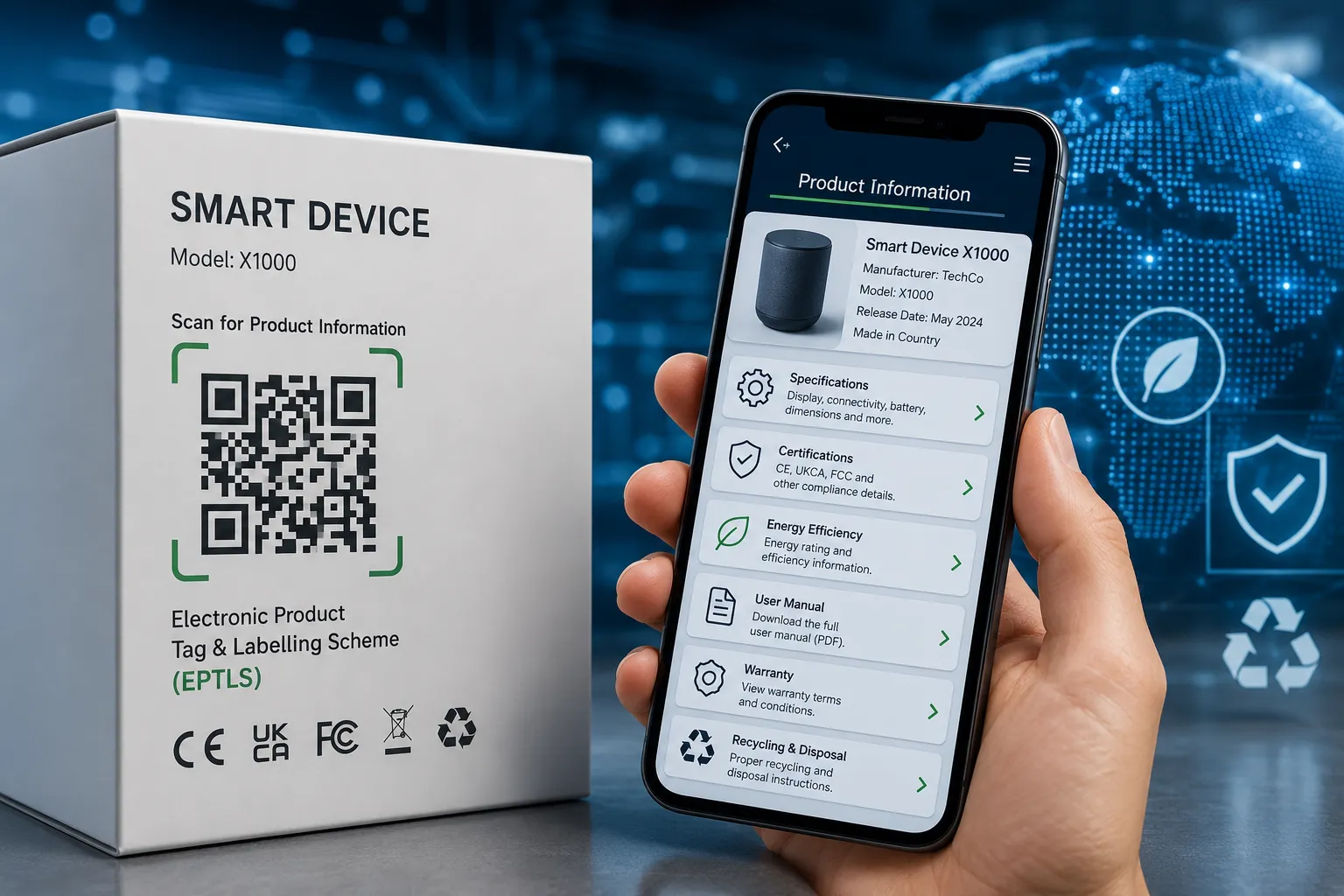
One answer has emerged through initiatives such as the Electronic Product Tag & Labelling Scheme (EPTLS), a framework designed to modernize how consumers, regulators, retailers, and manufacturers access information about electronic products.
While traditional labels have long been used to communicate safety ratings, energy efficiency, certifications, and technical specifications, digital technology is rapidly transforming how that information is delivered. EPTLS represents part of a broader movement toward electronic labeling systems that leverage databases, QR codes, digital product records, and connected technologies to make product information more accessible and easier to maintain.
The Evolution of Product Labeling
For decades, electronic products have relied on physical labels attached directly to devices or printed on packaging. These labels often contain regulatory information, serial numbers, energy ratings, safety certifications, manufacturer details, and other legally required disclosures.
The problem is that modern products are becoming more complex while available packaging space remains limited.
A smartphone may contain information related to wireless certifications, battery standards, environmental regulations, recycling requirements, import laws, warranty details, and software compliance. Attempting to display all of this information physically can be difficult and costly.
Digital labeling systems offer a solution by moving much of this information online while maintaining regulatory transparency.
Instead of relying solely on printed labels, manufacturers can provide consumers with access to detailed product information through electronic records linked by QR codes, unique identifiers, serial numbers, or online databases.
What Is EPTLS?
The Electronic Product Tag & Labelling Scheme serves as a structured framework for managing and distributing electronic product information in a digital environment.
Rather than treating labels as static pieces of packaging, EPTLS treats product information as dynamic data that can be updated, expanded, and accessed electronically.
An electronic product record may contain:
- Product specifications
- Energy efficiency ratings
- Safety certifications
- Regulatory compliance information
- Environmental disclosures
- Repairability data
- Warranty information
- Product manuals
- Software version details
- Manufacturer contact information
This approach allows consumers to access significantly more information than could reasonably fit on traditional packaging.
Why Digital Labels Matter
The rise of digital labeling is closely connected to broader technological trends affecting manufacturing and retail.
Consumers increasingly expect instant access to information through smartphones and connected devices. At the same time, governments are demanding greater transparency regarding product origins, sustainability, energy consumption, and environmental impact.
Digital labeling addresses both needs.
When a consumer scans a QR code on a product package, they can immediately access a complete digital profile that may include technical specifications, user manuals, troubleshooting guides, recycling instructions, and certification records.
This creates a more efficient experience for both manufacturers and consumers.
The Role of QR Codes
QR codes have become one of the most visible components of modern electronic labeling systems.
These machine-readable codes act as gateways between physical products and digital information systems.
A single QR code can connect users to:
- Product databases
- Regulatory documents
- Support resources
- Installation guides
- Firmware updates
- Warranty registration systems
Because QR codes are inexpensive to print and widely supported by smartphones, they have become a practical bridge between physical and digital product information.
As adoption grows, many industry observers believe QR-based product identification will become standard across numerous sectors.
Supporting Regulatory Compliance
One of the strongest arguments for electronic labeling systems is regulatory compliance.
Manufacturers often sell products across multiple countries, each with different labeling requirements.
Managing these requirements through physical packaging alone can be expensive and inefficient.
Electronic labeling systems allow manufacturers to maintain centralized information repositories while ensuring that consumers and regulators have access to current information.
When regulations change, digital records can often be updated without redesigning packaging or manufacturing processes.
This flexibility helps companies adapt more quickly to evolving standards.
Sustainability Benefits
Digital product labeling may also contribute to sustainability goals.
Traditional product packaging often includes printed manuals, warranty cards, technical inserts, safety documentation, and regulatory disclosures.
Many of these documents are discarded shortly after purchase.
Electronic labeling allows manufacturers to reduce paper consumption by providing digital access to information instead of printing large volumes of documentation.
While digital systems still require infrastructure and energy resources, reducing unnecessary printing can help lower material usage throughout the supply chain.
This aligns with broader industry efforts to reduce waste and improve environmental performance.
Digital Product Passports and the Next Generation of Labeling
The concept behind EPTLS is increasingly connected to discussions surrounding digital product passports.
A digital product passport is an electronic record that follows a product throughout its lifecycle.
These records may contain information about:
- Manufacturing origins
- Materials used
- Environmental impact
- Repair history
- Ownership records
- Recycling requirements
- Compliance documentation
Governments and industry groups around the world are actively exploring digital passport systems as tools for improving transparency and supporting circular economy initiatives.
Future electronic labeling frameworks may evolve into comprehensive digital identity systems for physical products.
Benefits for Consumers
For consumers, digital labeling offers several practical advantages.
Information becomes easier to find, easier to update, and easier to search.
Instead of storing paper manuals for years, users can access digital resources whenever needed.
Consumers may also benefit from:
- Faster product support
- Easier troubleshooting
- More transparent specifications
- Better sustainability information
- Improved warranty access
- Enhanced repair guidance
As connected devices become increasingly common, consumers are likely to expect digital access to product information as a standard feature.
Challenges and Considerations
Despite its advantages, electronic labeling is not without challenges.
Digital systems must remain accessible to users who may not have reliable internet access or smartphones.
Privacy concerns must also be addressed when product registration systems collect user information.
Additionally, governments must balance innovation with accessibility to ensure that critical safety information remains available to all consumers.
The success of electronic labeling initiatives ultimately depends on thoughtful implementation, interoperability, and user trust.
The Future of Product Information
The shift toward electronic labeling reflects a larger transformation taking place across technology, manufacturing, and retail.
Products are becoming increasingly connected, data-driven, and digitally managed.
Information that once existed only on packaging is now becoming part of broader digital ecosystems that connect manufacturers, retailers, regulators, and consumers.
As technologies such as QR codes, cloud databases, digital product passports, and supply-chain tracking systems continue to evolve, frameworks like the Electronic Product Tag & Labelling Scheme provide a glimpse into the future of product transparency.
In the years ahead, the concept of a product label may expand far beyond a printed sticker. Instead, every electronic device may carry a rich digital identity capable of providing real-time information throughout its entire lifecycle.
The future of labeling is no longer limited by packaging space. Increasingly, it lives in the cloud.








