Blab Tech
Airbus Helicopters and Voyageur Aviation Sign First Canadian Order for U030 Flexrotor UAV
On July 21 2026, a quiet ceremony at the Farnborough International Airshow marked the first Canadian purchase of the Airbus U030 Flexrotor, setting the stage for a new era of unmanned surveillance.
The agreement, signed by Airbus Helicopters and Voyageur Aviation, made Voyageur the platform’s Canadian launch customer. It followed a memorandum of understanding signed at CANSEC in May, a step that was designed to support Canada’s defence objectives.
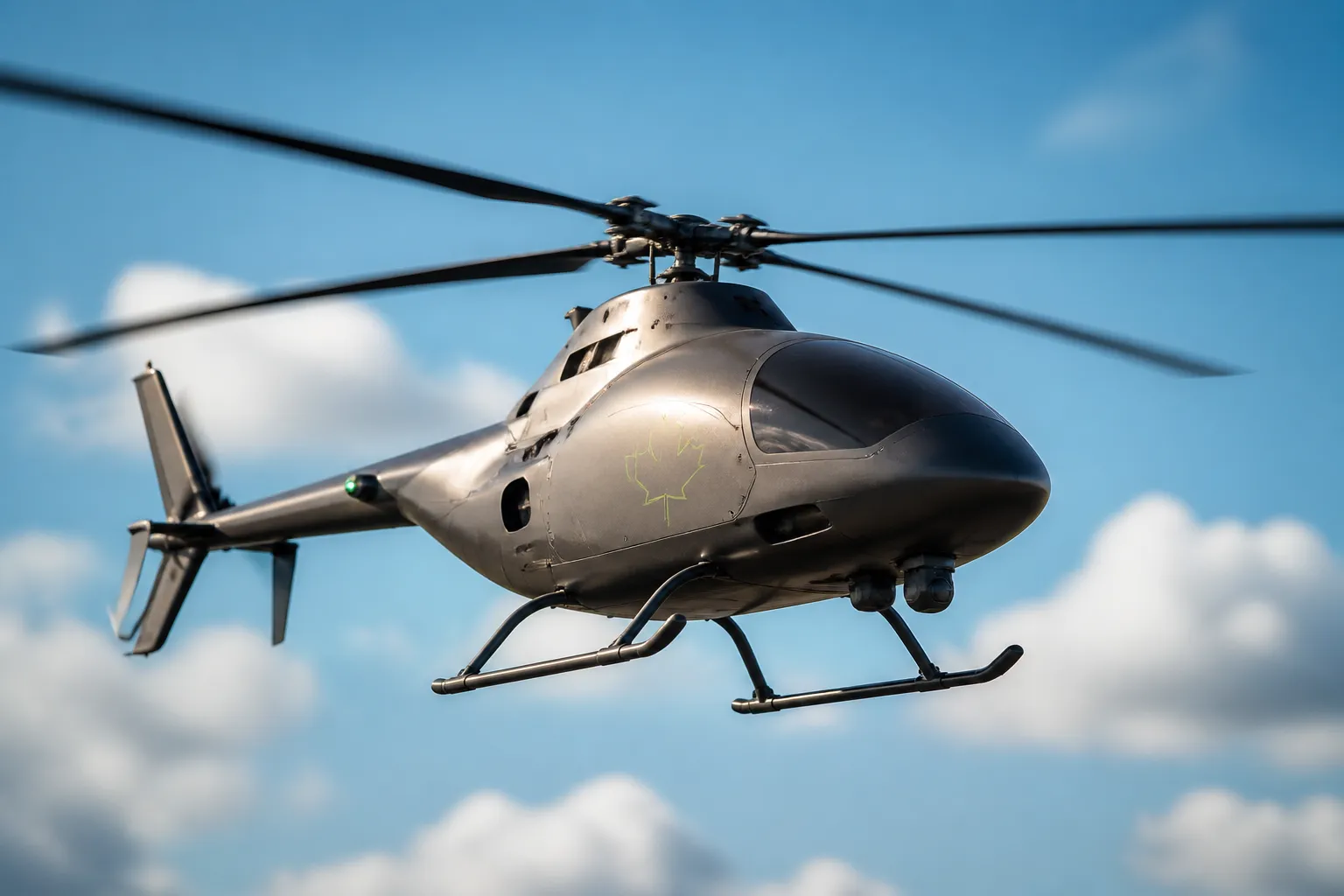
The U030 Flexrotor is a Group 2 tactical vertical‑take‑off and landing (VTOL) system built for intelligence, surveillance, target acquisition and reconnaissance (ISTAR) missions in military, parapublic and commercial roles. With a maximum launch weight of 25 kg, Airbus claims the aircraft can fly for more than 12 hours in standard configurations. Its launch and recovery footprint measures 3.7 m by 3.7 m, and the system can be launched and recovered autonomously from land or sea. Payload capacity is sufficient for electro‑optical sensors and other advanced equipment, allowing the UAV to support operations ranging from Arctic ice navigation and forest‑fire surveillance to infrastructure monitoring and law‑enforcement missions.
The Flexrotor has already proven itself in harsh, high‑threat and GPS‑denied environments. Its small footprint makes it attractive for shipborne use on vessels that lack flight decks or arrestor equipment.
The system was originally developed by Aerovel, a U.S. company founded in 2006 by Tad McGeer, who also pioneered the Insitu ScanEagle. Airbus acquired Aerovel in 2024, added the system to its uncrewed portfolio, and redesignated it the U030. The acquisition expanded Airbus Helicopters’ reach into the tactical UAS market and positioned the Flexrotor as a key component of the company’s next‑generation tactical capabilities.
Voyageur Aviation, headquartered in North Bay, Ontario, operates a fleet of fixed‑ and rotary‑wing aircraft on contract and specialist mission work and is part of Chorus Aviation. The company’s long history of aircraft operations, maintenance, training and sustainment expertise provides a solid foundation for the safe and effective operation of the Flexrotor. “This purchase represents a significant advancement in Voyageur’s ISR strategy and an important first for the Canadian market,” said Cory Cousineau, president of Voyageur. “As the first Flexrotor operator in Canada, Voyageur is well positioned to introduce and operationalise this new technology within the realities of Canada’s operating environment.”
Dwayne Charette, president of Airbus Helicopters in Canada, said the deal “underscores Airbus’ commitment to delivering next‑generation tactical capabilities to the region.” He added that operators need systems that deliver greater reach, persistence and situational awareness, and that the Flexrotor’s advanced design and potential to support crewed‑uncrewed teaming represents a critical shift in how complex ISTAR missions can be executed.
The order marks the first Canadian deployment of the U030 Flexrotor and could pave the way for further procurement by Canadian forces. The system’s autonomous launch and recovery, long endurance and small footprint make it well suited to expeditionary operations, including Arctic patrols, forest‑fire monitoring and maritime surveillance. While the agreement does not yet disclose the quantity or delivery schedule, both Airbus Helicopters Canada, headquartered at Fort Erie, Ontario, and Voyageur Aviation will work to integrate the UAV into Canadian operational environments. The purchase follows the May CANSEC memorandum and supports Canada’s broader defence objectives, but further details on training, certification and future orders remain to be announced.
The agreement, signed by Airbus Helicopters and Voyageur Aviation, made Voyageur the platform’s Canadian launch customer. It followed a memorandum of understanding signed at CANSEC in May, a step that was designed to support Canada’s defence objectives.
The U030 Flexrotor is a Group 2 tactical vertical‑take‑off and landing (VTOL) system built for intelligence, surveillance, target acquisition and reconnaissance (ISTAR) missions in military, parapublic and commercial roles. With a maximum launch weight of 25 kg, Airbus claims the aircraft can fly for more than 12 hours in standard configurations. Its launch and recovery footprint measures 3.7 m by 3.7 m, and the system can be launched and recovered autonomously from land or sea. Payload capacity is sufficient for electro‑optical sensors and other advanced equipment, allowing the UAV to support operations ranging from Arctic ice navigation and forest‑fire surveillance to infrastructure monitoring and law‑enforcement missions.
The Flexrotor has already proven itself in harsh, high‑threat and GPS‑denied environments. Its small footprint makes it attractive for shipborne use on vessels that lack flight decks or arrestor equipment.
The system was originally developed by Aerovel, a U.S. company founded in 2006 by Tad McGeer, who also pioneered the Insitu ScanEagle. Airbus acquired Aerovel in 2024, added the system to its uncrewed portfolio, and redesignated it the U030. The acquisition expanded Airbus Helicopters’ reach into the tactical UAS market and positioned the Flexrotor as a key component of the company’s next‑generation tactical capabilities.
Voyageur Aviation, headquartered in North Bay, Ontario, operates a fleet of fixed‑ and rotary‑wing aircraft on contract and specialist mission work and is part of Chorus Aviation. The company’s long history of aircraft operations, maintenance, training and sustainment expertise provides a solid foundation for the safe and effective operation of the Flexrotor. “This purchase represents a significant advancement in Voyageur’s ISR strategy and an important first for the Canadian market,” said Cory Cousineau, president of Voyageur. “As the first Flexrotor operator in Canada, Voyageur is well positioned to introduce and operationalise this new technology within the realities of Canada’s operating environment.”
Dwayne Charette, president of Airbus Helicopters in Canada, said the deal “underscores Airbus’ commitment to delivering next‑generation tactical capabilities to the region.” He added that operators need systems that deliver greater reach, persistence and situational awareness, and that the Flexrotor’s advanced design and potential to support crewed‑uncrewed teaming represents a critical shift in how complex ISTAR missions can be executed.
The order marks the first Canadian deployment of the U030 Flexrotor and could pave the way for further procurement by Canadian forces. The system’s autonomous launch and recovery, long endurance and small footprint make it well suited to expeditionary operations, including Arctic patrols, forest‑fire monitoring and maritime surveillance. While the agreement does not yet disclose the quantity or delivery schedule, both Airbus Helicopters Canada, headquartered at Fort Erie, Ontario, and Voyageur Aviation will work to integrate the UAV into Canadian operational environments. The purchase follows the May CANSEC memorandum and supports Canada’s broader defence objectives, but further details on training, certification and future orders remain to be announced.








