Blab Tech
M5Stack M5StickC Plus: Tiny ESP32 Board Packs WiFi, Bluetooth, and a 1.14-inch Display in a 48-mm Pocket-Size Package
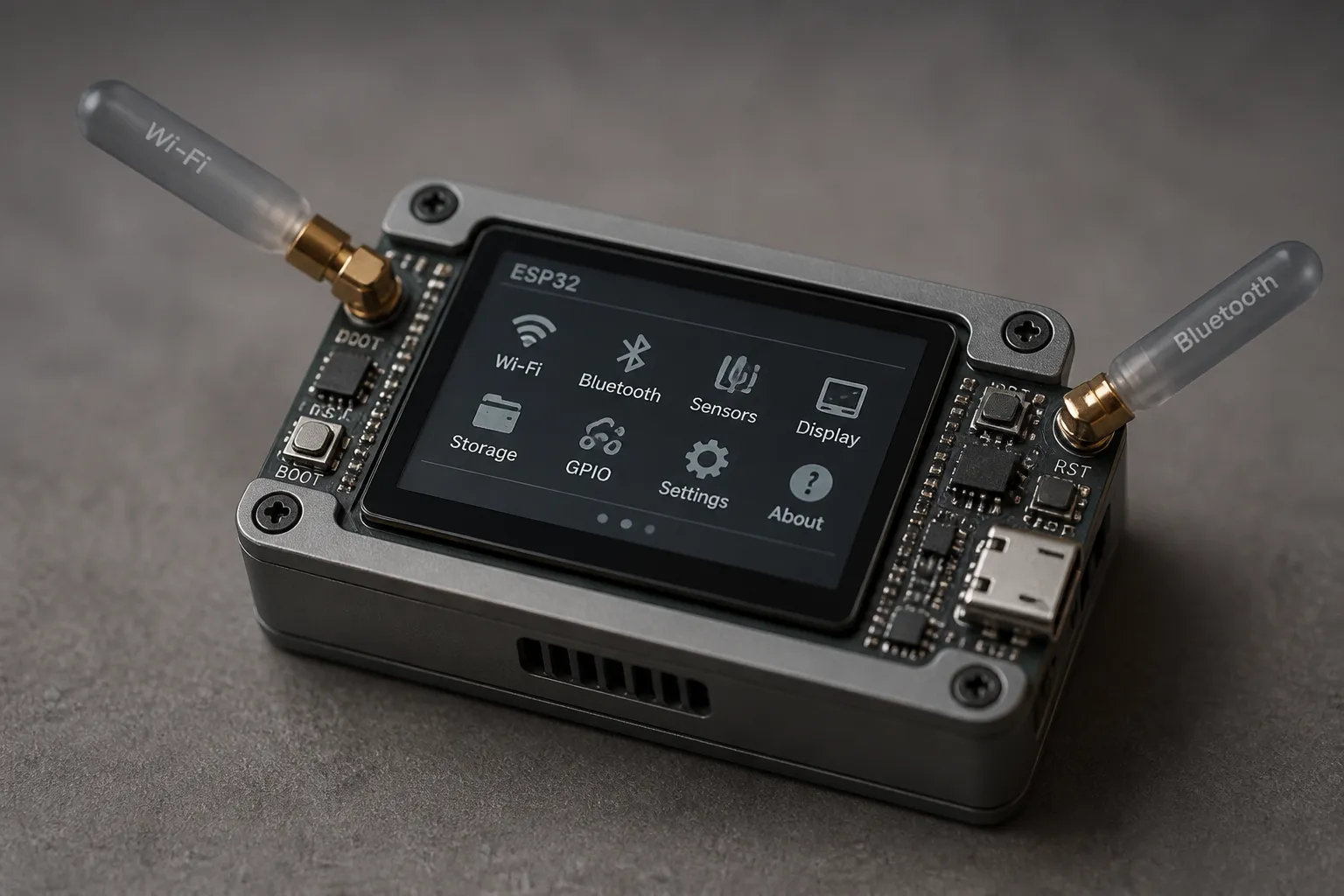
The M5Stack M5StickC Plus is a compact development board that integrates an ESP32‑PICO‑D4 microcontroller, a 1.14‑inch color TFT screen, and a 120 mAh lithium battery into a 48 × 24 × 13.5 mm enclosure that weighs less than 17 g. The device is marketed as a finished gadget rather than a bare board, featuring two programmable buttons, a side logo, and a Grove expansion port on the back.
The battery is charged through a USB‑C connector. In typical use, the device delivers a few hours of operation before the battery must be recharged, with actual runtime dependent on screen brightness and wireless activity. The board powers on within a few seconds of pressing the reset button and shuts down quickly when the button is held for six seconds, reducing the chance of accidental power‑off.
At its core is the ESP32‑PICO‑D4, which can run at up to 240 MHz and includes built‑in Wi‑Fi and Bluetooth 4.2. The chip provides 4 MB of flash memory and 512 KB of RAM, giving developers enough space to run simple scripts or more complex applications. Additional on‑board peripherals include a six‑axis motion sensor, a microphone, a real‑time clock, a red LED, an infrared transmitter, and a passive buzzer.
Programming the M5StickC Plus is straightforward. The free UiFlow tool offers a drag‑and‑drop block interface that is suitable for beginners, while more experienced users can employ the Arduino IDE, PlatformIO, or Espressif’s native ESP‑IDF environment. Code is uploaded through the same USB‑C cable used for charging; no extra drivers are required beyond the standard FTDI virtual COM port package.
The board’s small size does not limit its versatility. A demo sketch included with the device reproduces the Windows XP launch sequence on the screen, playing the startup tones through the buzzer. The graphics and sounds are stored as small data arrays that fit within the board’s limited memory, demonstrating the level of detail that can be achieved on such a tiny platform.
The Grove expansion port follows a standard that allows a wide range of inexpensive add‑on modules to be connected with a single wire. Because the connectors are plug‑and‑play, prototypes can be assembled in minutes without soldering. Users have built portable network testers that scan Wi‑Fi networks, or have turned the device into a wearable that displays step counts or heart‑rate data when attached to a watch strap.
According to a video review, the M5StickC Plus has also been used for Wi‑Fi pentesting, providing a portable platform for network analysis. The device’s combination of wireless connectivity, sensor suite, and expandable form factor makes it attractive to hobbyists, educators, and developers working on Internet‑of‑Things or edge‑AI projects.
The board is sold for roughly $30, positioning it as an affordable entry point for developers who need a fully featured, battery‑powered ESP32 module. Its open‑source firmware and community‑driven libraries further lower the barrier to entry.
At present, the M5Stack M5StickC Plus is available through online marketplaces and the manufacturer’s website. No major regulatory filings or court actions have been reported, and the product continues to receive updates from the community. The device remains a popular choice for developers seeking a small, versatile, and inexpensive ESP32‑based platform.
The battery is charged through a USB‑C connector. In typical use, the device delivers a few hours of operation before the battery must be recharged, with actual runtime dependent on screen brightness and wireless activity. The board powers on within a few seconds of pressing the reset button and shuts down quickly when the button is held for six seconds, reducing the chance of accidental power‑off.
At its core is the ESP32‑PICO‑D4, which can run at up to 240 MHz and includes built‑in Wi‑Fi and Bluetooth 4.2. The chip provides 4 MB of flash memory and 512 KB of RAM, giving developers enough space to run simple scripts or more complex applications. Additional on‑board peripherals include a six‑axis motion sensor, a microphone, a real‑time clock, a red LED, an infrared transmitter, and a passive buzzer.
Programming the M5StickC Plus is straightforward. The free UiFlow tool offers a drag‑and‑drop block interface that is suitable for beginners, while more experienced users can employ the Arduino IDE, PlatformIO, or Espressif’s native ESP‑IDF environment. Code is uploaded through the same USB‑C cable used for charging; no extra drivers are required beyond the standard FTDI virtual COM port package.
The board’s small size does not limit its versatility. A demo sketch included with the device reproduces the Windows XP launch sequence on the screen, playing the startup tones through the buzzer. The graphics and sounds are stored as small data arrays that fit within the board’s limited memory, demonstrating the level of detail that can be achieved on such a tiny platform.
The Grove expansion port follows a standard that allows a wide range of inexpensive add‑on modules to be connected with a single wire. Because the connectors are plug‑and‑play, prototypes can be assembled in minutes without soldering. Users have built portable network testers that scan Wi‑Fi networks, or have turned the device into a wearable that displays step counts or heart‑rate data when attached to a watch strap.
According to a video review, the M5StickC Plus has also been used for Wi‑Fi pentesting, providing a portable platform for network analysis. The device’s combination of wireless connectivity, sensor suite, and expandable form factor makes it attractive to hobbyists, educators, and developers working on Internet‑of‑Things or edge‑AI projects.
The board is sold for roughly $30, positioning it as an affordable entry point for developers who need a fully featured, battery‑powered ESP32 module. Its open‑source firmware and community‑driven libraries further lower the barrier to entry.
At present, the M5Stack M5StickC Plus is available through online marketplaces and the manufacturer’s website. No major regulatory filings or court actions have been reported, and the product continues to receive updates from the community. The device remains a popular choice for developers seeking a small, versatile, and inexpensive ESP32‑based platform.








