Blab Tech
Jakarta Moves Toward Source-Based Waste Management, Partners with Universities for New Technologies
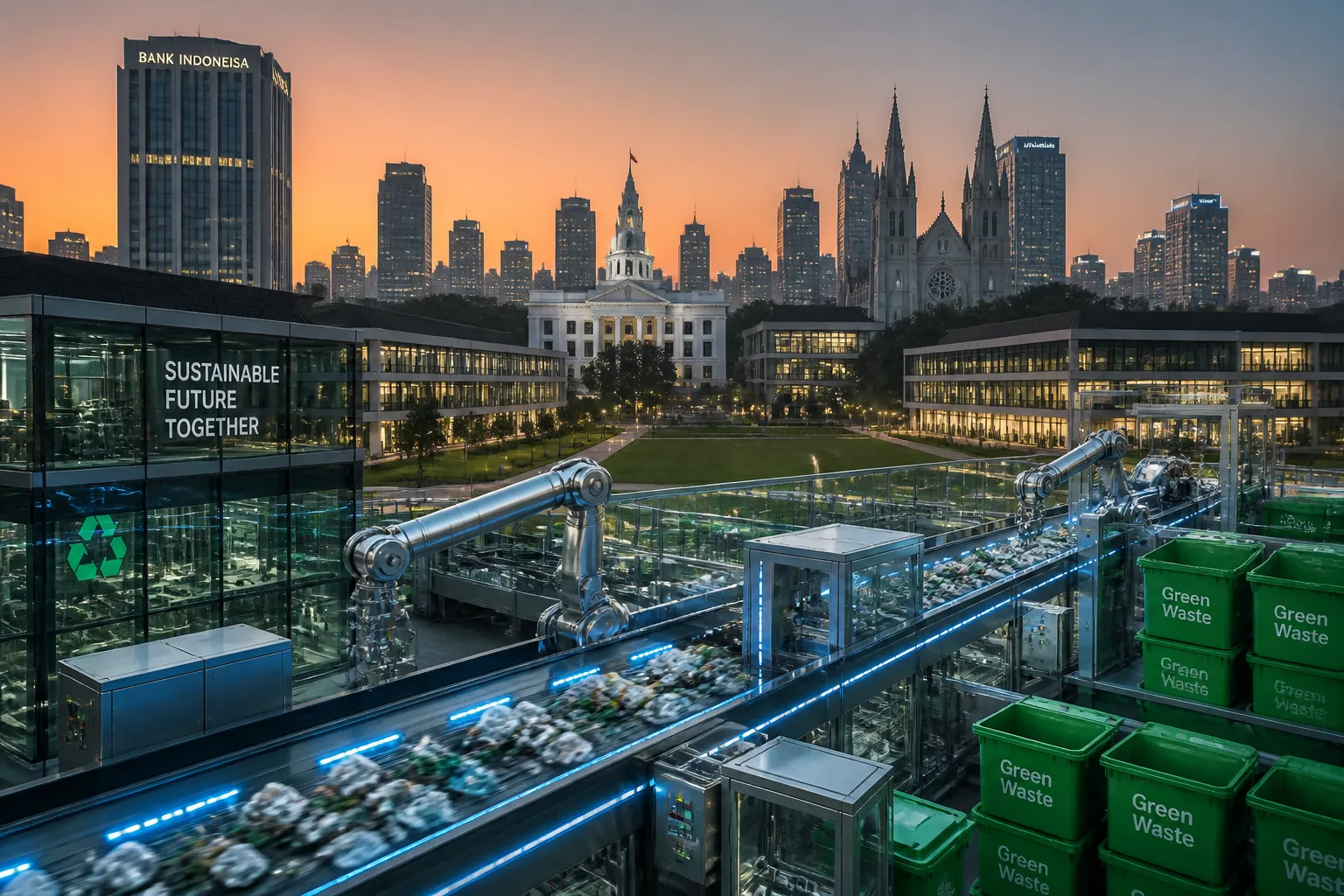
Jakarta is turning the tide on trash, with city leaders turning to universities for the tech that will separate, transform, and power the metropolis. In a Friday briefing, Minister of Higher Education, Science and Technology Brian Yuliarto confirmed that Jakarta will follow President Prabowo Subianto’s directive to shift toward source‑based sorting and processing.
Yuliarto emphasized that effective waste management begins at the point of generation. “Proper segregation at the source is essential for the performance of downstream technologies,” he said. He highlighted a handful of university‑derived innovations that could help Jakarta meet its goals: biodigesters that turn organic waste into biogas, composting systems that convert food and green waste into fertilizer, and hydrothermal carbonization (HTC) units that turn wet biomass into carbon‑rich pellets suitable for energy or soil amendment.
The minister also stressed the value of a decentralized approach. By strengthening regional processing facilities, Jakarta can cut transportation costs and make the entire system more resilient.
Jakarta Governor Pramono Anung echoed the shift, describing the city’s move from a “transport‑and‑dump” model to a “sort‑transport‑process” framework. The provincial government is already developing waste‑processing plants, expanding 3R (reduce‑reuse‑recycle) collection sites, and exploring refuse‑derived fuel (RDF) and waste‑to‑energy (WTE) facilities. Anung said the government is opening doors for cooperation with universities, state‑owned enterprises, and private partners to test proven models from pilot projects.
The city’s progress is measurable. Jakarta’s waste‑management rate has risen to 26 percent, up from 2024 levels, according to reports. To build on that momentum, the city plans to break ground on a 40‑MW waste‑to‑energy plant—a project estimated at US$1 billion. The plant is part of a broader effort to launch five WTE projects by June 2026.
The Danantara Indonesia project, announced in May, prioritizes proven technologies for waste‑to‑energy conversion. The company intends to build a plant that will use RDF and other waste streams to generate electricity, thereby reducing landfill use and greenhouse‑gas emissions. The project is expected to contribute to Jakarta’s goal of cutting the volume of waste sent to temporary dumps.
Biodigesters, composting units, and HTC are being evaluated for their suitability to Jakarta’s waste characteristics and local infrastructure. Each technology offers a different pathway for turning waste into useful products: biogas for power, compost for agriculture, and carbon‑rich pellets for energy or soil amendment.
The collaboration between the central and provincial governments, universities, and industry partners aims to create a more efficient, sustainable waste‑management system that reduces environmental impact while supporting the city’s rapid urban growth. The next steps include pilot testing of the identified technologies, securing funding for the 40‑MW plant, and finalizing agreements with private partners.
The Ministry of Higher Education, Science and Technology has already identified several university research projects that have demonstrated feasibility in laboratory and small‑scale pilot settings. By integrating these innovations into Jakarta’s municipal framework, the government hopes to accelerate technology transfer and build local expertise in waste‑processing engineering. The universities involved will also monitor performance metrics—such as biogas yield, compost quality, and carbon conversion rates—to ensure compliance with environmental standards.
In short, Jakarta is charting a new course that blends academic research with municipal action. The outcome of these initiatives will determine whether the city can meet the President’s one‑year deadline for cleaning up the country’s waste problem, and whether the models developed here will serve as a blueprint for other Indonesian cities.
Yuliarto emphasized that effective waste management begins at the point of generation. “Proper segregation at the source is essential for the performance of downstream technologies,” he said. He highlighted a handful of university‑derived innovations that could help Jakarta meet its goals: biodigesters that turn organic waste into biogas, composting systems that convert food and green waste into fertilizer, and hydrothermal carbonization (HTC) units that turn wet biomass into carbon‑rich pellets suitable for energy or soil amendment.
The minister also stressed the value of a decentralized approach. By strengthening regional processing facilities, Jakarta can cut transportation costs and make the entire system more resilient.
Jakarta Governor Pramono Anung echoed the shift, describing the city’s move from a “transport‑and‑dump” model to a “sort‑transport‑process” framework. The provincial government is already developing waste‑processing plants, expanding 3R (reduce‑reuse‑recycle) collection sites, and exploring refuse‑derived fuel (RDF) and waste‑to‑energy (WTE) facilities. Anung said the government is opening doors for cooperation with universities, state‑owned enterprises, and private partners to test proven models from pilot projects.
The city’s progress is measurable. Jakarta’s waste‑management rate has risen to 26 percent, up from 2024 levels, according to reports. To build on that momentum, the city plans to break ground on a 40‑MW waste‑to‑energy plant—a project estimated at US$1 billion. The plant is part of a broader effort to launch five WTE projects by June 2026.
The Danantara Indonesia project, announced in May, prioritizes proven technologies for waste‑to‑energy conversion. The company intends to build a plant that will use RDF and other waste streams to generate electricity, thereby reducing landfill use and greenhouse‑gas emissions. The project is expected to contribute to Jakarta’s goal of cutting the volume of waste sent to temporary dumps.
Biodigesters, composting units, and HTC are being evaluated for their suitability to Jakarta’s waste characteristics and local infrastructure. Each technology offers a different pathway for turning waste into useful products: biogas for power, compost for agriculture, and carbon‑rich pellets for energy or soil amendment.
The collaboration between the central and provincial governments, universities, and industry partners aims to create a more efficient, sustainable waste‑management system that reduces environmental impact while supporting the city’s rapid urban growth. The next steps include pilot testing of the identified technologies, securing funding for the 40‑MW plant, and finalizing agreements with private partners.
The Ministry of Higher Education, Science and Technology has already identified several university research projects that have demonstrated feasibility in laboratory and small‑scale pilot settings. By integrating these innovations into Jakarta’s municipal framework, the government hopes to accelerate technology transfer and build local expertise in waste‑processing engineering. The universities involved will also monitor performance metrics—such as biogas yield, compost quality, and carbon conversion rates—to ensure compliance with environmental standards.
In short, Jakarta is charting a new course that blends academic research with municipal action. The outcome of these initiatives will determine whether the city can meet the President’s one‑year deadline for cleaning up the country’s waste problem, and whether the models developed here will serve as a blueprint for other Indonesian cities.