Blab Tech
Infistar and Arciplug Forge Joint Venture to Accelerate Indias Compressed Biogas Growth
In a bold step toward a cleaner energy future, Infistar Renewables Pvt Ltd and Finland‑based Arciplug Oy announced the formation of Arcistar Bioenergy Pvt Ltd. The new joint venture will pour roughly ₹50 crore into a demonstration compressed biogas (CBG) plant in Gujarat’s Gandhinagar district, positioning itself at the heart of India’s rapidly expanding green‑fuel market.
The CBG sector, valued today at about ₹8,000‑9,000 crore, is expected to grow to ₹25,000‑30,000 crore by 2032, analysts note. Infistar’s chairman and managing director, Suhrid V Sarabhai, told businessline that compressed biogas is emerging as a key alternative to imported liquefied natural gas (LNG). He added that Arcistar plans to sell 150 modular plug‑flow reactors across India within the next five years.
Arcistar’s reactors are built on Arciplug’s patented plug‑flow technology, which eliminates the need for additional water when Napier grass is used as feedstock. The design can be commissioned in four to five months—far shorter than the 12‑18 months typical of conventional CBG projects. Reported benefits include a 20‑50 percent increase in methane yields and a 30‑35 percent reduction in electricity consumption. The reactors are versatile, handling more than 100 feedstock types such as agricultural residues, municipal solid waste, paddy straw, press mud, cotton residue, fruit and vegetable waste, poultry litter and fish waste.
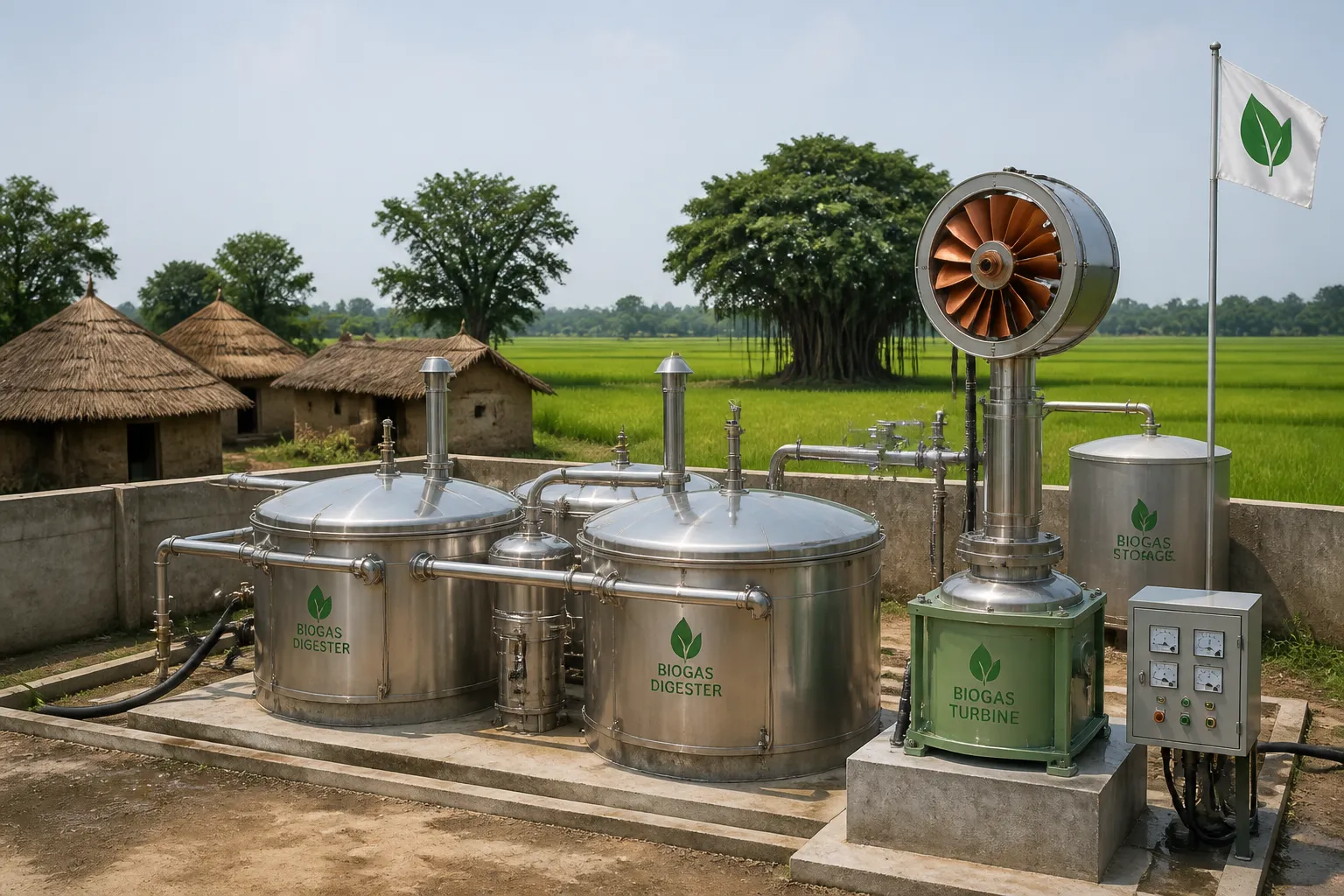
The 60‑acre demonstration site will operate under a circular‑economy model. Napier grass will be cultivated on‑site, solar power will meet the plant’s energy needs, and organic fertilizer will be produced as a by‑product. The compressed biogas generated will be supplied to the local city gas distributor through a 15‑year offtake agreement. According to the joint venture, 99 percent of the plant’s components will be sourced domestically, with only the automation hardware imported.
Arciplug will hold a 47 percent stake in Arcistar, while Infistar will own the remaining equity. Vice President Jari Valtanen of Arciplug said the reactors are “proven in Europe and in India” and that they are designed for an operating life of around 30 years.
The partnership seeks to make smaller CBG projects commercially viable for a broader customer base, especially micro‑, small‑ and medium‑enterprise (MSME) operators and private developers who have found conventional biogas plants capital‑intensive and slow to execute. By offering a modular, plug‑flow solution, Arcistar intends to accelerate the deployment of green fuels across industrial, municipal and agricultural sectors.
At present, the joint venture is focused on establishing the demonstration project and securing the necessary permits. The company has not yet disclosed a timeline for the first commercial deployment of its modular reactors, but it has set a target of 150 units sold within five years.
The development underscores India’s broader push to expand renewable energy infrastructure and reduce dependence on imported fossil fuels. While the joint venture’s success will hinge on regulatory approvals, market uptake and the ability to deliver the promised performance gains, it represents a significant step toward scaling compressed biogas as a viable green fuel.
The CBG sector, valued today at about ₹8,000‑9,000 crore, is expected to grow to ₹25,000‑30,000 crore by 2032, analysts note. Infistar’s chairman and managing director, Suhrid V Sarabhai, told businessline that compressed biogas is emerging as a key alternative to imported liquefied natural gas (LNG). He added that Arcistar plans to sell 150 modular plug‑flow reactors across India within the next five years.
Arcistar’s reactors are built on Arciplug’s patented plug‑flow technology, which eliminates the need for additional water when Napier grass is used as feedstock. The design can be commissioned in four to five months—far shorter than the 12‑18 months typical of conventional CBG projects. Reported benefits include a 20‑50 percent increase in methane yields and a 30‑35 percent reduction in electricity consumption. The reactors are versatile, handling more than 100 feedstock types such as agricultural residues, municipal solid waste, paddy straw, press mud, cotton residue, fruit and vegetable waste, poultry litter and fish waste.
The 60‑acre demonstration site will operate under a circular‑economy model. Napier grass will be cultivated on‑site, solar power will meet the plant’s energy needs, and organic fertilizer will be produced as a by‑product. The compressed biogas generated will be supplied to the local city gas distributor through a 15‑year offtake agreement. According to the joint venture, 99 percent of the plant’s components will be sourced domestically, with only the automation hardware imported.
Arciplug will hold a 47 percent stake in Arcistar, while Infistar will own the remaining equity. Vice President Jari Valtanen of Arciplug said the reactors are “proven in Europe and in India” and that they are designed for an operating life of around 30 years.
The partnership seeks to make smaller CBG projects commercially viable for a broader customer base, especially micro‑, small‑ and medium‑enterprise (MSME) operators and private developers who have found conventional biogas plants capital‑intensive and slow to execute. By offering a modular, plug‑flow solution, Arcistar intends to accelerate the deployment of green fuels across industrial, municipal and agricultural sectors.
At present, the joint venture is focused on establishing the demonstration project and securing the necessary permits. The company has not yet disclosed a timeline for the first commercial deployment of its modular reactors, but it has set a target of 150 units sold within five years.
The development underscores India’s broader push to expand renewable energy infrastructure and reduce dependence on imported fossil fuels. While the joint venture’s success will hinge on regulatory approvals, market uptake and the ability to deliver the promised performance gains, it represents a significant step toward scaling compressed biogas as a viable green fuel.








