Blab Tech
GForce Launches Official Sequential Prophet-5 Plugin with Full MPE and Dual-Layer Architecture
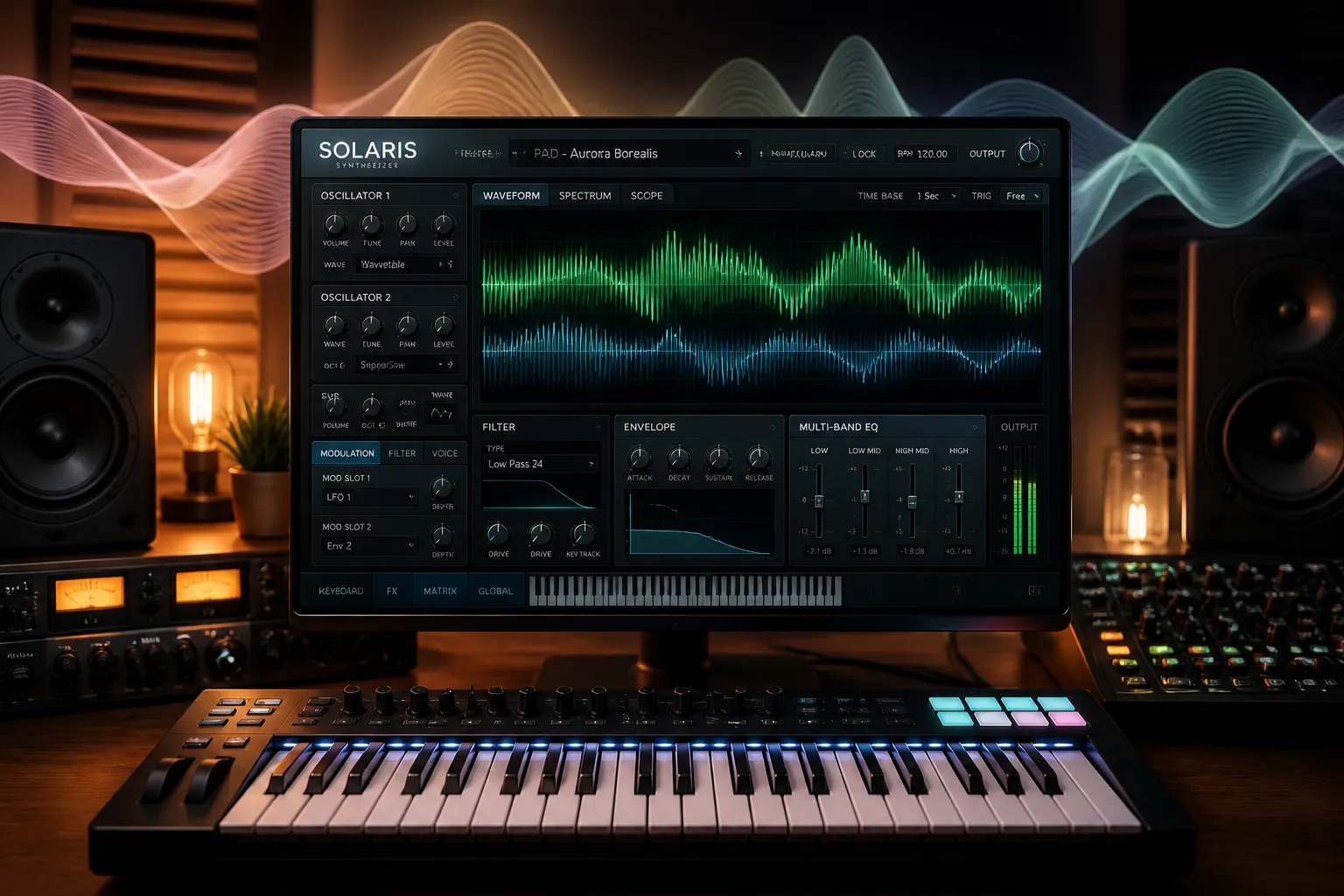
A new chapter in analog nostalgia opens as GForce Software releases the first official software emulation of Sequential’s 1978 Prophet‑5, the pioneer programmable polyphonic synthesizer. The plugin, available as VST, AU, AAX, and standalone, adds contemporary features—MIDI Polyphonic Expression (MPE), a dual‑layer architecture, and a robust suite of effects—while faithfully preserving the original hardware’s sonic character.
The Prophet‑5, conceived by Dave Smith and John Bowen, introduced programmable memory to polyphonic synthesis in 1978. Since that debut, the instrument has been emulated by several companies, most notably Native Instruments’ Pro‑Five, but this marks the first time Sequential has licensed the design for a software product.
According to the review, the plugin recreates the oscillator, filter, and mixer circuitry of the Rev 1, Rev 2, and Rev 3 hardware revisions, including the distinct SSM and Curtis filter designs. Key technical details include an expanded LFO that supports clock sync and sample‑and‑hold mode, 460 custom effects, and the original 38 factory presets from 1978.
GForce’s X‑Modifiers system, developed in-house, allows envelopes and LFOs to be routed to almost any parameter, delivering a high degree of modulation flexibility. The dual‑layer architecture lets users stack two Prophet‑5 instances within a single plugin, mirroring the practice of pairing two hardware units.
MPE support is a significant addition. The plugin can assign poly‑phonic pitch and timbre to individual notes, enabling expressive performance with controllers such as the Novation Launch Control XL 2 or Ableton Push 3. The ability to use MPE also means the Prophet‑5 can automatically support Ableton Live’s tuning systems.
The effects section contains chorus, phaser, filter, distortion, tremolo, compressor (assignable to two slots), delay, reverb, and pan spread. GForce’s signature delay and reverb are included, and two user‑selectable effect slots are added for further flexibility. The review emphasizes that the effects are integral to the package rather than peripheral.
Remi Engelen, a developer at GForce, explained the modeling process in an interview. He said the team spent extensive time with the hardware to capture subtle differences between revisions, such as the minimum cutoff and curve variations of the Rev 1/2 filter compared to Rev 3. Engelen highlighted that the model also accounts for how resonance, distortion, and biasing change with cutoff frequency and oscillator level, which is critical for achieving a Prophet‑like sound.
Engelen also discussed the collaboration with Sequential. He said, “It is a privilege to have been selected by Sequential to develop the first ever official Prophet‑5 software instrument. The brand is iconic and the instrument has shaped countless records over the years. It has been an incredible project to work on.” He added that Sequential’s involvement helped the team focus on the instrument’s unique architecture and guided the final review.
The plugin is priced at £99.99 (US$119.99, €119.99) with an introductory price of £69.99 (US$83.99, €83.99) until the end of July. It is available for macOS and Windows, with a standalone version. The review notes that GForce has not yet released a Linux version.
For producers and musicians who value the Prophet‑5’s legacy, the plugin offers a comprehensive and authentic digital alternative. While other emulations exist, the review argues that GForce’s version provides a more complete and detailed package, particularly because it carries the official Sequential endorsement.
The release comes at a time when software emulations of classic hardware are increasingly common, and the addition of MPE and dual‑layer support positions the plugin as a versatile tool for modern production workflows. The current status is that the plugin is available for purchase and download, with no pending regulatory actions or court proceedings. Sequential’s recent acquisition by Focusrite and the return of the Sequential trademark to Dave Smith Instruments add context to the brand’s renewed focus on software.
In summary, GForce’s official Prophet‑5 plugin delivers a faithful recreation of the original synthesizer with modern enhancements, including MPE, dual‑layer architecture, and an expanded effects suite. The product is available for purchase through GForce’s website and major plugin distributors, and it represents a significant addition to the catalog of software instruments that preserve classic analog sounds.
The Prophet‑5, conceived by Dave Smith and John Bowen, introduced programmable memory to polyphonic synthesis in 1978. Since that debut, the instrument has been emulated by several companies, most notably Native Instruments’ Pro‑Five, but this marks the first time Sequential has licensed the design for a software product.
According to the review, the plugin recreates the oscillator, filter, and mixer circuitry of the Rev 1, Rev 2, and Rev 3 hardware revisions, including the distinct SSM and Curtis filter designs. Key technical details include an expanded LFO that supports clock sync and sample‑and‑hold mode, 460 custom effects, and the original 38 factory presets from 1978.
GForce’s X‑Modifiers system, developed in-house, allows envelopes and LFOs to be routed to almost any parameter, delivering a high degree of modulation flexibility. The dual‑layer architecture lets users stack two Prophet‑5 instances within a single plugin, mirroring the practice of pairing two hardware units.
MPE support is a significant addition. The plugin can assign poly‑phonic pitch and timbre to individual notes, enabling expressive performance with controllers such as the Novation Launch Control XL 2 or Ableton Push 3. The ability to use MPE also means the Prophet‑5 can automatically support Ableton Live’s tuning systems.
The effects section contains chorus, phaser, filter, distortion, tremolo, compressor (assignable to two slots), delay, reverb, and pan spread. GForce’s signature delay and reverb are included, and two user‑selectable effect slots are added for further flexibility. The review emphasizes that the effects are integral to the package rather than peripheral.
Remi Engelen, a developer at GForce, explained the modeling process in an interview. He said the team spent extensive time with the hardware to capture subtle differences between revisions, such as the minimum cutoff and curve variations of the Rev 1/2 filter compared to Rev 3. Engelen highlighted that the model also accounts for how resonance, distortion, and biasing change with cutoff frequency and oscillator level, which is critical for achieving a Prophet‑like sound.
Engelen also discussed the collaboration with Sequential. He said, “It is a privilege to have been selected by Sequential to develop the first ever official Prophet‑5 software instrument. The brand is iconic and the instrument has shaped countless records over the years. It has been an incredible project to work on.” He added that Sequential’s involvement helped the team focus on the instrument’s unique architecture and guided the final review.
The plugin is priced at £99.99 (US$119.99, €119.99) with an introductory price of £69.99 (US$83.99, €83.99) until the end of July. It is available for macOS and Windows, with a standalone version. The review notes that GForce has not yet released a Linux version.
For producers and musicians who value the Prophet‑5’s legacy, the plugin offers a comprehensive and authentic digital alternative. While other emulations exist, the review argues that GForce’s version provides a more complete and detailed package, particularly because it carries the official Sequential endorsement.
The release comes at a time when software emulations of classic hardware are increasingly common, and the addition of MPE and dual‑layer support positions the plugin as a versatile tool for modern production workflows. The current status is that the plugin is available for purchase and download, with no pending regulatory actions or court proceedings. Sequential’s recent acquisition by Focusrite and the return of the Sequential trademark to Dave Smith Instruments add context to the brand’s renewed focus on software.
In summary, GForce’s official Prophet‑5 plugin delivers a faithful recreation of the original synthesizer with modern enhancements, including MPE, dual‑layer architecture, and an expanded effects suite. The product is available for purchase through GForce’s website and major plugin distributors, and it represents a significant addition to the catalog of software instruments that preserve classic analog sounds.