Blab Tech
Toyota Unveils First Battery-Electric Hilux with Hybrid and Hydrogen Options
When Toyota pulls the curtain on its ninth‑generation Hilux, it doesn’t just unveil a new pickup—it signals a shift in the rugged‑vehicle market.
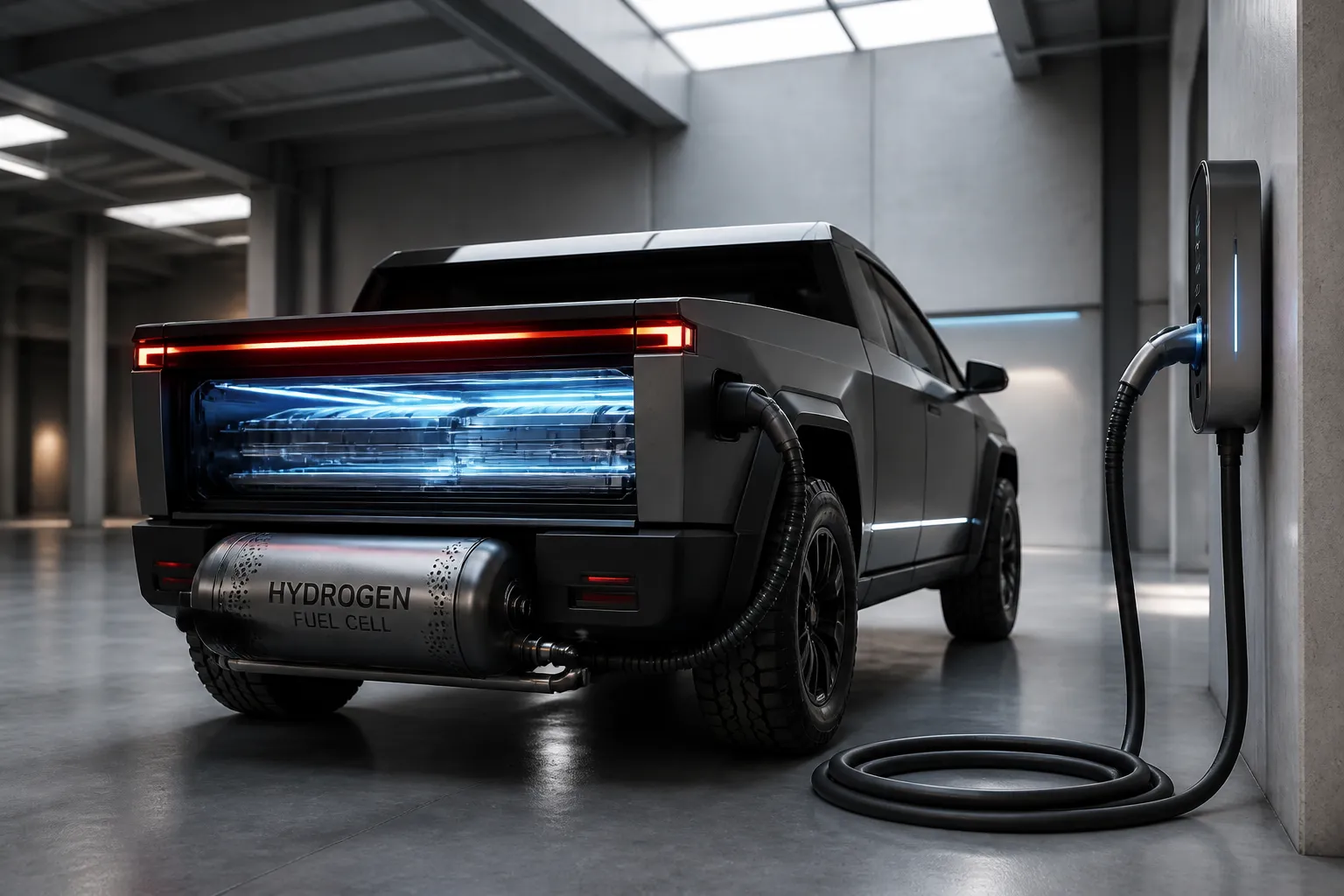
The brand’s latest offering is a Double‑Cab body‑on‑frame truck that will arrive in spring 2026, with first deliveries slated for June in the United Kingdom. The new Hilux comes in three powertrains: a full‑electric version, a 48‑volt mild‑hybrid diesel, and a hydrogen fuel‑cell model that is scheduled for production in 2028.
The electric Hilux is powered by a pair of motors that deliver 80 kW from the front axle and 128 kW from the rear. They draw energy from a 59.2 kWh water‑cooled lithium‑ion pack hidden inside the ladder frame. Under the WLTP combined cycle the battery is rated for 257 km, while a city‑cycle rating reaches 380 km. A DC fast‑charge rate of 125 kW or more can lift the pack from 10 % to 80 % in just 30 minutes. The BEV can haul a payload of 710–715 kg and tow up to 1,600 kg, all while maintaining a 212 mm ground clearance and a 700 mm wading depth that matches the diesel counterpart. The vehicle also retains a 29° approach angle and 500 mm wheel articulation.
The 48‑volt mild‑hybrid diesel builds on Toyota’s 2.8‑litre four‑cylinder engine from the previous generation, now standard across all trim levels. The hybrid system adds an electric motor‑generator that supplies 204 hp (150 kW) and 500 Nm of torque. Under the WLTP combined cycle the unit consumes 9.7–10.0 L/100 km. It can lift more than 1,000 kg of payload and tow 3,500 kg. Because the motor‑generator is mounted higher than in earlier models, the diesel retains a 700 mm wading depth. Diesel and petrol variants will be sold in Eastern European markets.
Both the BEV and the hybrid share a Multi‑Terrain Select system that offers five modes—rock, sand, mud, dirt and, for the BEV, a new mogul setting—plus an automatic mode. The hybrid version’s ground clearance is 309 mm, while the electric version’s is 212 mm. Inside, a 12.3‑inch central display is standard, with a second 12.3‑inch digital driver’s cockpit on higher grades. A redesigned centre console groups all four‑wheel‑drive controls in a single location. The European Hilux is the first in the line to use electric power steering, enabling Lane Tracing Assist and Emergency Steering Assist. Third‑generation Toyota Safety Sense is standard across the range.
Warranty coverage is delivered through Toyota’s Relax programme, offering up to ten years or 185,000 km. BEV buyers receive a Battery Care Programme that guarantees at least 70 % of the original battery capacity for up to ten years or one million kilometres, provided the battery undergoes annual health checks at an authorised Toyota centre.
Toyota’s announcement carries three key implications. First, the body‑on‑frame electric pickup demonstrates that battery‑electric powertrains can be integrated into rugged commercial vehicles without compromising off‑road capability. Second, the Hilux now offers four distinct powertrains—mild‑hybrid diesel, full BEV, internal‑combustion variants for specific markets, and a hydrogen fuel‑cell version—allowing the company to address diverse infrastructure and regulatory environments. Third, the 257‑km WLTP range and 1,600‑kg towing limit define the commercial viability of the BEV for single‑location operations such as forestry, construction and site‑based work, where a full charge can be achieved at the base without the need for an intermediate charge.
At present, the new Hilux is in the production phase, with deliveries scheduled to begin in spring 2026. The hydrogen fuel‑cell version is expected to enter production in 2028. Toyota has not yet announced pricing for the electric or hybrid variants, but the company has indicated that the diesel version will be a volume seller in Europe. The company’s statements confirm that the new Hilux will be available only in Double Cab format, and that the battery‑electric version will be the first of its kind in a body‑on‑frame pickup.
The brand’s latest offering is a Double‑Cab body‑on‑frame truck that will arrive in spring 2026, with first deliveries slated for June in the United Kingdom. The new Hilux comes in three powertrains: a full‑electric version, a 48‑volt mild‑hybrid diesel, and a hydrogen fuel‑cell model that is scheduled for production in 2028.
The electric Hilux is powered by a pair of motors that deliver 80 kW from the front axle and 128 kW from the rear. They draw energy from a 59.2 kWh water‑cooled lithium‑ion pack hidden inside the ladder frame. Under the WLTP combined cycle the battery is rated for 257 km, while a city‑cycle rating reaches 380 km. A DC fast‑charge rate of 125 kW or more can lift the pack from 10 % to 80 % in just 30 minutes. The BEV can haul a payload of 710–715 kg and tow up to 1,600 kg, all while maintaining a 212 mm ground clearance and a 700 mm wading depth that matches the diesel counterpart. The vehicle also retains a 29° approach angle and 500 mm wheel articulation.
The 48‑volt mild‑hybrid diesel builds on Toyota’s 2.8‑litre four‑cylinder engine from the previous generation, now standard across all trim levels. The hybrid system adds an electric motor‑generator that supplies 204 hp (150 kW) and 500 Nm of torque. Under the WLTP combined cycle the unit consumes 9.7–10.0 L/100 km. It can lift more than 1,000 kg of payload and tow 3,500 kg. Because the motor‑generator is mounted higher than in earlier models, the diesel retains a 700 mm wading depth. Diesel and petrol variants will be sold in Eastern European markets.
Both the BEV and the hybrid share a Multi‑Terrain Select system that offers five modes—rock, sand, mud, dirt and, for the BEV, a new mogul setting—plus an automatic mode. The hybrid version’s ground clearance is 309 mm, while the electric version’s is 212 mm. Inside, a 12.3‑inch central display is standard, with a second 12.3‑inch digital driver’s cockpit on higher grades. A redesigned centre console groups all four‑wheel‑drive controls in a single location. The European Hilux is the first in the line to use electric power steering, enabling Lane Tracing Assist and Emergency Steering Assist. Third‑generation Toyota Safety Sense is standard across the range.
Warranty coverage is delivered through Toyota’s Relax programme, offering up to ten years or 185,000 km. BEV buyers receive a Battery Care Programme that guarantees at least 70 % of the original battery capacity for up to ten years or one million kilometres, provided the battery undergoes annual health checks at an authorised Toyota centre.
Toyota’s announcement carries three key implications. First, the body‑on‑frame electric pickup demonstrates that battery‑electric powertrains can be integrated into rugged commercial vehicles without compromising off‑road capability. Second, the Hilux now offers four distinct powertrains—mild‑hybrid diesel, full BEV, internal‑combustion variants for specific markets, and a hydrogen fuel‑cell version—allowing the company to address diverse infrastructure and regulatory environments. Third, the 257‑km WLTP range and 1,600‑kg towing limit define the commercial viability of the BEV for single‑location operations such as forestry, construction and site‑based work, where a full charge can be achieved at the base without the need for an intermediate charge.
At present, the new Hilux is in the production phase, with deliveries scheduled to begin in spring 2026. The hydrogen fuel‑cell version is expected to enter production in 2028. Toyota has not yet announced pricing for the electric or hybrid variants, but the company has indicated that the diesel version will be a volume seller in Europe. The company’s statements confirm that the new Hilux will be available only in Double Cab format, and that the battery‑electric version will be the first of its kind in a body‑on‑frame pickup.