Blab Tech
Google Maps Misroute Leaves Four Uttar Pradesh Police Exam Aspirants 59 km Off Course
On the morning of the Uttar Pradesh Police Constable recruitment exam, four aspirants from Ghaziabad and Hapur—Vishal, Dharmendra Malik, Arun Kumar, and Nakul Kumar—were misdirected 59 kilometres from the exam centre by Google Maps.
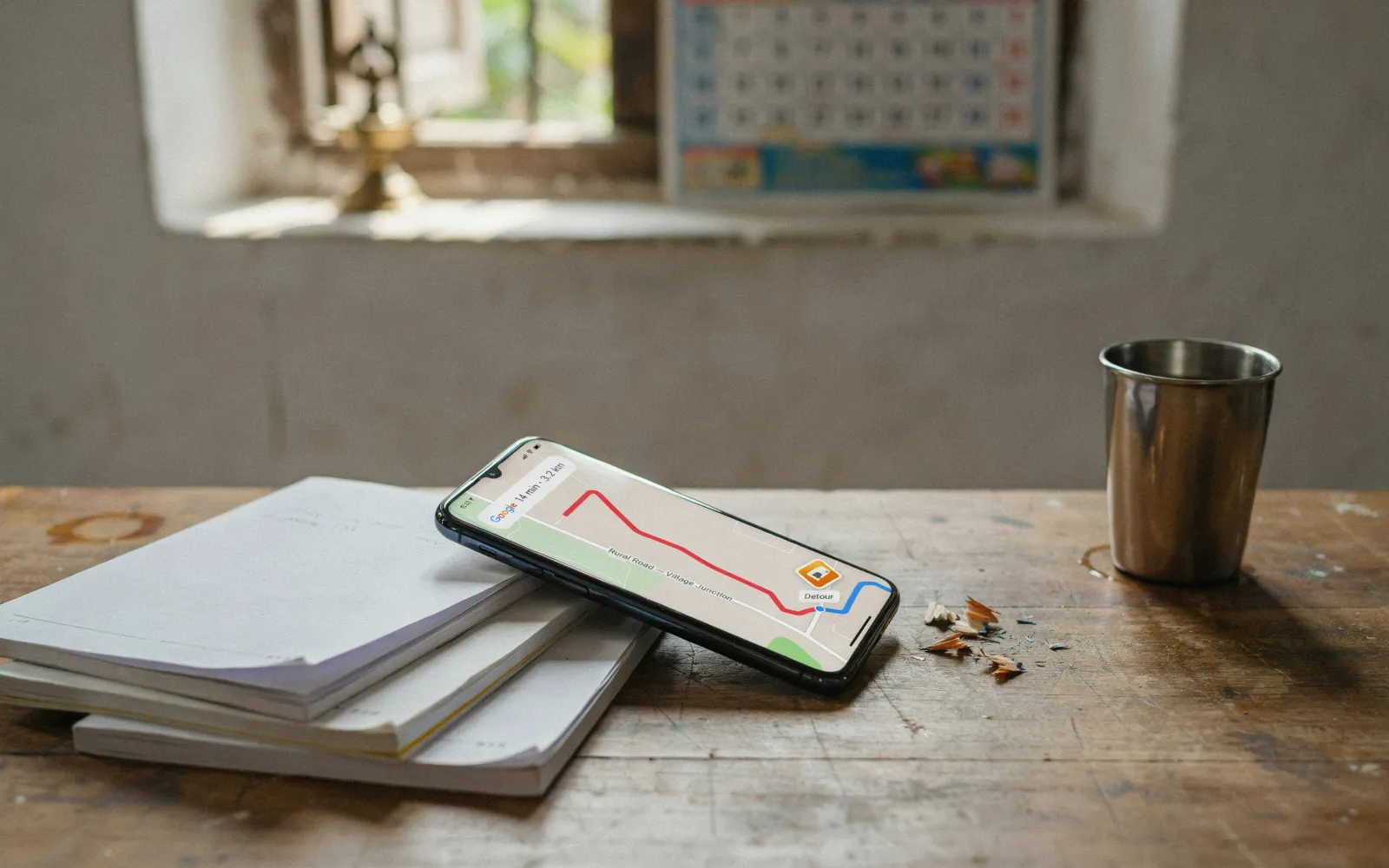
The candidates had entered the address of Deepchand Grain Chamber Inter College in Patel Nagar, New Delhi, the official venue for the UP Police Constable test. Instead of a route that would have taken them into the city, the navigation app led them toward the fields of Jandheri village in Shamli district. By the time the error was noticed, the four had already travelled the wrong way, wasting valuable minutes.
The UP Police Constable exam is a highly competitive government test that offers a stable career and social mobility for many young Indians. Missing the exam means forfeiting a chance to secure a position that can provide financial security and a pathway to further advancement.
According to the report, the aspirants were initially heading toward Muzaffarnagar—a city on the route to the exam centre—before the app’s guidance pulled them off course. They attempted to correct the navigation by seeking alternative directions and cross‑checking the centre’s actual location, but the clock was unforgiving. By the time they reached Muzaffarnagar, the exam process had already moved beyond their reach.
Google Maps, a widely used navigation service that relies on satellite imagery, aerial photography, and real‑time traffic data to generate routes, has been in use since 2005. As of 2020, it was being used by over a billion people each month. While the system is generally reliable, errors can occur when the underlying map data is incomplete or outdated.
This incident underscores the potential consequences of relying on digital navigation for time‑critical travel. It also highlights the importance of verifying destination addresses—especially when the stakes involve a government exam that determines a person’s future.
There is no public record of an investigation into the mapping error, and the Uttar Pradesh Police Recruitment Board has not issued a statement regarding the incident. The candidates’ experience may prompt the exam authorities to review their guidance for candidates, ensuring that official exam centre addresses are clearly communicated and that candidates are advised to double‑check routes.
Navigation errors are not isolated to India. In 2023, a driver in Colorado was led into a muddy field after a Google Maps detour following a road closure. Such cases illustrate that, despite its popularity, Google Maps is not infallible.
The four aspirants’ ordeal serves as a cautionary tale for students and professionals who depend on GPS navigation for critical journeys. While the technology offers convenience, it is essential to cross‑reference routes with official sources and remain alert to potential discrepancies.
The incident remains a singular event with no known follow‑up actions from either Google or the exam board. The candidates’ future prospects will depend on whether they can re‑apply for the next recruitment cycle or seek alternative employment opportunities.
The case also raises questions about the responsibilities of navigation service providers in ensuring accurate routing for high‑stakes travel. Until such responsibilities are clearly defined, users must remain vigilant and prepared to adjust their plans if a route appears inconsistent with known facts.
As of now, the four aspirants have not publicly disclosed their next steps. The Uttar Pradesh Police Recruitment Board has not announced any changes to its exam scheduling or location verification procedures in response to this incident.
The incident underscores the need for reliable navigation tools and the importance of verifying critical travel information, especially when the outcome can significantly impact a person’s career and livelihood.
The candidates had entered the address of Deepchand Grain Chamber Inter College in Patel Nagar, New Delhi, the official venue for the UP Police Constable test. Instead of a route that would have taken them into the city, the navigation app led them toward the fields of Jandheri village in Shamli district. By the time the error was noticed, the four had already travelled the wrong way, wasting valuable minutes.
The UP Police Constable exam is a highly competitive government test that offers a stable career and social mobility for many young Indians. Missing the exam means forfeiting a chance to secure a position that can provide financial security and a pathway to further advancement.
According to the report, the aspirants were initially heading toward Muzaffarnagar—a city on the route to the exam centre—before the app’s guidance pulled them off course. They attempted to correct the navigation by seeking alternative directions and cross‑checking the centre’s actual location, but the clock was unforgiving. By the time they reached Muzaffarnagar, the exam process had already moved beyond their reach.
Google Maps, a widely used navigation service that relies on satellite imagery, aerial photography, and real‑time traffic data to generate routes, has been in use since 2005. As of 2020, it was being used by over a billion people each month. While the system is generally reliable, errors can occur when the underlying map data is incomplete or outdated.
This incident underscores the potential consequences of relying on digital navigation for time‑critical travel. It also highlights the importance of verifying destination addresses—especially when the stakes involve a government exam that determines a person’s future.
There is no public record of an investigation into the mapping error, and the Uttar Pradesh Police Recruitment Board has not issued a statement regarding the incident. The candidates’ experience may prompt the exam authorities to review their guidance for candidates, ensuring that official exam centre addresses are clearly communicated and that candidates are advised to double‑check routes.
Navigation errors are not isolated to India. In 2023, a driver in Colorado was led into a muddy field after a Google Maps detour following a road closure. Such cases illustrate that, despite its popularity, Google Maps is not infallible.
The four aspirants’ ordeal serves as a cautionary tale for students and professionals who depend on GPS navigation for critical journeys. While the technology offers convenience, it is essential to cross‑reference routes with official sources and remain alert to potential discrepancies.
The incident remains a singular event with no known follow‑up actions from either Google or the exam board. The candidates’ future prospects will depend on whether they can re‑apply for the next recruitment cycle or seek alternative employment opportunities.
The case also raises questions about the responsibilities of navigation service providers in ensuring accurate routing for high‑stakes travel. Until such responsibilities are clearly defined, users must remain vigilant and prepared to adjust their plans if a route appears inconsistent with known facts.
As of now, the four aspirants have not publicly disclosed their next steps. The Uttar Pradesh Police Recruitment Board has not announced any changes to its exam scheduling or location verification procedures in response to this incident.
The incident underscores the need for reliable navigation tools and the importance of verifying critical travel information, especially when the outcome can significantly impact a person’s career and livelihood.