Blab Tech
Ericsson and Epiroc Deploy Private 5G to Enable Real-Time Connectivity in Underground Mines
Ericsson and Epiroc have joined forces to roll out private 5G and LTE networks beneath the earth’s surface, a development that promises the high‑bandwidth, low‑latency links required for autonomous mining machines and instant data analysis.
The partnership builds on Ericsson’s long‑standing expertise in industrial cellular infrastructure and Epiroc’s line of autonomous drilling, loading and haulage equipment. “Connectivity is becoming increasingly important as mining companies advance automation and digitalisation throughout their operations,” said Paul Bergström, president of Epiroc’s Digital Solutions division. He added that the collaboration will help customers build robust communications infrastructure needed to enable safer, more efficient and more productive mining.
Wireless signals in mines are notoriously hostile. Metal, rock and heavy machinery absorb, block or scatter radio waves, producing dead zones and bandwidth bottlenecks. Wi‑Fi, while sometimes used underground, lacks the capacity and reliability required for driverless haul trucks and other autonomous vehicles that need split‑second reaction times. Older wireless set‑ups also suffer from signal drop when equipment moves between access points.
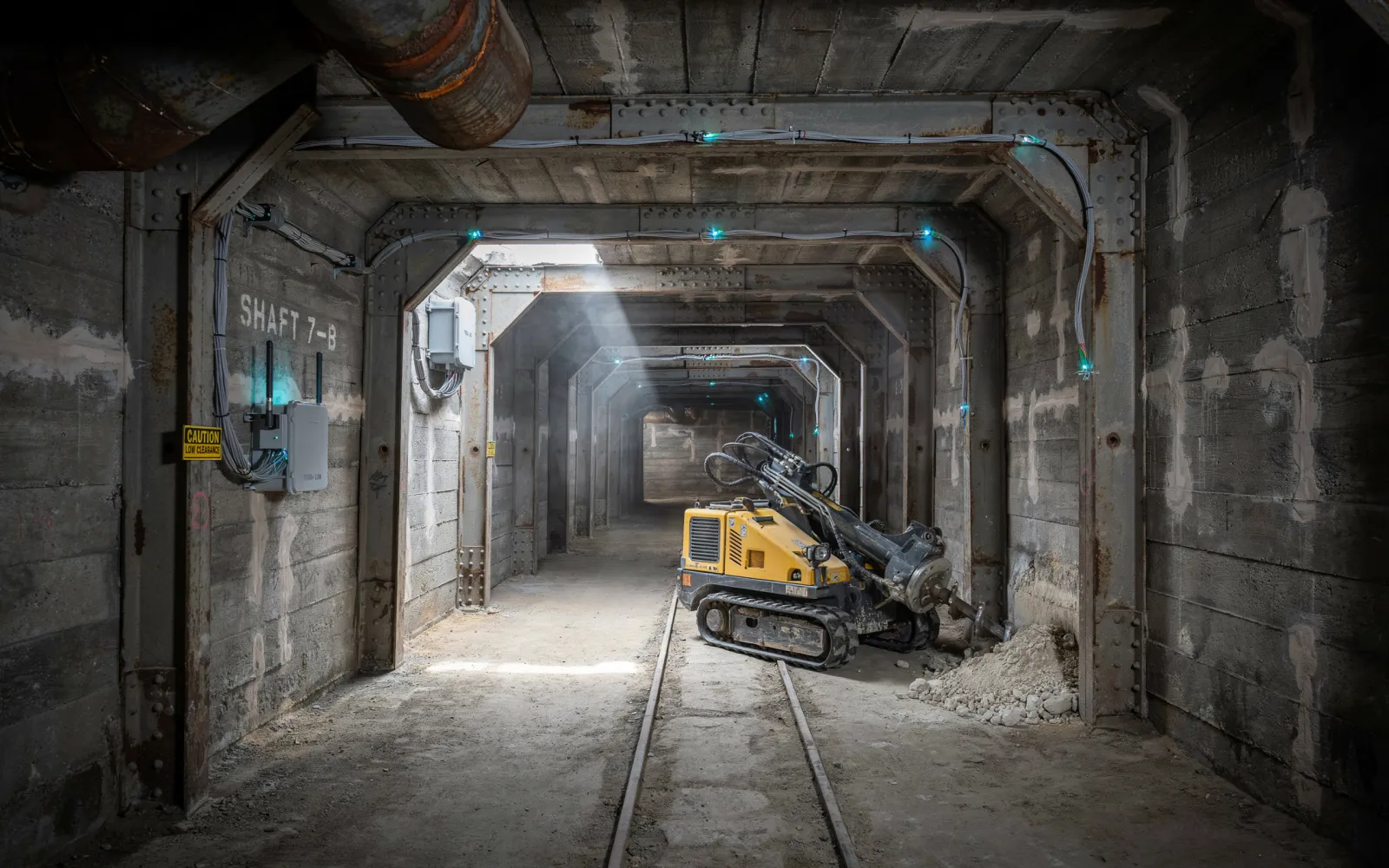
To tackle these obstacles, Ericsson supplies hardened radio gear, a core network and management software, while Epiroc contributes autonomous loaders, haulers and remotely operated drills. Together they deliver a private network that offers consistent, high‑capacity coverage across the mine. Operators on the surface can view live video feeds without lag and control equipment hundreds of meters below ground with minimal delay.
The network also powers a predictive‑maintenance model. Every sensor on Epiroc equipment—monitoring engine temperature, hydraulic pressure, drill bit wear and vibration—streams data in real time to a central platform. AI algorithms analyse live and historical data to predict failures before they occur, enabling crews to replace parts during scheduled maintenance windows rather than dealing with unexpected breakdowns.
Pankaj Malhotra, head of product and engineering at Ericsson Enterprise Wireless Solutions, said the partnership is about delivering real operational impact for mining customers, including safer operations, higher productivity and greater efficiency. He added that the collaboration is an important step in building the connected ecosystems that modern industrial enterprises depend on.
This initiative follows a series of private 5G deployments in the mining sector. In 2025, Newmont, the world’s largest gold miner, activated Ericsson’s private 5G network at its Cadia gold‑copper mine in Australia to remotely operate a fleet of bulldozers. The same year, Ericsson and Rogers Communications launched Canada’s first underground private 5G network at the Northern Center for Advanced Technology’s Sudbury mine.
Industry analysts note that private 5G can provide the capacity and predictability that Wi‑Fi lacks, especially for teleremote operations. The technology also supports edge computing and network slicing, which can further reduce latency and isolate critical traffic.
While the partnership focuses on underground connectivity, the same principles apply to surface operations. By owning the network, mining operators maintain control over security, bandwidth allocation and service levels, which is critical in environments where downtime can cost millions of dollars.
The collaboration between Ericsson and Epiroc is part of a broader trend of integrating industrial IoT, autonomous equipment and private cellular networks to transform mining. The goal is to create a digital foundation that rewrites the mining playbook, enabling sites to run safer, lean on data and extract more product.
At present, the private 5G deployments are still in the early stages of implementation. Ericsson and Epiroc are working with a handful of mines to pilot the technology, with plans to expand to additional sites in the coming years. The companies have not yet disclosed specific timelines for broader rollout.
In the meantime, mining operators that have adopted private 5G report improved operational visibility, reduced equipment downtime and increased safety. The technology also opens the door to further automation, such as fully autonomous haul trucks and drilling rigs, which could reshape the industry’s productivity and cost structure.
The partnership demonstrates how private 5G can overcome the unique challenges of underground mining, providing a reliable, high‑bandwidth platform for autonomous equipment and real‑time data analytics. As more mines adopt the technology, the industry may see a shift toward deeper automation and data‑driven decision making.
The partnership builds on Ericsson’s long‑standing expertise in industrial cellular infrastructure and Epiroc’s line of autonomous drilling, loading and haulage equipment. “Connectivity is becoming increasingly important as mining companies advance automation and digitalisation throughout their operations,” said Paul Bergström, president of Epiroc’s Digital Solutions division. He added that the collaboration will help customers build robust communications infrastructure needed to enable safer, more efficient and more productive mining.
Wireless signals in mines are notoriously hostile. Metal, rock and heavy machinery absorb, block or scatter radio waves, producing dead zones and bandwidth bottlenecks. Wi‑Fi, while sometimes used underground, lacks the capacity and reliability required for driverless haul trucks and other autonomous vehicles that need split‑second reaction times. Older wireless set‑ups also suffer from signal drop when equipment moves between access points.
To tackle these obstacles, Ericsson supplies hardened radio gear, a core network and management software, while Epiroc contributes autonomous loaders, haulers and remotely operated drills. Together they deliver a private network that offers consistent, high‑capacity coverage across the mine. Operators on the surface can view live video feeds without lag and control equipment hundreds of meters below ground with minimal delay.
The network also powers a predictive‑maintenance model. Every sensor on Epiroc equipment—monitoring engine temperature, hydraulic pressure, drill bit wear and vibration—streams data in real time to a central platform. AI algorithms analyse live and historical data to predict failures before they occur, enabling crews to replace parts during scheduled maintenance windows rather than dealing with unexpected breakdowns.
Pankaj Malhotra, head of product and engineering at Ericsson Enterprise Wireless Solutions, said the partnership is about delivering real operational impact for mining customers, including safer operations, higher productivity and greater efficiency. He added that the collaboration is an important step in building the connected ecosystems that modern industrial enterprises depend on.
This initiative follows a series of private 5G deployments in the mining sector. In 2025, Newmont, the world’s largest gold miner, activated Ericsson’s private 5G network at its Cadia gold‑copper mine in Australia to remotely operate a fleet of bulldozers. The same year, Ericsson and Rogers Communications launched Canada’s first underground private 5G network at the Northern Center for Advanced Technology’s Sudbury mine.
Industry analysts note that private 5G can provide the capacity and predictability that Wi‑Fi lacks, especially for teleremote operations. The technology also supports edge computing and network slicing, which can further reduce latency and isolate critical traffic.
While the partnership focuses on underground connectivity, the same principles apply to surface operations. By owning the network, mining operators maintain control over security, bandwidth allocation and service levels, which is critical in environments where downtime can cost millions of dollars.
The collaboration between Ericsson and Epiroc is part of a broader trend of integrating industrial IoT, autonomous equipment and private cellular networks to transform mining. The goal is to create a digital foundation that rewrites the mining playbook, enabling sites to run safer, lean on data and extract more product.
At present, the private 5G deployments are still in the early stages of implementation. Ericsson and Epiroc are working with a handful of mines to pilot the technology, with plans to expand to additional sites in the coming years. The companies have not yet disclosed specific timelines for broader rollout.
In the meantime, mining operators that have adopted private 5G report improved operational visibility, reduced equipment downtime and increased safety. The technology also opens the door to further automation, such as fully autonomous haul trucks and drilling rigs, which could reshape the industry’s productivity and cost structure.
The partnership demonstrates how private 5G can overcome the unique challenges of underground mining, providing a reliable, high‑bandwidth platform for autonomous equipment and real‑time data analytics. As more mines adopt the technology, the industry may see a shift toward deeper automation and data‑driven decision making.








