Blab Tech
Vention Opens Montreal Lab to Advance Physical AI for Manufacturing
On September 9 2026, Montreal’s tech community celebrated the inauguration of a new powerhouse: Vention’s dedicated physical‑AI research lab. The facility, located in the city’s burgeoning innovation district, will host 16 of the company’s 120 R&D staff and will be steered by Director of Physical AI Jimmy Li.
The lab’s launch comes after Vention reported a staggering 400 percent jump in revenue tied to its physical‑AI offerings over the past year. CEO Etienne Lacroix said the surge signaled a clear mandate to deepen the company’s research footprint. He added that Vention’s R&D budget remains its largest single investment and that the new lab will prioritize projects with a 12‑month horizon, moving beyond the quarterly release cadence that has dominated the industry.
Founded in 2016, Vention now employs roughly 330 people. Its flagship platform blends plug‑and‑play automation hardware, cloud‑based engineering software, and 3‑D CAD tools with a physical‑AI layer called GRIIP—Generalized Robotic Industrial Intelligence Pipeline. GRIIP fuses proprietary AI models with Nvidia Isaac foundation models to endow robots with perception, pose estimation, grasp selection, and motion planning. The platform is already in use at more than 4,000 factories worldwide, including major accounts such as Boeing, L’Oreal, and Lockheed Martin.
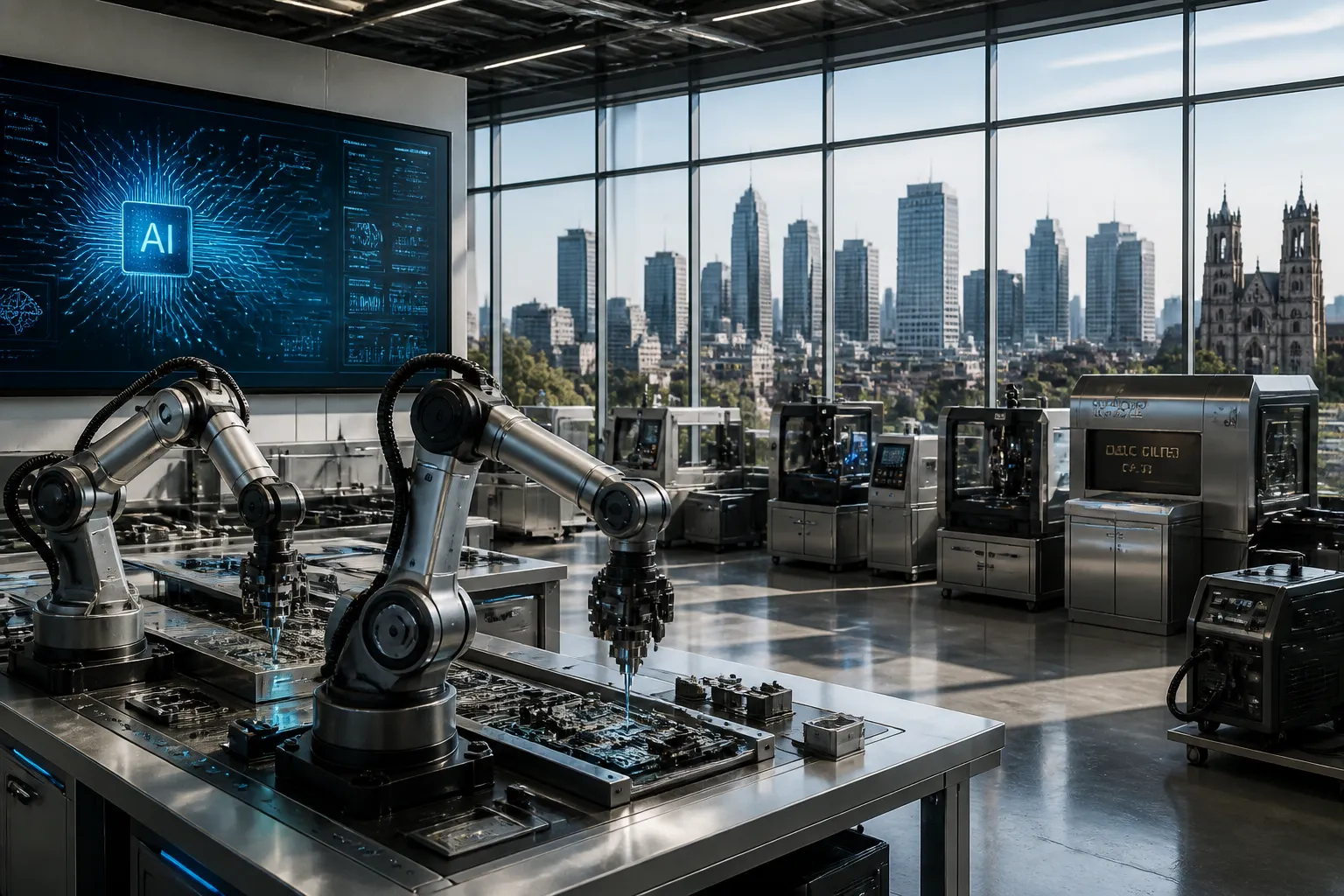
Physical AI, as Vention defines it, refers to systems that perceive, reason about, and act within the physical world—industrial robots being the most prominent example. The new lab will build on the GRIIP pipeline to explore applied use cases for robotics, with a focus on long‑term objectives that are not constrained by immediate ship dates. Lacroix described the facility as the largest in Canada by a wide margin, noting that it will provide researchers with access to expensive robotic equipment and a collaborative environment that encourages experimentation.
Beyond internal leadership, the lab will benefit from external expertise. Joelle Pineau—chief AI officer at Canadian AI firm Cohere, former senior AI executive at Meta, and professor at McGill University—has been appointed as an external advisor and robotics expert. Her involvement is intended to shape the lab’s research agenda and provide governance oversight.
Vention’s expansion follows a $110 million Series D funding round earlier in 2026. The capital injection, coupled with the recent revenue surge, positions the company to accelerate the development of physical‑AI solutions. Lacroix has suggested that if physical AI becomes mainstream, the $130 billion manufacturing automation market could grow by up to a factor of ten.
The company’s strategy is to let pre‑training models compete in the market and wait for a convergence that will enable broader adoption. By investing in research now, Vention aims to capture demand as physical‑AI technologies mature.
The lab’s inaugural projects will focus on refining robotic manipulation tasks for assembly lines, building on the GRIIP system that has already supported the development of Vention’s GRIIP robotic system for picking parts off the assembly line.
The opening marks a significant step for Vention as it seeks to strengthen its position in the growing physical‑AI sector. While the company has not yet disclosed specific investment amounts for the lab or detailed timelines for new product releases, the announcement signals a clear commitment to pushing the boundaries of industrial automation.
In summary, Vention’s Montreal lab is a research‑centric facility designed to accelerate physical‑AI innovation in manufacturing. With leadership from Jimmy Li, advisory input from Joelle Pineau, and a focus on long‑term research goals, the lab aims to develop applied robotics solutions that could shape the future of industrial automation.
The lab’s launch comes after Vention reported a staggering 400 percent jump in revenue tied to its physical‑AI offerings over the past year. CEO Etienne Lacroix said the surge signaled a clear mandate to deepen the company’s research footprint. He added that Vention’s R&D budget remains its largest single investment and that the new lab will prioritize projects with a 12‑month horizon, moving beyond the quarterly release cadence that has dominated the industry.
Founded in 2016, Vention now employs roughly 330 people. Its flagship platform blends plug‑and‑play automation hardware, cloud‑based engineering software, and 3‑D CAD tools with a physical‑AI layer called GRIIP—Generalized Robotic Industrial Intelligence Pipeline. GRIIP fuses proprietary AI models with Nvidia Isaac foundation models to endow robots with perception, pose estimation, grasp selection, and motion planning. The platform is already in use at more than 4,000 factories worldwide, including major accounts such as Boeing, L’Oreal, and Lockheed Martin.
Physical AI, as Vention defines it, refers to systems that perceive, reason about, and act within the physical world—industrial robots being the most prominent example. The new lab will build on the GRIIP pipeline to explore applied use cases for robotics, with a focus on long‑term objectives that are not constrained by immediate ship dates. Lacroix described the facility as the largest in Canada by a wide margin, noting that it will provide researchers with access to expensive robotic equipment and a collaborative environment that encourages experimentation.
Beyond internal leadership, the lab will benefit from external expertise. Joelle Pineau—chief AI officer at Canadian AI firm Cohere, former senior AI executive at Meta, and professor at McGill University—has been appointed as an external advisor and robotics expert. Her involvement is intended to shape the lab’s research agenda and provide governance oversight.
Vention’s expansion follows a $110 million Series D funding round earlier in 2026. The capital injection, coupled with the recent revenue surge, positions the company to accelerate the development of physical‑AI solutions. Lacroix has suggested that if physical AI becomes mainstream, the $130 billion manufacturing automation market could grow by up to a factor of ten.
The company’s strategy is to let pre‑training models compete in the market and wait for a convergence that will enable broader adoption. By investing in research now, Vention aims to capture demand as physical‑AI technologies mature.
The lab’s inaugural projects will focus on refining robotic manipulation tasks for assembly lines, building on the GRIIP system that has already supported the development of Vention’s GRIIP robotic system for picking parts off the assembly line.
The opening marks a significant step for Vention as it seeks to strengthen its position in the growing physical‑AI sector. While the company has not yet disclosed specific investment amounts for the lab or detailed timelines for new product releases, the announcement signals a clear commitment to pushing the boundaries of industrial automation.
In summary, Vention’s Montreal lab is a research‑centric facility designed to accelerate physical‑AI innovation in manufacturing. With leadership from Jimmy Li, advisory input from Joelle Pineau, and a focus on long‑term research goals, the lab aims to develop applied robotics solutions that could shape the future of industrial automation.