Blab Tech
Promegas Early DNA Automation Aided 9/11 Victim Identification, Still in Use 25 Years Later
In the chaotic days after the September 11 attacks, a team from Promega Corporation arrived on the Ground Zero site with a different kind of hope: the promise of modern DNA science to bring closure to grieving families.
The attacks claimed 2,996 lives, and New York officials now say nearly 3,000 victims died. Yet, according to a WKOW report dated September 8, 2026, more than 1,000 of those who perished remain unidentified.
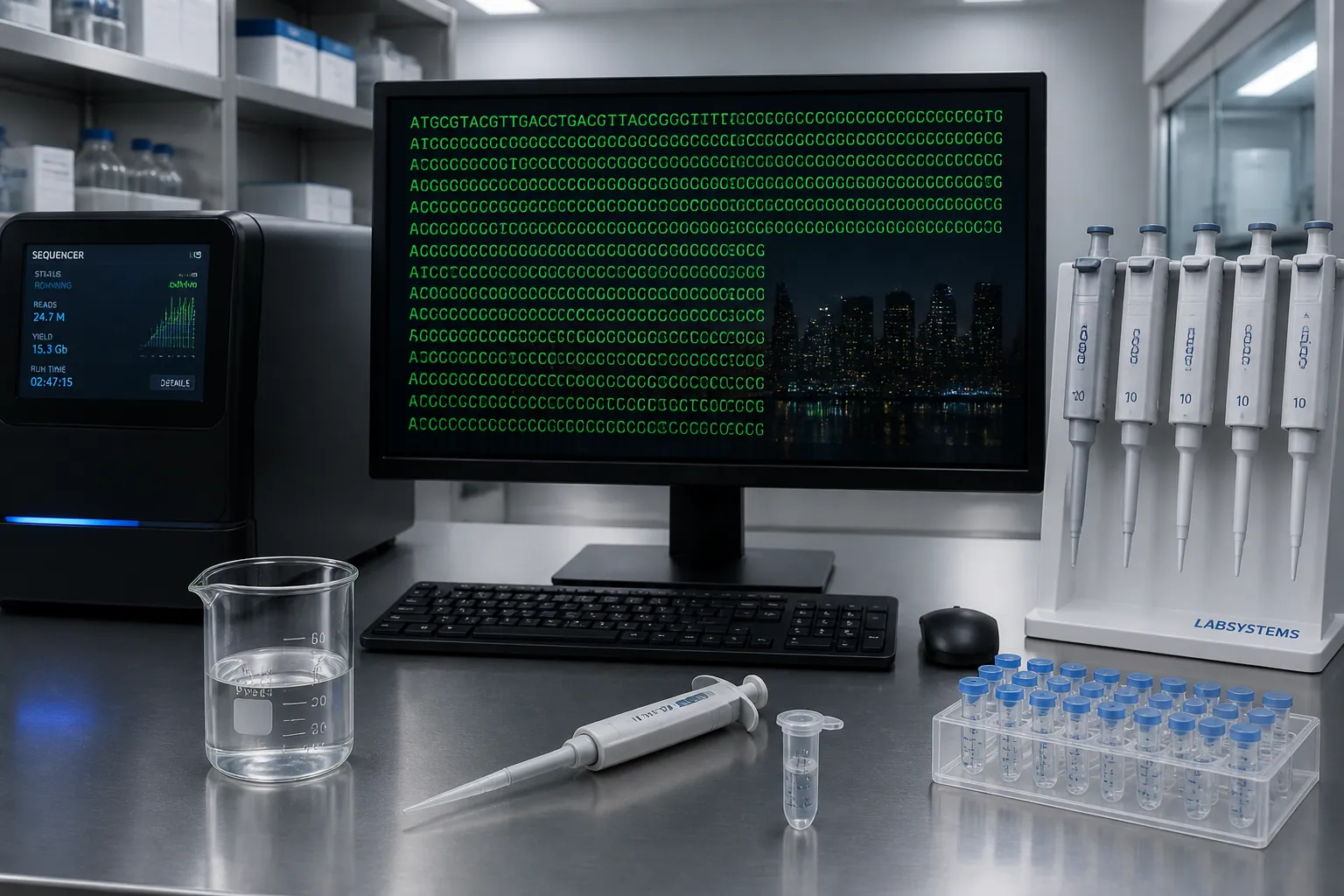
Promega was at the forefront of automated DNA processing when the tragedy struck. In the summer of 2000, the company launched DNA IQ, a kit that employed magnetic‑bead technology to purify forensic DNA. By September 2001, the system was still in its infancy, but it was already hailed as a breakthrough.
Bob McLaren, Director of Promega’s Genetic Identity Research Group, flew to Ground Zero less than a week after the attacks. In a WKOW interview he recalled that he and his colleagues were prepared to help the Office of Chief Medical Examiner (OCME) “speed up the workflow” for the thousands of samples requiring DNA extraction, not only from the World Trade Center site but also from locations in Albany and upstate New York. When asked about the risks of traveling, McLaren said, “People were like, ‘Are you worried traveling?’ And my response was, ‘No. It’s probably the safest time to fly right now, because they ramped up the security.’”
The automated DNA machines Promega supplied allowed the OCME to process samples more quickly than manual methods. McLaren explained that the system’s early adoption “was a sign of hope for families and friends of people who died on 9/11.” The technology enabled investigators to match DNA profiles to reference samples from relatives, turning anonymous evidence into names.
A quarter‑century later, the same machines are still in use. McLaren noted that the technology has evolved dramatically: “We’ve got a much greater sensitivity, a heightened ability to work with compromised samples you get at crime scenes.” The upgrades have accelerated DNA extraction and profiling, improving accuracy when dealing with the degraded material typical of mass‑casualty sites.
Despite these advances, the identification effort remains incomplete. As of September 2026, more than 1,000 victims are still unidentified. The OCME continues to process new samples as they are recovered, and Promega’s automated systems remain a core part of that workflow.
The 9/11 victim identification program demonstrates how forensic genetics can provide closure for families even decades after a tragedy. The ongoing use of Promega’s technology underscores the importance of continuous improvement in automated DNA processing for mass‑casualty investigations.
In the coming months, the OCME is expected to release updates on the number of new identifications. Promega has not announced any new product releases related to the 9/11 program, but the company continues to refine its DNA extraction platforms for forensic use.
The story of Promega’s involvement in 9/11 victim identification highlights the intersection of biotechnology and public‑service forensic work, and it remains a living example of how early innovations can have lasting humanitarian impact.
The attacks claimed 2,996 lives, and New York officials now say nearly 3,000 victims died. Yet, according to a WKOW report dated September 8, 2026, more than 1,000 of those who perished remain unidentified.
Promega was at the forefront of automated DNA processing when the tragedy struck. In the summer of 2000, the company launched DNA IQ, a kit that employed magnetic‑bead technology to purify forensic DNA. By September 2001, the system was still in its infancy, but it was already hailed as a breakthrough.
Bob McLaren, Director of Promega’s Genetic Identity Research Group, flew to Ground Zero less than a week after the attacks. In a WKOW interview he recalled that he and his colleagues were prepared to help the Office of Chief Medical Examiner (OCME) “speed up the workflow” for the thousands of samples requiring DNA extraction, not only from the World Trade Center site but also from locations in Albany and upstate New York. When asked about the risks of traveling, McLaren said, “People were like, ‘Are you worried traveling?’ And my response was, ‘No. It’s probably the safest time to fly right now, because they ramped up the security.’”
The automated DNA machines Promega supplied allowed the OCME to process samples more quickly than manual methods. McLaren explained that the system’s early adoption “was a sign of hope for families and friends of people who died on 9/11.” The technology enabled investigators to match DNA profiles to reference samples from relatives, turning anonymous evidence into names.
A quarter‑century later, the same machines are still in use. McLaren noted that the technology has evolved dramatically: “We’ve got a much greater sensitivity, a heightened ability to work with compromised samples you get at crime scenes.” The upgrades have accelerated DNA extraction and profiling, improving accuracy when dealing with the degraded material typical of mass‑casualty sites.
Despite these advances, the identification effort remains incomplete. As of September 2026, more than 1,000 victims are still unidentified. The OCME continues to process new samples as they are recovered, and Promega’s automated systems remain a core part of that workflow.
The 9/11 victim identification program demonstrates how forensic genetics can provide closure for families even decades after a tragedy. The ongoing use of Promega’s technology underscores the importance of continuous improvement in automated DNA processing for mass‑casualty investigations.
In the coming months, the OCME is expected to release updates on the number of new identifications. Promega has not announced any new product releases related to the 9/11 program, but the company continues to refine its DNA extraction platforms for forensic use.
The story of Promega’s involvement in 9/11 victim identification highlights the intersection of biotechnology and public‑service forensic work, and it remains a living example of how early innovations can have lasting humanitarian impact.