Blab Tech
Covenant Unveils Anthem Cruise Missile, Opens Texas Factory, Secures $250 Million Funding
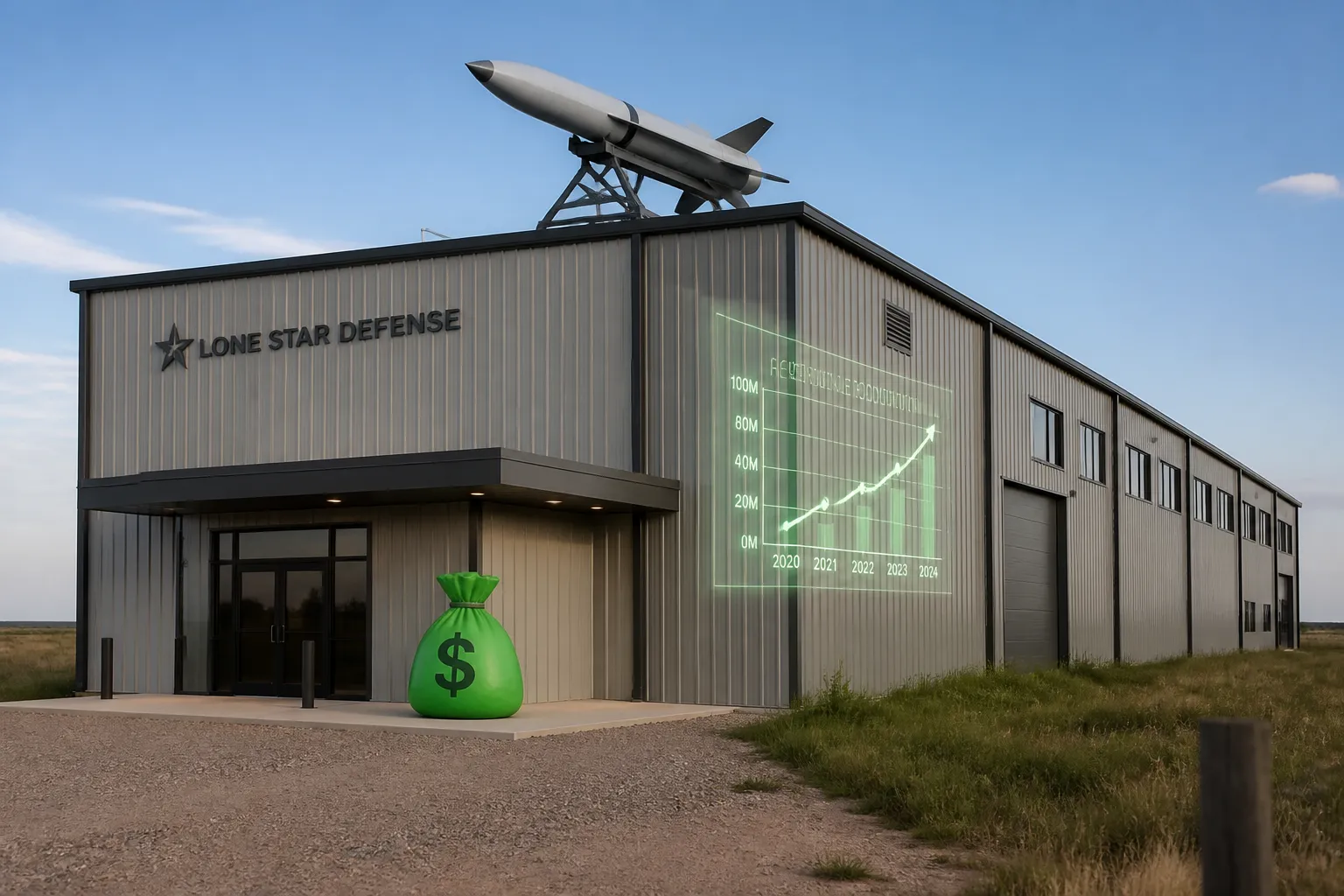
Covenant, a Washington‑based defense startup, has broken ground on a 105,000‑square‑foot missile factory in Grand Prairie, Texas, and announced a $250 million venture‑capital round. The new plant will produce the company’s heavy‑payload, long‑range cruise missile, Anthem, with full‑scale production slated to begin in the first quarter of 2027.
Anthem can deliver a large warhead over distances exceeding 1,500 kilometres. Most of its components are off‑the‑shelf, and Covenant has secured long‑term agreements for key parts from suppliers in allied nations. The company also built its own mission‑planning and command‑and‑control software and aims to manufacture 5,000 units per year once the line is running.
The funding round attracted several high‑profile venture firms. Andreessen Horowitz, Founders Fund, Lux Capital, 8VC, Aleph, and Lightspeed Venture Partners each participated in the series that brought the total to $250 million. Investors see the project as a way to rebuild the United States’ long‑range strike capability.
Anthem has already proven its flight performance. In July, the missile was fired during the U.S. Army’s Project Convergence Capstone 6 event at Fort Irwin, California, where the Army evaluated more than 90 emerging technologies. A month later, the missile completed a flight test at the Multidomain Training Area range complex in Morocco. Covenant says it has flown the missile nearly every week for the past year.
The company highlighted contracts with U.S. military agencies. Covenant has an Other Transaction Agreement with the Army for an accelerated testing and qualification program, and a contract with the Navy’s Rapid Capabilities Office to adapt Anthem for maritime launch. That project is valued at roughly $70 million.
Covenant also operates facilities outside the United States. A 110,000‑square‑foot plant in Saxony, Germany, and a 32,000‑square‑foot site in Israel are already in operation. The company is hiring engineering, manufacturing, and program‑management staff at all three locations.
Spokesperson Abby Denburg said the next phase is to deliver “mission‑critical capability to our customers on time, at scale and with the performance they expect.” CEO Michael Kaufman added that the missile was built to address the need for a large‑payload, long‑range system that can reach hardened targets beyond the range of existing U.S. weapons, warning that a thinning stockpile would weaken deterrence.
The advisory board includes former U.S. Representative Mike Garcia, who noted that the United States needs enough advanced weapons and that Anthem is designed from the outset to be produced in the numbers required for a real conflict.
Covenant’s emergence from stealth mode and the opening of its Texas factory signal a new entrant in the U.S. cruise‑missile market. The company’s stated production target of 5,000 units per year is significantly higher than the output of existing U.S. manufacturers, and its use of off‑the‑shelf parts and local supply chains is intended to keep costs lower than those of established systems.
Contracts with the Army and Navy indicate that the U.S. military is interested in the missile’s capabilities. The Army’s Project Convergence event and the Navy’s Rapid Capabilities Office are both focused on developing new technologies for multi‑domain operations.
Covenant’s next steps include beginning full‑scale production in early 2027, scaling to 5,000 units per year, and delivering the missile to U.S. and allied customers. The company has not yet announced any export orders or international customers.
The company’s public debut and the announcement of its production plans mark a significant milestone for a startup that has been developing a new class of cruise missile. The next year will test whether Covenant can transition from prototype to mass production and whether the U.S. military will adopt Anthem as part of its long‑range strike portfolio.
Covenant currently operates a production facility in Texas, additional facilities in Germany and Israel, holds contracts with the Army and Navy, and has raised $250 million in funding. Upcoming milestones include the start of full‑scale production in 2027, scaling to 5,000 units per year, and the delivery of the missile to U.S. and allied customers. No other regulatory actions, court proceedings, or funding developments have been reported.
Anthem can deliver a large warhead over distances exceeding 1,500 kilometres. Most of its components are off‑the‑shelf, and Covenant has secured long‑term agreements for key parts from suppliers in allied nations. The company also built its own mission‑planning and command‑and‑control software and aims to manufacture 5,000 units per year once the line is running.
The funding round attracted several high‑profile venture firms. Andreessen Horowitz, Founders Fund, Lux Capital, 8VC, Aleph, and Lightspeed Venture Partners each participated in the series that brought the total to $250 million. Investors see the project as a way to rebuild the United States’ long‑range strike capability.
Anthem has already proven its flight performance. In July, the missile was fired during the U.S. Army’s Project Convergence Capstone 6 event at Fort Irwin, California, where the Army evaluated more than 90 emerging technologies. A month later, the missile completed a flight test at the Multidomain Training Area range complex in Morocco. Covenant says it has flown the missile nearly every week for the past year.
The company highlighted contracts with U.S. military agencies. Covenant has an Other Transaction Agreement with the Army for an accelerated testing and qualification program, and a contract with the Navy’s Rapid Capabilities Office to adapt Anthem for maritime launch. That project is valued at roughly $70 million.
Covenant also operates facilities outside the United States. A 110,000‑square‑foot plant in Saxony, Germany, and a 32,000‑square‑foot site in Israel are already in operation. The company is hiring engineering, manufacturing, and program‑management staff at all three locations.
Spokesperson Abby Denburg said the next phase is to deliver “mission‑critical capability to our customers on time, at scale and with the performance they expect.” CEO Michael Kaufman added that the missile was built to address the need for a large‑payload, long‑range system that can reach hardened targets beyond the range of existing U.S. weapons, warning that a thinning stockpile would weaken deterrence.
The advisory board includes former U.S. Representative Mike Garcia, who noted that the United States needs enough advanced weapons and that Anthem is designed from the outset to be produced in the numbers required for a real conflict.
Covenant’s emergence from stealth mode and the opening of its Texas factory signal a new entrant in the U.S. cruise‑missile market. The company’s stated production target of 5,000 units per year is significantly higher than the output of existing U.S. manufacturers, and its use of off‑the‑shelf parts and local supply chains is intended to keep costs lower than those of established systems.
Contracts with the Army and Navy indicate that the U.S. military is interested in the missile’s capabilities. The Army’s Project Convergence event and the Navy’s Rapid Capabilities Office are both focused on developing new technologies for multi‑domain operations.
Covenant’s next steps include beginning full‑scale production in early 2027, scaling to 5,000 units per year, and delivering the missile to U.S. and allied customers. The company has not yet announced any export orders or international customers.
The company’s public debut and the announcement of its production plans mark a significant milestone for a startup that has been developing a new class of cruise missile. The next year will test whether Covenant can transition from prototype to mass production and whether the U.S. military will adopt Anthem as part of its long‑range strike portfolio.
Covenant currently operates a production facility in Texas, additional facilities in Germany and Israel, holds contracts with the Army and Navy, and has raised $250 million in funding. Upcoming milestones include the start of full‑scale production in 2027, scaling to 5,000 units per year, and the delivery of the missile to U.S. and allied customers. No other regulatory actions, court proceedings, or funding developments have been reported.








