Blab Tech
BepiColombo Jettisons Transfer Module as Mercury Arrival Phase Begins
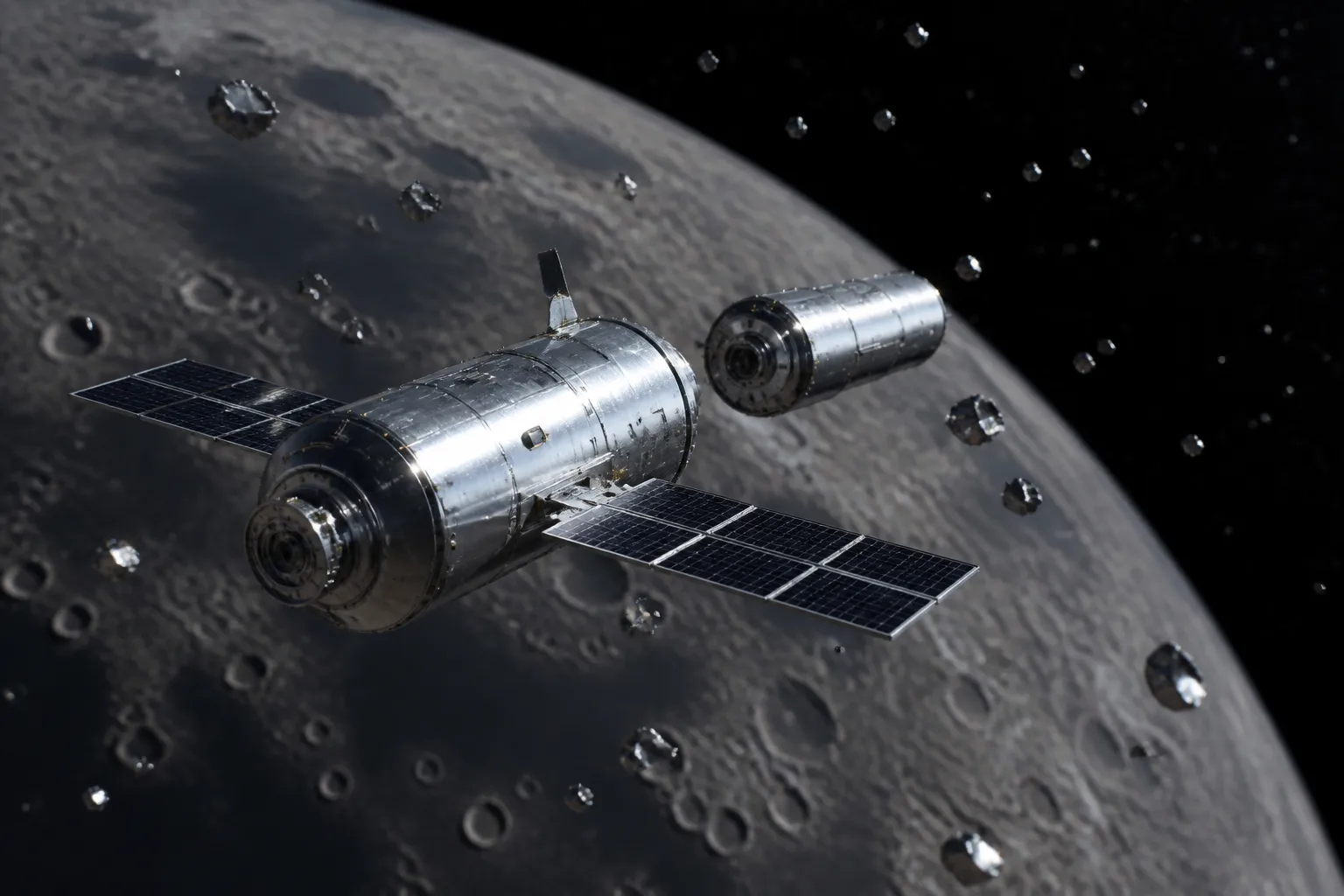
On September 3 2026, the European Space Agency (ESA) and Japan Aerospace Exploration Agency (JAXA) celebrated a pivotal moment for their joint probe, BepiColombo. At a distance of 200 million kilometres from Earth, the spacecraft’s Mercury Transfer Module (MTM) was released from the stacked configuration, signalling the end of its interplanetary escort.
The command that freed the MTM travelled from ESA’s Operations Center in Darmstadt, Germany, to the orbiter in 11 minutes, a delay that reflects the vast gulf between the two points. Once the command was received, pyrotechnic‑activated springs pushed the MTM away, a motion confirmed by a measurable Doppler shift in the spacecraft’s radio signal.
The MTM, a solar‑electric propulsion system driven by an ion‑drive, had been the workhorse of BepiColombo’s eight‑year voyage. During that time the craft performed nine gravity assists—one around Earth, two around Venus, and six around Mercury—to shave off velocity and fine‑tune its trajectory. With orbital insertion slated for November 21, the MTM’s job was finished.
BepiColombo is composed of two orbiters: the Mercury Planetary Orbiter (MPO), built by ESA, and the Mercury Magnetospheric Orbiter (Mio), built by JAXA. Prior to the MTM separation, the two spacecraft were stacked with the MTM and the Magnetospheric Orbiter Sunshield and Interface (MOSIF) shielding Mio from solar radiation. After the jettison, the MPO’s solar arrays unfurled, restoring power generation.
The mission’s next chapter involves a 16‑maneuver orbital insertion on November 21 that will place the stack into Mercury orbit. Two days later, on December 9–10, Mio will detach from MPO and enter a highly elliptical polar orbit, positioning it to study Mercury’s magnetic field and exosphere. Meanwhile, MPO will settle into a tight, low‑altitude orbit to map the planet’s surface and composition. Science operations are scheduled to begin in April 2027.
BepiColombo’s arrival marks the first time that two separate spacecraft will simultaneously orbit Mercury, offering an unprecedented view of the planet’s interior, surface, and magnetosphere. The mission also showcases the viability of long‑duration ion‑propulsion for deep‑space travel, a technology that has proven resilient against Mercury’s extreme temperatures and intense solar wind.
The current status is clear: BepiColombo has successfully jettisoned its transfer module and is now preparing for orbital insertion. The forthcoming milestones—orbital insertion on November 21, the separation of MPO and Mio in early December, and the commencement of science operations in April—will determine the mission’s final trajectory and scientific yield.
The command that freed the MTM travelled from ESA’s Operations Center in Darmstadt, Germany, to the orbiter in 11 minutes, a delay that reflects the vast gulf between the two points. Once the command was received, pyrotechnic‑activated springs pushed the MTM away, a motion confirmed by a measurable Doppler shift in the spacecraft’s radio signal.
The MTM, a solar‑electric propulsion system driven by an ion‑drive, had been the workhorse of BepiColombo’s eight‑year voyage. During that time the craft performed nine gravity assists—one around Earth, two around Venus, and six around Mercury—to shave off velocity and fine‑tune its trajectory. With orbital insertion slated for November 21, the MTM’s job was finished.
BepiColombo is composed of two orbiters: the Mercury Planetary Orbiter (MPO), built by ESA, and the Mercury Magnetospheric Orbiter (Mio), built by JAXA. Prior to the MTM separation, the two spacecraft were stacked with the MTM and the Magnetospheric Orbiter Sunshield and Interface (MOSIF) shielding Mio from solar radiation. After the jettison, the MPO’s solar arrays unfurled, restoring power generation.
The mission’s next chapter involves a 16‑maneuver orbital insertion on November 21 that will place the stack into Mercury orbit. Two days later, on December 9–10, Mio will detach from MPO and enter a highly elliptical polar orbit, positioning it to study Mercury’s magnetic field and exosphere. Meanwhile, MPO will settle into a tight, low‑altitude orbit to map the planet’s surface and composition. Science operations are scheduled to begin in April 2027.
BepiColombo’s arrival marks the first time that two separate spacecraft will simultaneously orbit Mercury, offering an unprecedented view of the planet’s interior, surface, and magnetosphere. The mission also showcases the viability of long‑duration ion‑propulsion for deep‑space travel, a technology that has proven resilient against Mercury’s extreme temperatures and intense solar wind.
The current status is clear: BepiColombo has successfully jettisoned its transfer module and is now preparing for orbital insertion. The forthcoming milestones—orbital insertion on November 21, the separation of MPO and Mio in early December, and the commencement of science operations in April—will determine the mission’s final trajectory and scientific yield.