Blab Tech
Foreign Investors Pay for Inside Access to Chinas Robotics and Electric-Vehicle Factories Amid "China Shock 2.0" Concerns
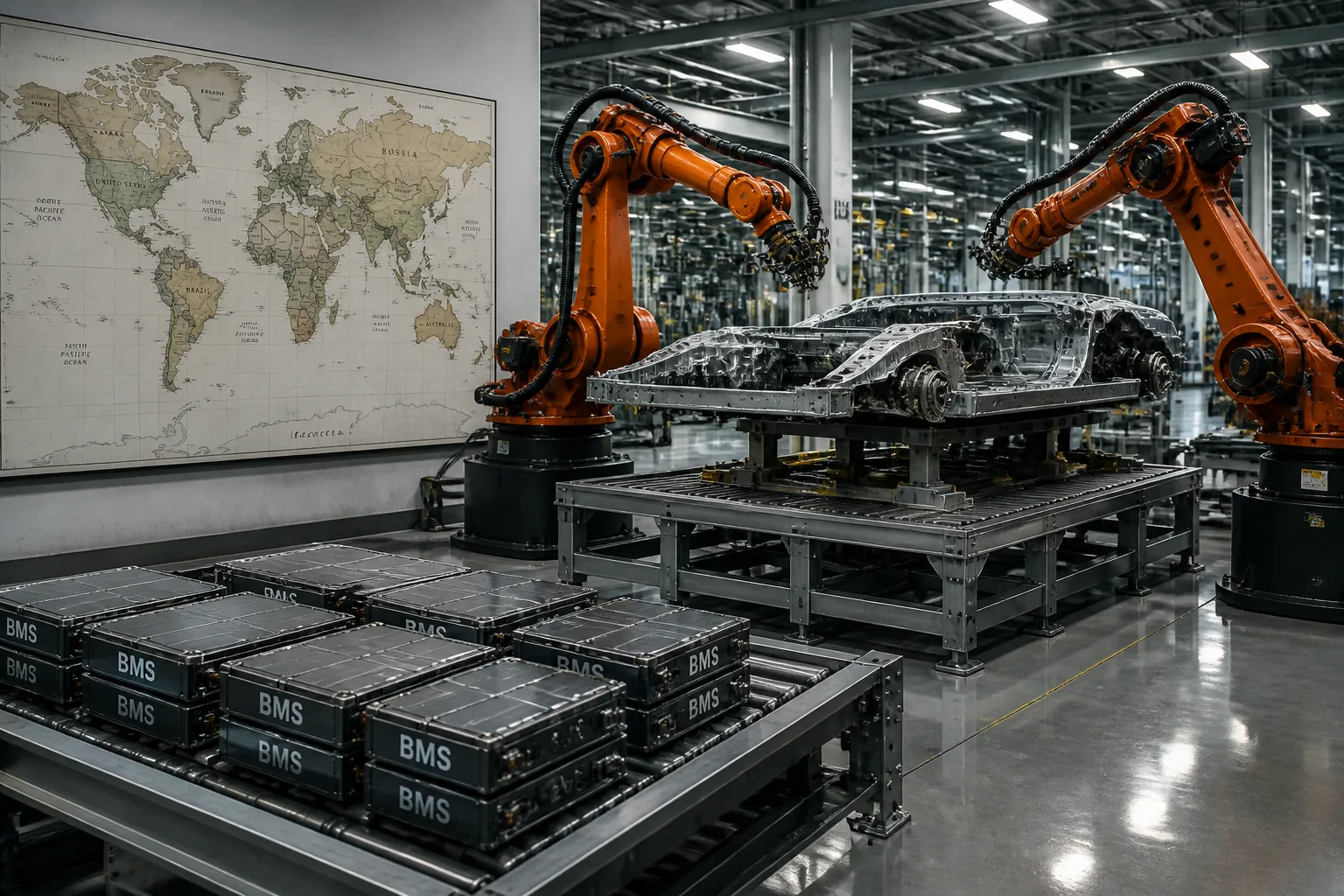
For up to $15,000, foreign investors are buying backstage passes to China’s most advanced factories. Shanghai‑based data‑research firm Baiguan is selling five‑day tours that let participants walk through production lines where robotics and electric‑vehicle (EV) manufacturing converge. The program, billed as a rare glimpse into the heart of China’s industrial automation, has already attracted more than two dozen investors, entrepreneurs and executives.
Robert Wu, Baiguan’s CEO, has led two such tours that drew participants from the United States, Southeast Asia and other regions. The company charges up to $15,000 for the experience, and about half of the attendees in the first two tours were from Southeast Asia. Visitors have included U.S. investment firms Dimension, Capital Group and Thrive Capital, as well as tech podcaster Lex Fridman.
China’s robotics industry has grown at a blistering pace. In 2022, the country accounted for 38 % of global industrial robot sales, with a domestic market worth $10.2 billion. Roughly half of those robots were deployed in automotive manufacturing, while electronics and logistics accounted for 22 % and 10 % respectively. Chinese firms such as Unitree Robotics, Siasun Robot & Automation, Ecovacs Robotics, Mech‑Mind Robotics and Horizon Robotics have become key players. These companies blend deep‑learning AI with mechanical design to produce humanoid, quadruped and industrial robots that are increasingly used on Chinese assembly lines.
The EV sector provides a complementary backdrop to the robotics narrative. China produced 12.4 million electric vehicles in 2024, representing more than 70 % of global output. In 2025, the country exported 5.2 million EVs and produced an additional 8.7 million units, according to industry statistics. The domestic market is dominated by Chinese brands, with BYD Auto and SAIC Motor occupying the top two spots. Government policies that began in 2009 and expanded subsidies have helped China become the world’s largest EV producer and exporter.
The convergence of robotics and EV manufacturing has fueled the “China shock 2.0” narrative that has appeared in policy discussions and media reports. Analysts note that the rapid scaling of Chinese factories, combined with advanced automation, raises concerns about potential displacement of manufacturing jobs in advanced economies. In response, the United States has implemented export controls targeting advanced computing and semiconductor technologies that could support China’s high‑tech manufacturing. The tours, while offering insight into production capabilities, also highlight the growing asymmetry in technological capabilities between China and many Western countries.
At present, the foreign‑visitor program continues to expand, with Baiguan and other boutique firms offering similar packages. The broader industry is watching how China’s robotics and EV sectors evolve, especially as U.S. export controls and international trade tensions shape the competitive landscape. In the coming months, new data releases on China’s EV production, updates on U.S. semiconductor export rules, and further commentary from industry experts will shed light on the implications of China’s manufacturing surge.
Robert Wu, Baiguan’s CEO, has led two such tours that drew participants from the United States, Southeast Asia and other regions. The company charges up to $15,000 for the experience, and about half of the attendees in the first two tours were from Southeast Asia. Visitors have included U.S. investment firms Dimension, Capital Group and Thrive Capital, as well as tech podcaster Lex Fridman.
China’s robotics industry has grown at a blistering pace. In 2022, the country accounted for 38 % of global industrial robot sales, with a domestic market worth $10.2 billion. Roughly half of those robots were deployed in automotive manufacturing, while electronics and logistics accounted for 22 % and 10 % respectively. Chinese firms such as Unitree Robotics, Siasun Robot & Automation, Ecovacs Robotics, Mech‑Mind Robotics and Horizon Robotics have become key players. These companies blend deep‑learning AI with mechanical design to produce humanoid, quadruped and industrial robots that are increasingly used on Chinese assembly lines.
The EV sector provides a complementary backdrop to the robotics narrative. China produced 12.4 million electric vehicles in 2024, representing more than 70 % of global output. In 2025, the country exported 5.2 million EVs and produced an additional 8.7 million units, according to industry statistics. The domestic market is dominated by Chinese brands, with BYD Auto and SAIC Motor occupying the top two spots. Government policies that began in 2009 and expanded subsidies have helped China become the world’s largest EV producer and exporter.
The convergence of robotics and EV manufacturing has fueled the “China shock 2.0” narrative that has appeared in policy discussions and media reports. Analysts note that the rapid scaling of Chinese factories, combined with advanced automation, raises concerns about potential displacement of manufacturing jobs in advanced economies. In response, the United States has implemented export controls targeting advanced computing and semiconductor technologies that could support China’s high‑tech manufacturing. The tours, while offering insight into production capabilities, also highlight the growing asymmetry in technological capabilities between China and many Western countries.
At present, the foreign‑visitor program continues to expand, with Baiguan and other boutique firms offering similar packages. The broader industry is watching how China’s robotics and EV sectors evolve, especially as U.S. export controls and international trade tensions shape the competitive landscape. In the coming months, new data releases on China’s EV production, updates on U.S. semiconductor export rules, and further commentary from industry experts will shed light on the implications of China’s manufacturing surge.