Blab Tech
Bengaluru Startup Dognosis Uses Dogs and AI to Detect Cancer from Breath Samples
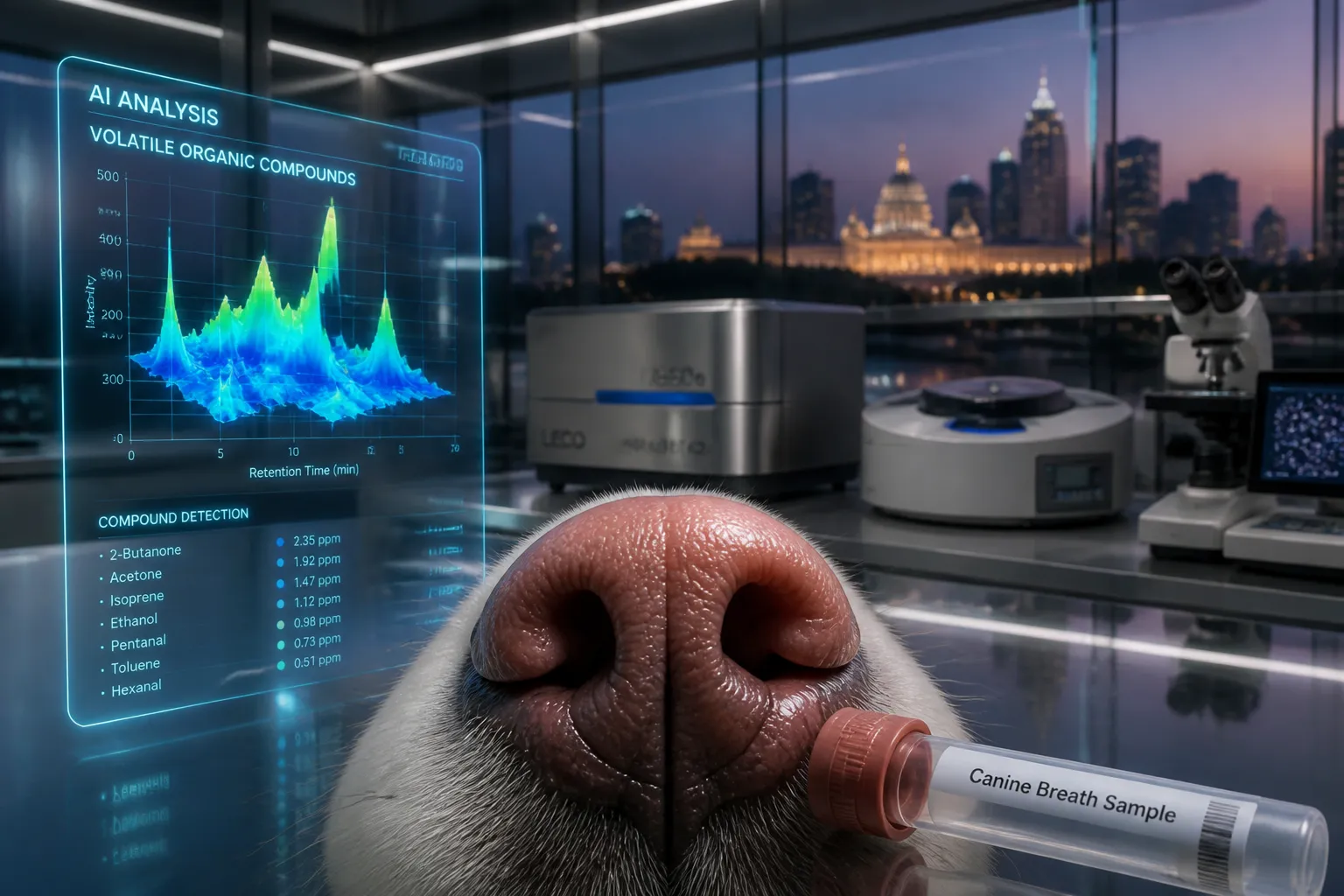
Bengaluru's Dognosis is turning tails into test tubes, announcing that a pack of trained canines paired with artificial intelligence can spot seven major cancers in human breath with more than 90 percent accuracy. The company says it will roll out a commercial screening service next year once it secures regulatory approval.
The heart of the system is a lightweight, 3‑D‑printed helmet that fits over a dog’s head. Inside, a network of sensors records brain activity, respiration and body language while the animal sniffs. The data are fed into an AI model that translates the dog’s reaction into a diagnostic signal. Each canine can perform thousands of sniffs in an hour, turning instinct into measurable data.
In a study published in the Journal of Clinical Oncology, Dognosis tested breath samples from over 1,500 participants at six hospitals across Karnataka. Patients exhaled into a cotton mask for about ten minutes; the mask was then sealed, transported to the lab, and the dogs sniffed the sample. The results showed an overall accuracy of more than 90 percent for the seven cancer types examined.
“The study is promising, as an early signal,” said Santhosh Kumar Devadas, head of oncology at Ramaiah Memorial Hospital. “But they need to do the study with a much larger group before we make any definitive conclusions.” Neelesh Reddy, senior consultant oncologist at Manipal Hospitals, added that the technology’s usefulness for patients will become clearer over time.
Dognosis currently works with 15 dogs—beagles, Labrador mixes, Dutch shepherds and other breeds—trained by positive reinforcement to detect the volatile organic compounds associated with cancer. The founders, 26‑year‑old cognitive‑science graduate Akash Kulgod of UC Berkeley and 28‑year‑old former Israeli special‑forces canine unit member Itamar Bitan, describe the training as a game. Dogs receive treats from an automatic feeder when they correctly identify a sample, and their work time is limited to 30‑45 minutes a day.
The startup’s website lists each dog as an official "sniffer" and includes photographs. Most animals are adopted or sourced from breeders, and they are given regular walks and playtime at a facility called "Sniffspace," where the dogs test samples on platforms equipped with automatic feeders.
Dognosis is the third company of its kind, following similar ventures in Germany and Israel. The company is backed by venture‑capital firms including Accel India and is collaborating with government medical institutions to advance its research. It plans to begin a real‑world screening program after obtaining commercial approval.
India’s cancer burden is high, with one in nine of the country’s 1.4 billion people expected to develop the disease. Early detection can improve survival rates, but many patients in India are diagnosed only after the disease has progressed. A non‑invasive, low‑cost screening tool based on canine olfaction could provide a first layer of screening that is scalable and affordable.
The company’s next steps include expanding the clinical study to larger populations, engaging with regulatory bodies for approval, and preparing for a commercial launch in 2027. The startup has not yet disclosed specific timelines for regulatory filings or market entry.
In summary, Dognosis has demonstrated a high‑accuracy, AI‑augmented canine screening platform for cancer detection from breath samples. The company is moving toward commercial deployment, with further validation and regulatory clearance required before it can be offered to the public.
The heart of the system is a lightweight, 3‑D‑printed helmet that fits over a dog’s head. Inside, a network of sensors records brain activity, respiration and body language while the animal sniffs. The data are fed into an AI model that translates the dog’s reaction into a diagnostic signal. Each canine can perform thousands of sniffs in an hour, turning instinct into measurable data.
In a study published in the Journal of Clinical Oncology, Dognosis tested breath samples from over 1,500 participants at six hospitals across Karnataka. Patients exhaled into a cotton mask for about ten minutes; the mask was then sealed, transported to the lab, and the dogs sniffed the sample. The results showed an overall accuracy of more than 90 percent for the seven cancer types examined.
“The study is promising, as an early signal,” said Santhosh Kumar Devadas, head of oncology at Ramaiah Memorial Hospital. “But they need to do the study with a much larger group before we make any definitive conclusions.” Neelesh Reddy, senior consultant oncologist at Manipal Hospitals, added that the technology’s usefulness for patients will become clearer over time.
Dognosis currently works with 15 dogs—beagles, Labrador mixes, Dutch shepherds and other breeds—trained by positive reinforcement to detect the volatile organic compounds associated with cancer. The founders, 26‑year‑old cognitive‑science graduate Akash Kulgod of UC Berkeley and 28‑year‑old former Israeli special‑forces canine unit member Itamar Bitan, describe the training as a game. Dogs receive treats from an automatic feeder when they correctly identify a sample, and their work time is limited to 30‑45 minutes a day.
The startup’s website lists each dog as an official "sniffer" and includes photographs. Most animals are adopted or sourced from breeders, and they are given regular walks and playtime at a facility called "Sniffspace," where the dogs test samples on platforms equipped with automatic feeders.
Dognosis is the third company of its kind, following similar ventures in Germany and Israel. The company is backed by venture‑capital firms including Accel India and is collaborating with government medical institutions to advance its research. It plans to begin a real‑world screening program after obtaining commercial approval.
India’s cancer burden is high, with one in nine of the country’s 1.4 billion people expected to develop the disease. Early detection can improve survival rates, but many patients in India are diagnosed only after the disease has progressed. A non‑invasive, low‑cost screening tool based on canine olfaction could provide a first layer of screening that is scalable and affordable.
The company’s next steps include expanding the clinical study to larger populations, engaging with regulatory bodies for approval, and preparing for a commercial launch in 2027. The startup has not yet disclosed specific timelines for regulatory filings or market entry.
In summary, Dognosis has demonstrated a high‑accuracy, AI‑augmented canine screening platform for cancer detection from breath samples. The company is moving toward commercial deployment, with further validation and regulatory clearance required before it can be offered to the public.