Blab Tech
Bedrock Robotics Deploys Operator-Free Excavators on U.S. Construction Sites, Nearing Human-Level Productivity
Bedrock Robotics, a San Francisco‑based startup, has begun operating fully autonomous excavators on three active infrastructure projects in Texas and Nevada. The machines, fitted with the company’s Bedrock Operator kit, work without a driver in the cab and report productivity that the firm says is close to that of experienced human operators.
The first deployment is a water‑treatment facility in Nevada, where Bedrock’s system is installed on an excavator used by Sundt Construction. In Texas, the company is working with Champion Site Prep on a multimillion‑cubic‑yard earth‑moving job. A third site, a 1.2‑million‑cubic‑yard civil project run by Zachry Construction Corporation, also hosts a Bedrock‑equipped machine. All three sites focus on early‑stage earthwork—cut‑and‑fill, rough cuts, and foundation preparation—tasks that typically occupy the first weeks of a construction schedule.
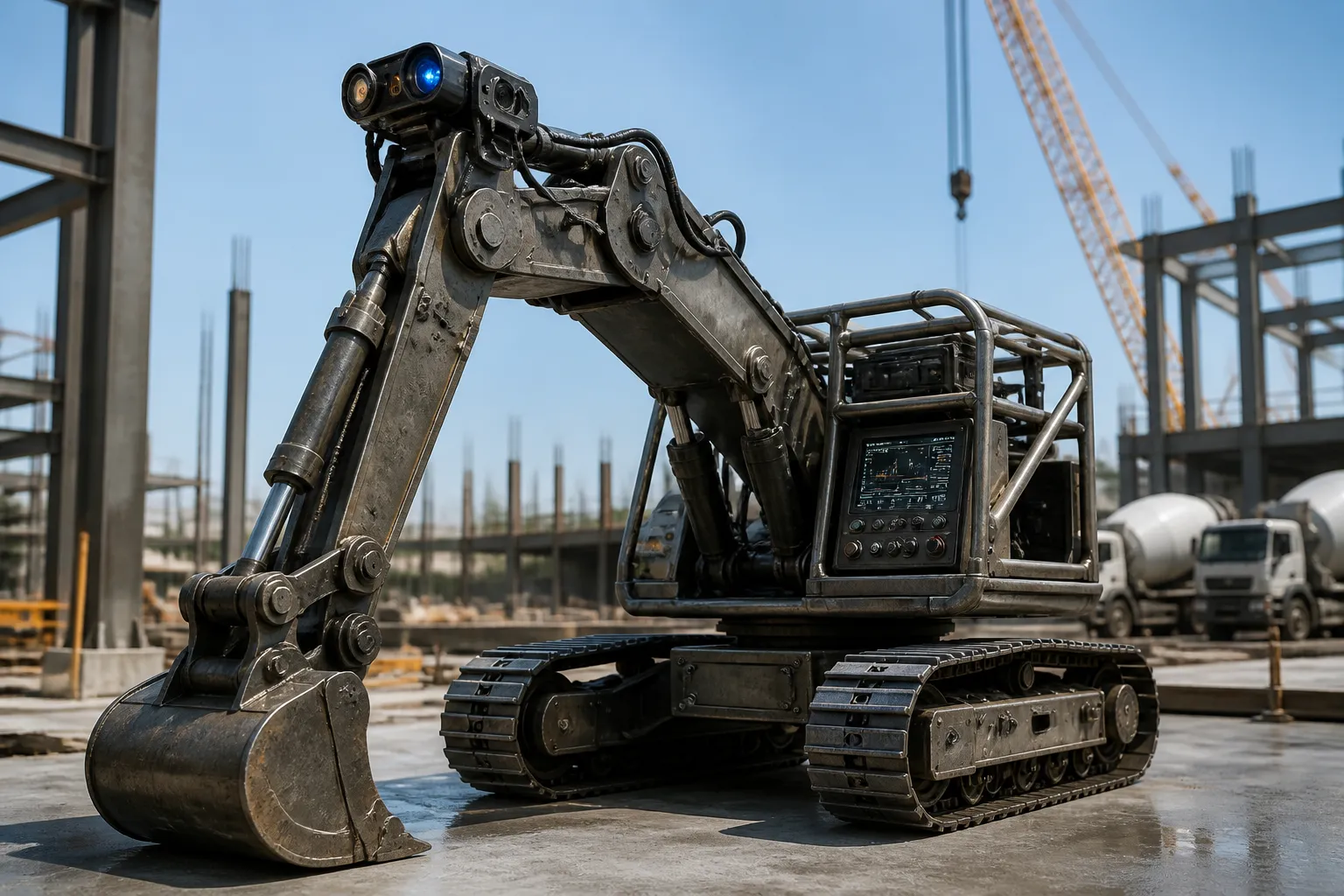
Bedrock’s autonomous solution is a retrofit kit that can be installed on existing heavy equipment in a single day. The kit includes a suite of sensors—multi‑camera arrays, LiDAR, GPS—and edge and cloud computing hardware that runs the Bedrock Operator software. The system uses machine‑learning models trained on tens of thousands of hours of field data to plan and execute digging operations. According to the company, the machines have been tested on Bedrock’s own facilities before being deployed on contractor sites.
Safety remains a priority. The system continuously monitors its surroundings and can automatically stop if a person or object comes within a predefined safety envelope. Human intervention is described as “relatively rare.” When a machine encounters an unusual situation, a remote operator can briefly take control until the autonomous system resumes operation.
Bedrock’s CEO, Kevin Peterson, said the company’s goal is to address the construction industry’s chronic labor shortage. Industry data indicate that roughly one in five construction workers is over 55, and more than 40 % of the workforce could retire within five years. A McKinsey study found that large construction projects often finish 20 % later than scheduled and run up to 80 % over budget. Bedrock argues that autonomous machines can keep earthwork on schedule when skilled operators are scarce.
The startup has raised more than $350 million in venture capital, including a $270 million Series B round in February 2026 led by CapitalG. Its founding team includes former Waymo engineers who spent years working on autonomous vehicles.
While Bedrock says operators will not be eliminated, the company envisions a future in which experienced crew members supervise fleets of autonomous machines. The firm also plans to develop coordination among multiple machines—excavators, bulldozers, trucks, and graders—so that a site manager can set a goal and let the connected fleet determine how to achieve it.
The current deployments are the first time Bedrock’s autonomous excavators have performed paid work on active construction sites. The company reports that productivity is approaching human levels, but independent verification of these figures has not yet been published. The broader construction community will be watching how the technology performs over longer periods and across a wider range of sites.
Safety, productivity, and labor dynamics remain the key metrics for evaluating the impact of Bedrock’s autonomous excavators. If the machines can maintain high output while operating safely around human crews, they could become a common sight on U.S. job sites.
Tags: Bedrock Robotics, autonomous excavators, construction automation, heavy equipment, AI in construction, labor shortage, Texas construction, Nevada construction, Sundt Construction, Champion Site Prep, Zachry Construction, AI, robotics, construction industry, safety, productivity, venture capital, funding, autonomous technology, construction workforce, automation, construction tech
The first deployment is a water‑treatment facility in Nevada, where Bedrock’s system is installed on an excavator used by Sundt Construction. In Texas, the company is working with Champion Site Prep on a multimillion‑cubic‑yard earth‑moving job. A third site, a 1.2‑million‑cubic‑yard civil project run by Zachry Construction Corporation, also hosts a Bedrock‑equipped machine. All three sites focus on early‑stage earthwork—cut‑and‑fill, rough cuts, and foundation preparation—tasks that typically occupy the first weeks of a construction schedule.
Bedrock’s autonomous solution is a retrofit kit that can be installed on existing heavy equipment in a single day. The kit includes a suite of sensors—multi‑camera arrays, LiDAR, GPS—and edge and cloud computing hardware that runs the Bedrock Operator software. The system uses machine‑learning models trained on tens of thousands of hours of field data to plan and execute digging operations. According to the company, the machines have been tested on Bedrock’s own facilities before being deployed on contractor sites.
Safety remains a priority. The system continuously monitors its surroundings and can automatically stop if a person or object comes within a predefined safety envelope. Human intervention is described as “relatively rare.” When a machine encounters an unusual situation, a remote operator can briefly take control until the autonomous system resumes operation.
Bedrock’s CEO, Kevin Peterson, said the company’s goal is to address the construction industry’s chronic labor shortage. Industry data indicate that roughly one in five construction workers is over 55, and more than 40 % of the workforce could retire within five years. A McKinsey study found that large construction projects often finish 20 % later than scheduled and run up to 80 % over budget. Bedrock argues that autonomous machines can keep earthwork on schedule when skilled operators are scarce.
The startup has raised more than $350 million in venture capital, including a $270 million Series B round in February 2026 led by CapitalG. Its founding team includes former Waymo engineers who spent years working on autonomous vehicles.
While Bedrock says operators will not be eliminated, the company envisions a future in which experienced crew members supervise fleets of autonomous machines. The firm also plans to develop coordination among multiple machines—excavators, bulldozers, trucks, and graders—so that a site manager can set a goal and let the connected fleet determine how to achieve it.
The current deployments are the first time Bedrock’s autonomous excavators have performed paid work on active construction sites. The company reports that productivity is approaching human levels, but independent verification of these figures has not yet been published. The broader construction community will be watching how the technology performs over longer periods and across a wider range of sites.
Safety, productivity, and labor dynamics remain the key metrics for evaluating the impact of Bedrock’s autonomous excavators. If the machines can maintain high output while operating safely around human crews, they could become a common sight on U.S. job sites.
Tags: Bedrock Robotics, autonomous excavators, construction automation, heavy equipment, AI in construction, labor shortage, Texas construction, Nevada construction, Sundt Construction, Champion Site Prep, Zachry Construction, AI, robotics, construction industry, safety, productivity, venture capital, funding, autonomous technology, construction workforce, automation, construction tech








