Blab Tech
ASMLs EUV Dominance Drives Q2 Earnings Beat and Investor Focus
ASML Holding NV, the Dutch company that builds the only commercially available extreme‑ultraviolet (EUV) lithography machines, reported second‑quarter 2026 results that exceeded analyst expectations and prompted the firm to raise its full‑year revenue forecast. The company’s net sales for the quarter were €9.3 billion, and the announcement came after a letter from the VT Holland Advisors Equity Fund that highlighted ASML’s role as a critical supplier for the semiconductor industry.
The fund’s Q2 2026 letter, released in April, described ASML’s technology as “indispensable for the next generation of semiconductors” and noted that the company would continue to benefit from the industry’s growth trajectory. The letter is part of the fund’s marketing communication and is not a regulatory filing. It reflects the fund’s view that ASML’s EUV systems are essential for producing advanced chips, especially those used in artificial‑intelligence (AI) applications.
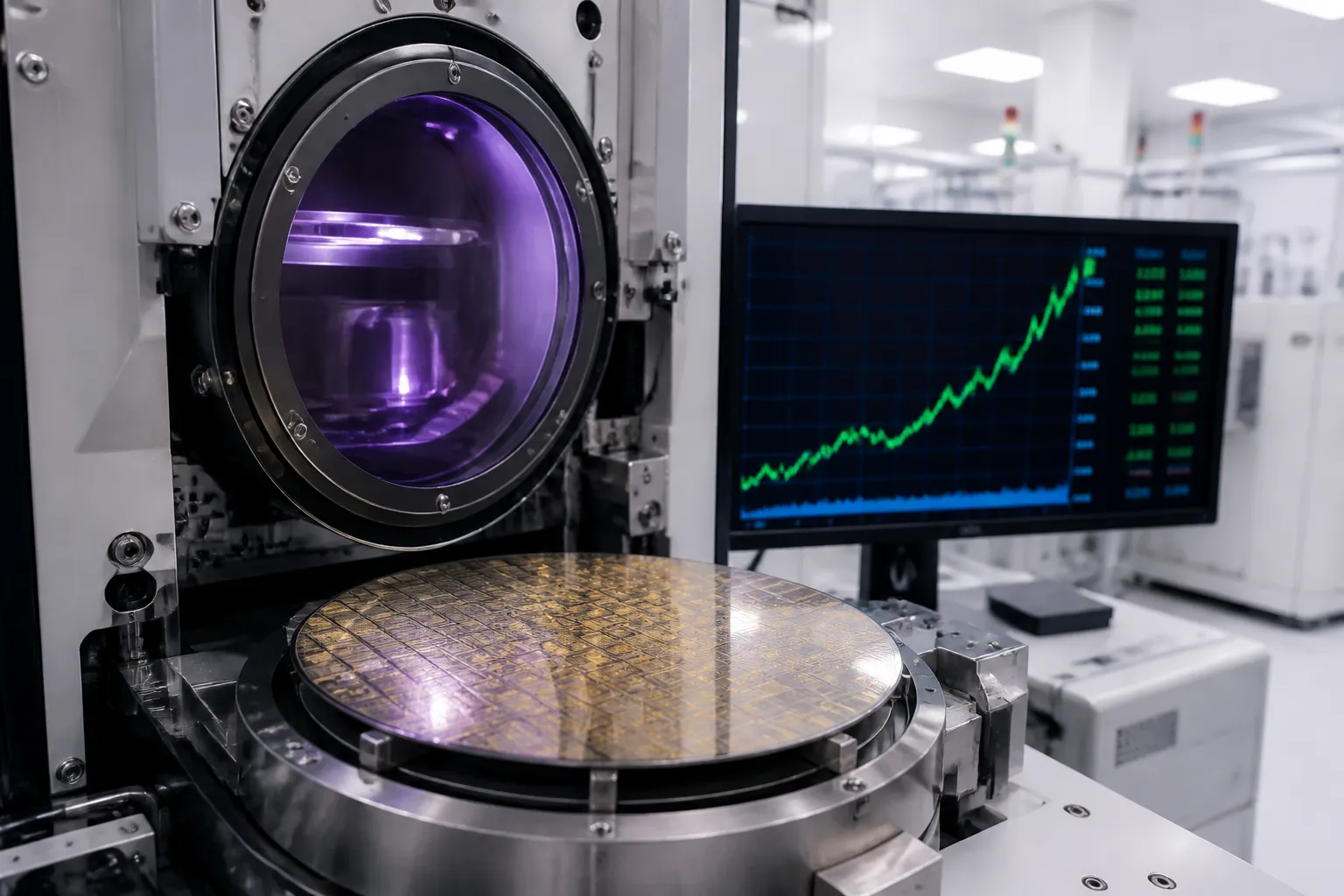
EUV lithography uses light with a wavelength of 13.5 nanometers, generated by a laser‑pulsed tin plasma source. The technology is required to pattern the smallest features on silicon wafers, enabling 5‑nanometer and 3‑nanometer process nodes that are common in modern AI processors. According to industry data, ASML holds 100 % of the global EUV market, and no other company currently manufactures EUV machines.
ASML’s history shows a steady progression from early failures to global dominance. Founded in 1984 as a joint venture between Philips and ASM International, the company became an independent public entity in 1988. Its first commercial product, the PAS 2000, was a technical failure, but the PAS 5500, introduced in the early 1990s, achieved commercial success. In 2012, Intel acquired a 15 % stake for $4.1 billion, and Samsung and TSMC later purchased stakes through a co‑investment program. The company completed the development of its EUV systems in the late 2010s.
ASML’s headquarters are in Veldhoven, Netherlands, where research, development, manufacturing, and assembly take place. The firm employs more than 42,000 people and relies on a network of nearly 5,000 tier‑1 suppliers. Its customer base is worldwide, with service points in 16 countries and offices in the United States, Belgium, France, Germany, Ireland, Israel, Italy, the United Kingdom, China, Hong Kong, Japan, South Korea, Malaysia, Singapore, and Taiwan.
The company’s Q2 2026 earnings call highlighted several factors that contributed to the strong performance. First, demand for AI chips has accelerated, driving higher sales of EUV systems. Second, ASML’s capacity expansion and pricing flexibility have allowed it to meet the growing demand without compromising margins. Third, the firm’s guidance for the full year was raised for the second time in 2026, reflecting sustained demand for advanced lithography equipment.
ASML’s market capitalization reached $718.25 billion on June 12 2026, up from approximately $527 billion in January 2026. The company’s shares trade on both the Euronext Amsterdam and Nasdaq exchanges and are a component of the EURO STOXX 50 and Nasdaq‑100 indices. While the company’s share price has shown volatility—its weekly volatility is 7 % and higher than 75 % of Dutch stocks—investors remain focused on its dominant position in EUV technology.
Regulatory scrutiny has increased in recent years. The United States and Dutch governments have imposed new oversight and restrictions on each individual sale of ASML technology to China. China has announced a prototype EUV system, but it is not yet commercially available, and the country continues to pursue alternative EUV light‑source approaches.
Looking ahead, ASML’s Q3 2026 earnings call is scheduled for October 14 2026. The company is expected to provide updated guidance, including a projected gross margin of 55‑57 %. Investors will watch the announcement closely, as it will indicate whether ASML can maintain its margin expansion streak and continue to capitalize on the AI‑driven chip demand.
In summary, ASML’s Q2 2026 results confirm the company’s strong market position and the continued importance of EUV lithography in the semiconductor supply chain. The firm’s ability to meet growing demand for advanced AI chips, combined with its unique technology and global reach, keeps it at the center of investor attention and industry analysis.
The fund’s Q2 2026 letter, released in April, described ASML’s technology as “indispensable for the next generation of semiconductors” and noted that the company would continue to benefit from the industry’s growth trajectory. The letter is part of the fund’s marketing communication and is not a regulatory filing. It reflects the fund’s view that ASML’s EUV systems are essential for producing advanced chips, especially those used in artificial‑intelligence (AI) applications.
EUV lithography uses light with a wavelength of 13.5 nanometers, generated by a laser‑pulsed tin plasma source. The technology is required to pattern the smallest features on silicon wafers, enabling 5‑nanometer and 3‑nanometer process nodes that are common in modern AI processors. According to industry data, ASML holds 100 % of the global EUV market, and no other company currently manufactures EUV machines.
ASML’s history shows a steady progression from early failures to global dominance. Founded in 1984 as a joint venture between Philips and ASM International, the company became an independent public entity in 1988. Its first commercial product, the PAS 2000, was a technical failure, but the PAS 5500, introduced in the early 1990s, achieved commercial success. In 2012, Intel acquired a 15 % stake for $4.1 billion, and Samsung and TSMC later purchased stakes through a co‑investment program. The company completed the development of its EUV systems in the late 2010s.
ASML’s headquarters are in Veldhoven, Netherlands, where research, development, manufacturing, and assembly take place. The firm employs more than 42,000 people and relies on a network of nearly 5,000 tier‑1 suppliers. Its customer base is worldwide, with service points in 16 countries and offices in the United States, Belgium, France, Germany, Ireland, Israel, Italy, the United Kingdom, China, Hong Kong, Japan, South Korea, Malaysia, Singapore, and Taiwan.
The company’s Q2 2026 earnings call highlighted several factors that contributed to the strong performance. First, demand for AI chips has accelerated, driving higher sales of EUV systems. Second, ASML’s capacity expansion and pricing flexibility have allowed it to meet the growing demand without compromising margins. Third, the firm’s guidance for the full year was raised for the second time in 2026, reflecting sustained demand for advanced lithography equipment.
ASML’s market capitalization reached $718.25 billion on June 12 2026, up from approximately $527 billion in January 2026. The company’s shares trade on both the Euronext Amsterdam and Nasdaq exchanges and are a component of the EURO STOXX 50 and Nasdaq‑100 indices. While the company’s share price has shown volatility—its weekly volatility is 7 % and higher than 75 % of Dutch stocks—investors remain focused on its dominant position in EUV technology.
Regulatory scrutiny has increased in recent years. The United States and Dutch governments have imposed new oversight and restrictions on each individual sale of ASML technology to China. China has announced a prototype EUV system, but it is not yet commercially available, and the country continues to pursue alternative EUV light‑source approaches.
Looking ahead, ASML’s Q3 2026 earnings call is scheduled for October 14 2026. The company is expected to provide updated guidance, including a projected gross margin of 55‑57 %. Investors will watch the announcement closely, as it will indicate whether ASML can maintain its margin expansion streak and continue to capitalize on the AI‑driven chip demand.
In summary, ASML’s Q2 2026 results confirm the company’s strong market position and the continued importance of EUV lithography in the semiconductor supply chain. The firm’s ability to meet growing demand for advanced AI chips, combined with its unique technology and global reach, keeps it at the center of investor attention and industry analysis.








