Blab Tech
Fering Partners with Turntide to Power Rugged Hybrid Vehicles with Axial Flux Motors
When rugged meets electrified, the off‑road world gets a new power source. In early 2026, Fering Technologies announced that it has chosen Turntide Technologies to supply the electric propulsion components for its next‑generation parallel‑hybrid platform.
The deal will see Turntide’s axial‑flux motors, motor‑generator units and DC‑to‑AC inverters integrated into Fering’s hardened 4×4 chassis. The partnership is designed to bring electrification to vehicles that traditionally rely on diesel or gasoline engines, expanding the reach of hybrid technology into the most demanding environments.
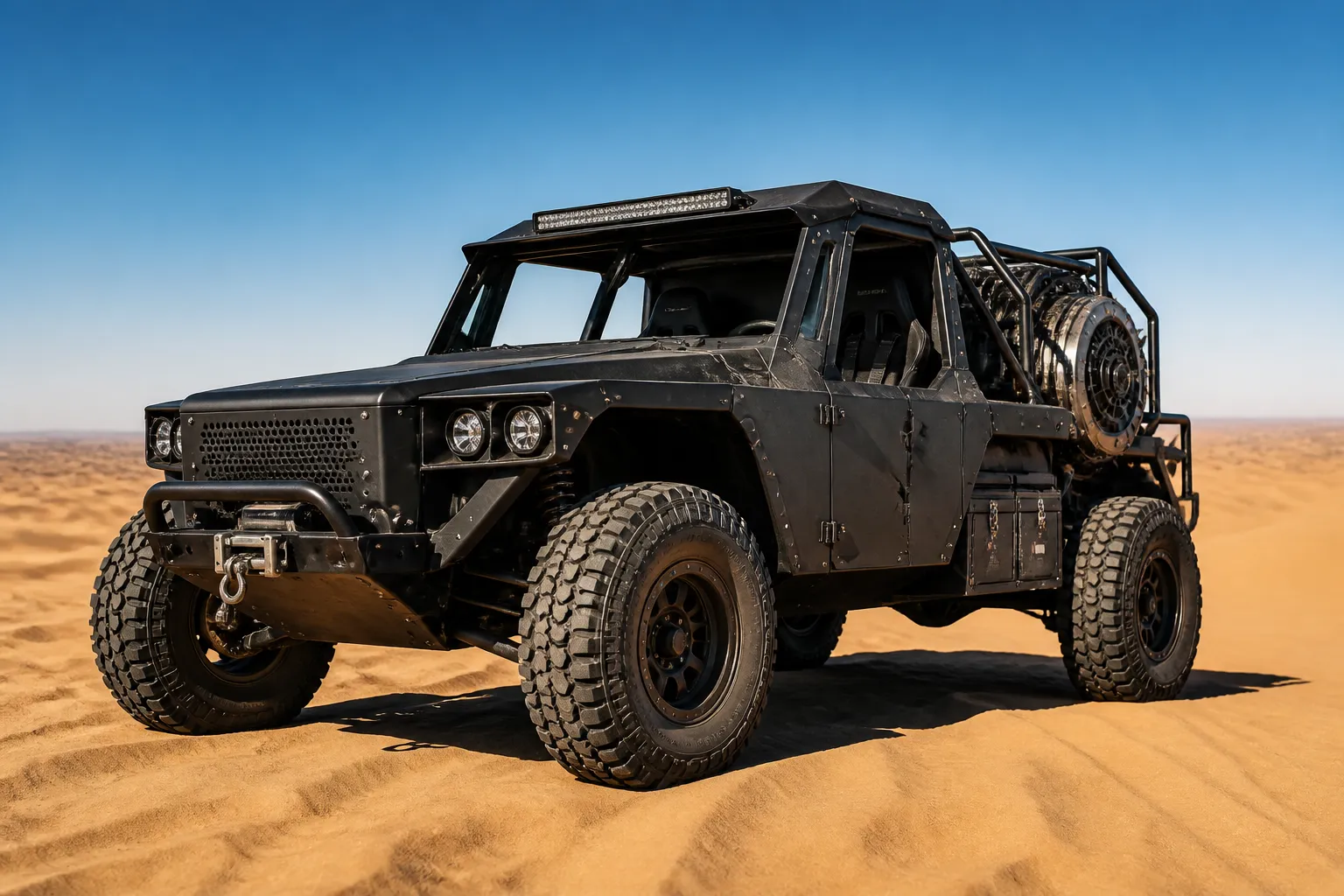
Fering’s new vehicle is a high‑performance hybrid Jeep that can reach 128 km/h in ideal conditions. Built for extreme duty cycles and long‑range operation in harsh terrain, the Jeep will combine a battery‑powered electric drive with an internal combustion engine in a parallel‑hybrid configuration. “This collaboration brings together Turntide’s world‑class electrification technology with Fering’s innovative approach to extreme mobility,” said Gareth Reece, Fering’s chief commercial officer.
Turntide, headquartered in the United Kingdom with operations in North America and India, specializes in compact, high‑torque electric motors and power electronics. According to the company’s website, its axial‑flux motors deliver up to 6.9 kW per kilogram of weight and 18.7 Nm per kilogram of torque at 800 VDC. Low cogging and torque ripple reduce NVH, while the motors can be stacked to scale power. They are engineered to operate up to 850 VDC, with a peak over‑voltage tolerance of 1 kV. Turntide’s Gen 6 DC‑to‑AC inverters are built for high efficiency and reliability in demanding environments.
Fering evaluated several axial‑flux suppliers before choosing Turntide. The company cited Turntide’s performance data, reliability record and engineering support as decisive factors. “The compact size and high performance of axial‑flux technology can help manufacturers integrate electric propulsion into existing vehicle platforms while delivering the performance and capability required for next‑generation vehicles,” said Brad Bell, Turntide’s chief commercial officer.
The propulsion package supplied by Turntide includes three key components: an axial‑flux traction motor, a motor‑generator unit for power generation, and inverters for motor control. The parallel‑hybrid architecture allows the vehicle to draw power from the battery, the internal combustion engine, or both simultaneously, depending on operating conditions. This configuration is designed to maximize efficiency and range without compromising the vehicle’s rugged capabilities.
Industry analysts view the partnership as a step toward broader electrification of off‑road and commercial vehicles. Axial‑flux motors are increasingly used in aerospace, marine, and industrial applications because of their high torque density and lightweight construction. By integrating these motors into a proven off‑road chassis, Fering and Turntide demonstrate that hybridization can be applied to vehicles that operate in remote or extreme environments.
The collaboration also highlights the growing importance of power electronics in hybrid systems. Turntide’s inverters convert DC power from the battery or generator into the AC power needed by the traction motor. Designed to handle high voltages and provide smooth motor control, the inverters are critical for maintaining vehicle stability and performance in variable terrain.
At present, the partnership is in the integration phase. Fering has not announced a production date for the new hybrid Jeep, but the company has indicated that it plans to begin testing the integrated propulsion system later in 2026. Turntide has not yet disclosed specific performance metrics for the combined system.
In summary, Fering’s selection of Turntide’s axial‑flux motors and inverters marks a significant development in the electrification of rugged vehicles. The partnership leverages Turntide’s high‑torque, compact motors and robust power electronics to enable a parallel‑hybrid drivetrain that can meet the demanding duty cycles of off‑road applications. While production timelines remain uncertain, the collaboration signals that hybrid technology is expanding beyond conventional passenger cars into vehicles designed for extreme mobility.
The deal will see Turntide’s axial‑flux motors, motor‑generator units and DC‑to‑AC inverters integrated into Fering’s hardened 4×4 chassis. The partnership is designed to bring electrification to vehicles that traditionally rely on diesel or gasoline engines, expanding the reach of hybrid technology into the most demanding environments.
Fering’s new vehicle is a high‑performance hybrid Jeep that can reach 128 km/h in ideal conditions. Built for extreme duty cycles and long‑range operation in harsh terrain, the Jeep will combine a battery‑powered electric drive with an internal combustion engine in a parallel‑hybrid configuration. “This collaboration brings together Turntide’s world‑class electrification technology with Fering’s innovative approach to extreme mobility,” said Gareth Reece, Fering’s chief commercial officer.
Turntide, headquartered in the United Kingdom with operations in North America and India, specializes in compact, high‑torque electric motors and power electronics. According to the company’s website, its axial‑flux motors deliver up to 6.9 kW per kilogram of weight and 18.7 Nm per kilogram of torque at 800 VDC. Low cogging and torque ripple reduce NVH, while the motors can be stacked to scale power. They are engineered to operate up to 850 VDC, with a peak over‑voltage tolerance of 1 kV. Turntide’s Gen 6 DC‑to‑AC inverters are built for high efficiency and reliability in demanding environments.
Fering evaluated several axial‑flux suppliers before choosing Turntide. The company cited Turntide’s performance data, reliability record and engineering support as decisive factors. “The compact size and high performance of axial‑flux technology can help manufacturers integrate electric propulsion into existing vehicle platforms while delivering the performance and capability required for next‑generation vehicles,” said Brad Bell, Turntide’s chief commercial officer.
The propulsion package supplied by Turntide includes three key components: an axial‑flux traction motor, a motor‑generator unit for power generation, and inverters for motor control. The parallel‑hybrid architecture allows the vehicle to draw power from the battery, the internal combustion engine, or both simultaneously, depending on operating conditions. This configuration is designed to maximize efficiency and range without compromising the vehicle’s rugged capabilities.
Industry analysts view the partnership as a step toward broader electrification of off‑road and commercial vehicles. Axial‑flux motors are increasingly used in aerospace, marine, and industrial applications because of their high torque density and lightweight construction. By integrating these motors into a proven off‑road chassis, Fering and Turntide demonstrate that hybridization can be applied to vehicles that operate in remote or extreme environments.
The collaboration also highlights the growing importance of power electronics in hybrid systems. Turntide’s inverters convert DC power from the battery or generator into the AC power needed by the traction motor. Designed to handle high voltages and provide smooth motor control, the inverters are critical for maintaining vehicle stability and performance in variable terrain.
At present, the partnership is in the integration phase. Fering has not announced a production date for the new hybrid Jeep, but the company has indicated that it plans to begin testing the integrated propulsion system later in 2026. Turntide has not yet disclosed specific performance metrics for the combined system.
In summary, Fering’s selection of Turntide’s axial‑flux motors and inverters marks a significant development in the electrification of rugged vehicles. The partnership leverages Turntide’s high‑torque, compact motors and robust power electronics to enable a parallel‑hybrid drivetrain that can meet the demanding duty cycles of off‑road applications. While production timelines remain uncertain, the collaboration signals that hybrid technology is expanding beyond conventional passenger cars into vehicles designed for extreme mobility.








