Blab Tech
U.S. Navy Completes Critical Design Review for E-2D Block II Upgrade
The U.S. Navy and Northrop Grumman announced on 18 August 2026 that the Block II upgrade for the E‑2D Advanced Hawkeye airborne early‑warning and control (AEW&C) aircraft has passed its Critical Design Review (CDR). The milestone clears the program to move from design to aircraft retrofits and flight testing, which is scheduled to begin in Fiscal Year 2029.
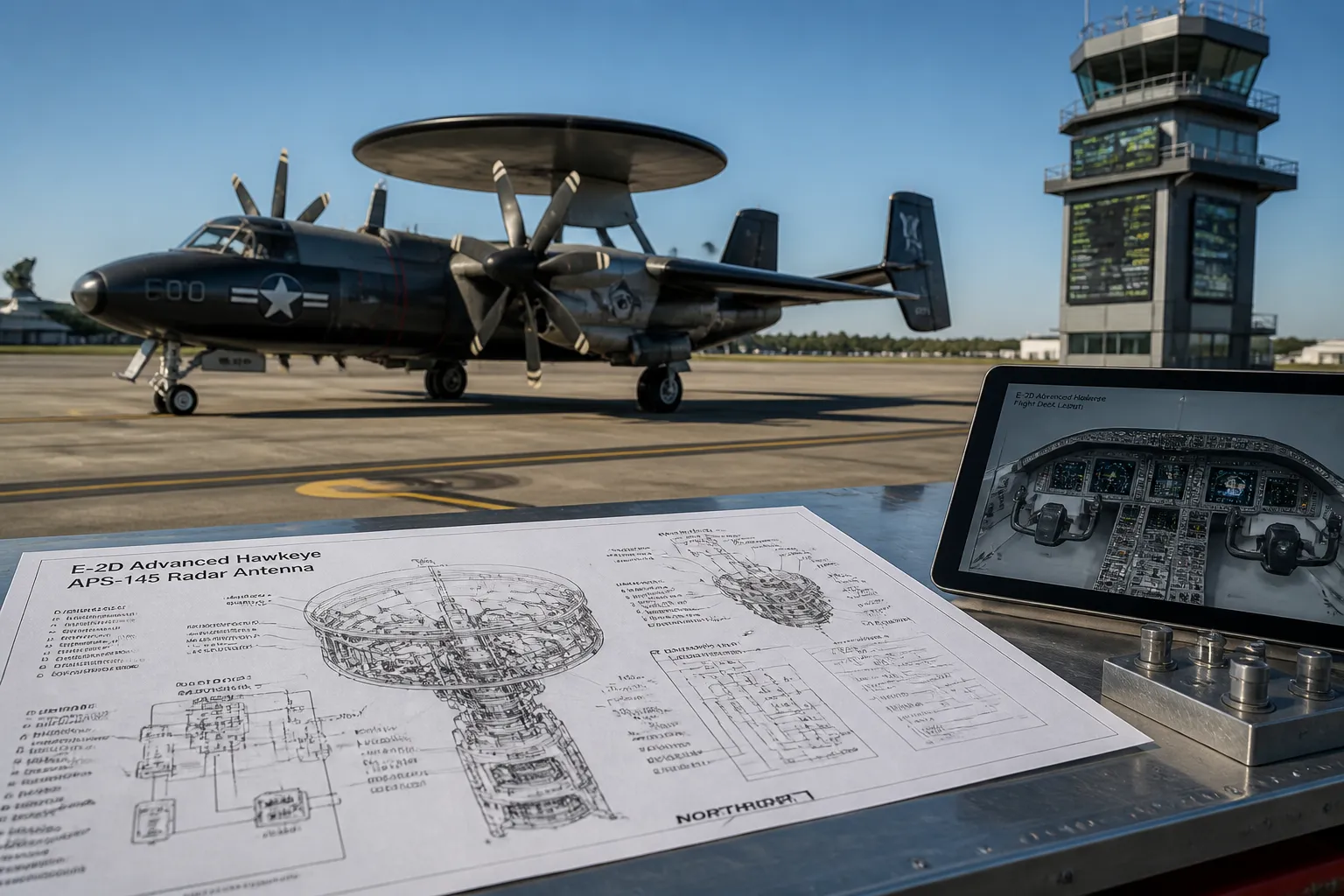
The Block II upgrade is a comprehensive overhaul of the E‑2D’s mission systems, computers, displays and cockpit. It introduces an open‑systems software architecture, increased computing power, modular interfaces and enhanced cybersecurity. The Navy says the new architecture will resolve parts obsolescence, allow rapid insertion of new capabilities and improve sensor fusion and crew workload. Northrop Grumman described the upgrade as the most significant change to the E‑2D since its first flight in 2007.
A contract signed on 22 July 2026 awarded Northrop Grumman $1.2 billion for three new E‑2D aircraft that will be built to Block II specifications. The Navy obligated $583 million of FY 2026 aircraft procurement funds for the award. Delivery of the three aircraft is scheduled for 2031. Existing E‑2Ds in the fleet will also receive the Block II upgrade.
The Navy’s E‑2D fleet totals 86 aircraft, with 62 delivered by the end of 2024. The service’s requirement is for 86 E‑2Ds. Procurement of the aircraft was paused after the FY 2024 budget request but resumed in FY 2026 after Congress approved funding for the three new aircraft. In the FY 2027 budget request the Navy asked for six additional E‑2Ds, with plans to operate the type into the 2040s.
Block II builds on the Delta System Software Configuration 6 (DSSC‑6). The open‑systems architecture is designed to support future artificial‑intelligence and machine‑learning technologies, new sensors and additional upgrades. The new cockpit architecture is intended to reduce pilot workload and improve battlespace management. The primary sensor on the E‑2D, the AN/APY‑9 active electronically scanned array (AESA) radar, will continue to provide detection and tracking of aerial and maritime targets.
The E‑2D’s development has progressed through a series of software configurations. DSSC‑1 added radar, mission computer display and communications upgrades. DSSC‑2 added satellite communications and an identification friend or foe (IFF) system. DSSC‑3 improved target‑tracking, while DSSC‑3.1 upgraded radio communications and aerial‑refueling capabilities. DSSC‑4 added data fusion, satellite navigation, beyond‑line‑of‑sight communications and sensor integration. DSSC‑5 and DSSC‑6, planned for FY 2025 and FY 2026 respectively, added sensor upgrades, counter‑electronic attack capability and readiness and reliability improvements.
Other recent developments include a $62 million contract awarded in January to BAE Systems for a depot to maintain the AN/APX‑122A IFF system, flight testing in April of a new radar subsystem by Lockheed Martin and Northrop Grumman, and the selection of Green Hills Software’s real‑time operating system for the GPS‑modernized embedded GPS/inertial navigation system.
The E‑2D is currently operational with eight of the nine deployable U.S. Navy Airborne Command and Control squadrons assigned to carrier air wings. The aircraft played a role in the 2024 West Asia conflict, tracking Shahed‑type one‑way attack drones. France, Egypt and Taiwan operate the earlier E‑2C variant; the French Navy is scheduled to transition to the E‑2D in 2027, and the U.S. Navy will transition its last E‑2C squadron.
The Block II CDR confirms that the upgrade has met all technical and safety requirements set by the Navy and Northrop Grumman. The next phase will involve retrofitting existing aircraft, integrating the new systems into the production line for future E‑2Ds and conducting flight tests in FY 2029. The Navy expects the upgrade to extend the service life of the fleet, reduce maintenance costs and improve operational effectiveness.
The milestone is a key step in the Navy’s long‑term plan to maintain a modern, network‑centric AEW&C capability. The Block II upgrade will enable the E‑2D to keep pace with evolving threats and technology, ensuring that the platform remains a critical asset for carrier strike groups and joint operations into the 2040s.
The Block II upgrade is a comprehensive overhaul of the E‑2D’s mission systems, computers, displays and cockpit. It introduces an open‑systems software architecture, increased computing power, modular interfaces and enhanced cybersecurity. The Navy says the new architecture will resolve parts obsolescence, allow rapid insertion of new capabilities and improve sensor fusion and crew workload. Northrop Grumman described the upgrade as the most significant change to the E‑2D since its first flight in 2007.
A contract signed on 22 July 2026 awarded Northrop Grumman $1.2 billion for three new E‑2D aircraft that will be built to Block II specifications. The Navy obligated $583 million of FY 2026 aircraft procurement funds for the award. Delivery of the three aircraft is scheduled for 2031. Existing E‑2Ds in the fleet will also receive the Block II upgrade.
The Navy’s E‑2D fleet totals 86 aircraft, with 62 delivered by the end of 2024. The service’s requirement is for 86 E‑2Ds. Procurement of the aircraft was paused after the FY 2024 budget request but resumed in FY 2026 after Congress approved funding for the three new aircraft. In the FY 2027 budget request the Navy asked for six additional E‑2Ds, with plans to operate the type into the 2040s.
Block II builds on the Delta System Software Configuration 6 (DSSC‑6). The open‑systems architecture is designed to support future artificial‑intelligence and machine‑learning technologies, new sensors and additional upgrades. The new cockpit architecture is intended to reduce pilot workload and improve battlespace management. The primary sensor on the E‑2D, the AN/APY‑9 active electronically scanned array (AESA) radar, will continue to provide detection and tracking of aerial and maritime targets.
The E‑2D’s development has progressed through a series of software configurations. DSSC‑1 added radar, mission computer display and communications upgrades. DSSC‑2 added satellite communications and an identification friend or foe (IFF) system. DSSC‑3 improved target‑tracking, while DSSC‑3.1 upgraded radio communications and aerial‑refueling capabilities. DSSC‑4 added data fusion, satellite navigation, beyond‑line‑of‑sight communications and sensor integration. DSSC‑5 and DSSC‑6, planned for FY 2025 and FY 2026 respectively, added sensor upgrades, counter‑electronic attack capability and readiness and reliability improvements.
Other recent developments include a $62 million contract awarded in January to BAE Systems for a depot to maintain the AN/APX‑122A IFF system, flight testing in April of a new radar subsystem by Lockheed Martin and Northrop Grumman, and the selection of Green Hills Software’s real‑time operating system for the GPS‑modernized embedded GPS/inertial navigation system.
The E‑2D is currently operational with eight of the nine deployable U.S. Navy Airborne Command and Control squadrons assigned to carrier air wings. The aircraft played a role in the 2024 West Asia conflict, tracking Shahed‑type one‑way attack drones. France, Egypt and Taiwan operate the earlier E‑2C variant; the French Navy is scheduled to transition to the E‑2D in 2027, and the U.S. Navy will transition its last E‑2C squadron.
The Block II CDR confirms that the upgrade has met all technical and safety requirements set by the Navy and Northrop Grumman. The next phase will involve retrofitting existing aircraft, integrating the new systems into the production line for future E‑2Ds and conducting flight tests in FY 2029. The Navy expects the upgrade to extend the service life of the fleet, reduce maintenance costs and improve operational effectiveness.
The milestone is a key step in the Navy’s long‑term plan to maintain a modern, network‑centric AEW&C capability. The Block II upgrade will enable the E‑2D to keep pace with evolving threats and technology, ensuring that the platform remains a critical asset for carrier strike groups and joint operations into the 2040s.