Blab Tech
New York Schools Embrace AI, Humanoid Robots, and Chatbots Amid Rising Tech Spending
On August 18, 2026, New York Focus reported that school districts across the state are investing in a range of technology tools, including AI‑powered reading programs for elementary students, chatbots that offer personalized learning support, and a humanoid robot slated for classroom use. The report also announced a 13‑question survey aimed at K‑12 teachers to gauge their views on these initiatives.
The survey, which will take approximately five minutes to complete, is open to educators statewide. Respondents will not be identified in any published analysis, and the data will be used to inform a broader investigation into how technology is shaping instruction in New York schools.
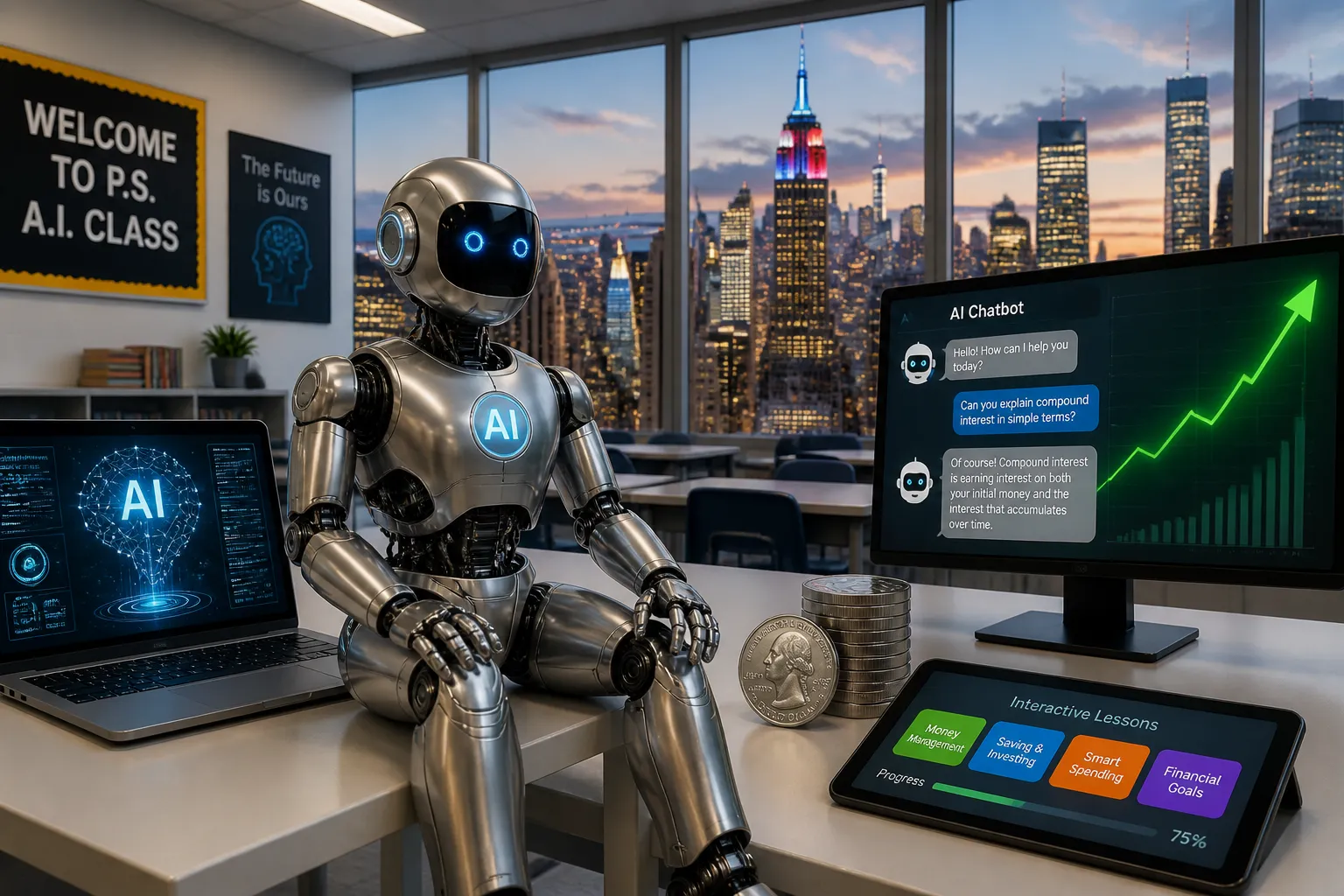
A key development highlighted by the Focus article is the planned trial of a humanoid robot named “Sally” in high‑school classrooms in a rural district. According to a July 29, 2026 report, the robot will be used to demonstrate interactive learning scenarios. A demonstration for the Focus team included a scenario in which the robot responded to a student describing bullying, illustrating the system’s conversational capabilities. The project has attracted international attention as one of the first deployments of a humanoid robot in a U.S. public‑school setting.
Chatbots are also becoming common in New York classrooms. The Focus piece notes that several districts are using AI chatbots to provide individualized support to students. A free version of ChatGPT for Teachers, available to verified U.S. K‑12 educators until June 2027, is one example of a tool that teachers can use to answer questions, generate practice problems, and track progress. Other reports indicate that chatbots are being considered for curriculum planning, with educators discussing how the technology can enhance engagement while noting the need for oversight.
In addition to conversational tools, AI‑driven reading programs are being introduced in elementary grades. The Center for Early Literacy and Responsible AI (CELaRAI) is conducting research on beginning‑reading instruction for culturally and linguistically diverse learners in urban, suburban, and rural New York schools. The initiative aims to combine responsible AI practices with evidence‑based literacy instruction.
These technology investments come against a backdrop of significant public spending. New York State spends roughly $32,000 per student, about 90 % more than the national average, according to the New York State Education Department (NYSED). NYSED oversees all public schools, standardized testing, and the administration of state exams, and it is responsible for ensuring that technology deployments comply with state regulations.
While the benefits of AI and robotics in education include personalized learning and increased engagement, experts caution that there are risks. Concerns include data privacy, potential bias in AI models, the possibility of over‑reliance on technology, and the need for AI literacy among teachers and students. The NYSED’s guidance on artificial intelligence, released a month ago, emphasizes the importance of ethical grounding and critical thinking skills.
At present, no new regulatory actions have been announced in response to these deployments. The upcoming survey results will likely shape future reporting and may influence district decisions on technology adoption. As the state continues to lead in per‑student spending, the integration of AI, chatbots, and humanoid robots represents a significant shift in how instruction is delivered.
The current situation remains in flux. The humanoid robot trial is scheduled to begin in the fall, and several districts plan to roll out AI reading programs in the next academic year. The survey’s findings, expected in early September, will provide insight into teacher sentiment and help determine whether these technologies meet educational goals while addressing ethical and equity concerns.
The survey, which will take approximately five minutes to complete, is open to educators statewide. Respondents will not be identified in any published analysis, and the data will be used to inform a broader investigation into how technology is shaping instruction in New York schools.
A key development highlighted by the Focus article is the planned trial of a humanoid robot named “Sally” in high‑school classrooms in a rural district. According to a July 29, 2026 report, the robot will be used to demonstrate interactive learning scenarios. A demonstration for the Focus team included a scenario in which the robot responded to a student describing bullying, illustrating the system’s conversational capabilities. The project has attracted international attention as one of the first deployments of a humanoid robot in a U.S. public‑school setting.
Chatbots are also becoming common in New York classrooms. The Focus piece notes that several districts are using AI chatbots to provide individualized support to students. A free version of ChatGPT for Teachers, available to verified U.S. K‑12 educators until June 2027, is one example of a tool that teachers can use to answer questions, generate practice problems, and track progress. Other reports indicate that chatbots are being considered for curriculum planning, with educators discussing how the technology can enhance engagement while noting the need for oversight.
In addition to conversational tools, AI‑driven reading programs are being introduced in elementary grades. The Center for Early Literacy and Responsible AI (CELaRAI) is conducting research on beginning‑reading instruction for culturally and linguistically diverse learners in urban, suburban, and rural New York schools. The initiative aims to combine responsible AI practices with evidence‑based literacy instruction.
These technology investments come against a backdrop of significant public spending. New York State spends roughly $32,000 per student, about 90 % more than the national average, according to the New York State Education Department (NYSED). NYSED oversees all public schools, standardized testing, and the administration of state exams, and it is responsible for ensuring that technology deployments comply with state regulations.
While the benefits of AI and robotics in education include personalized learning and increased engagement, experts caution that there are risks. Concerns include data privacy, potential bias in AI models, the possibility of over‑reliance on technology, and the need for AI literacy among teachers and students. The NYSED’s guidance on artificial intelligence, released a month ago, emphasizes the importance of ethical grounding and critical thinking skills.
At present, no new regulatory actions have been announced in response to these deployments. The upcoming survey results will likely shape future reporting and may influence district decisions on technology adoption. As the state continues to lead in per‑student spending, the integration of AI, chatbots, and humanoid robots represents a significant shift in how instruction is delivered.
The current situation remains in flux. The humanoid robot trial is scheduled to begin in the fall, and several districts plan to roll out AI reading programs in the next academic year. The survey’s findings, expected in early September, will provide insight into teacher sentiment and help determine whether these technologies meet educational goals while addressing ethical and equity concerns.








