Blab Tech
Globe Business Unveils Intelligent Transformation Framework at G Summit 2026
Globe Business announced its new Intelligent Transformation framework at the Philippine G Summit 2026, a gathering that brought together the country’s top business leaders. The framework promises to fuse cloud, cybersecurity, APIs, and artificial intelligence into a single, resilient enterprise architecture, the company said in a press release.
During the summit’s opening session, executives learned that Philippine enterprises now run an average of 120 separate applications. Globe Business framed the shift from simply adding more software to weaving those systems into a coherent “brain.” Vice President Glenn Estrella emphasized, “Enterprise scale demands seamless harmony across every layer of the technology stack,” and noted that the summit offers practical blueprints for managing increasingly complex systems.
The company used the event to demonstrate how integration can boost operational efficiency. Former Chief Innovation Officer of DBS Bank, Neal Cross, presented a case study from his tenure at the bank. Cross explained that “delivering frictionless customer interactions, such as instant onboarding and high‑availability digital banking, hinged on an always‑on network foundation built for real‑time data integration.” He added that linking customer‑facing channels directly to secure, automated backend infrastructure eliminated latency and accelerated feature deployment.
After the keynote talks, delegates moved into four interactive experience rooms that brought the framework’s core concepts to life.
In the Orchestrated Infrastructure room, executives watched live stress tests of self‑healing networks and quantum‑safe protocols. The demonstrations showed the system automatically mitigating hardware failures and security threats without service disruption. The room also highlighted infrastructure designed to democratize high‑performance computing and enterprise AI access.
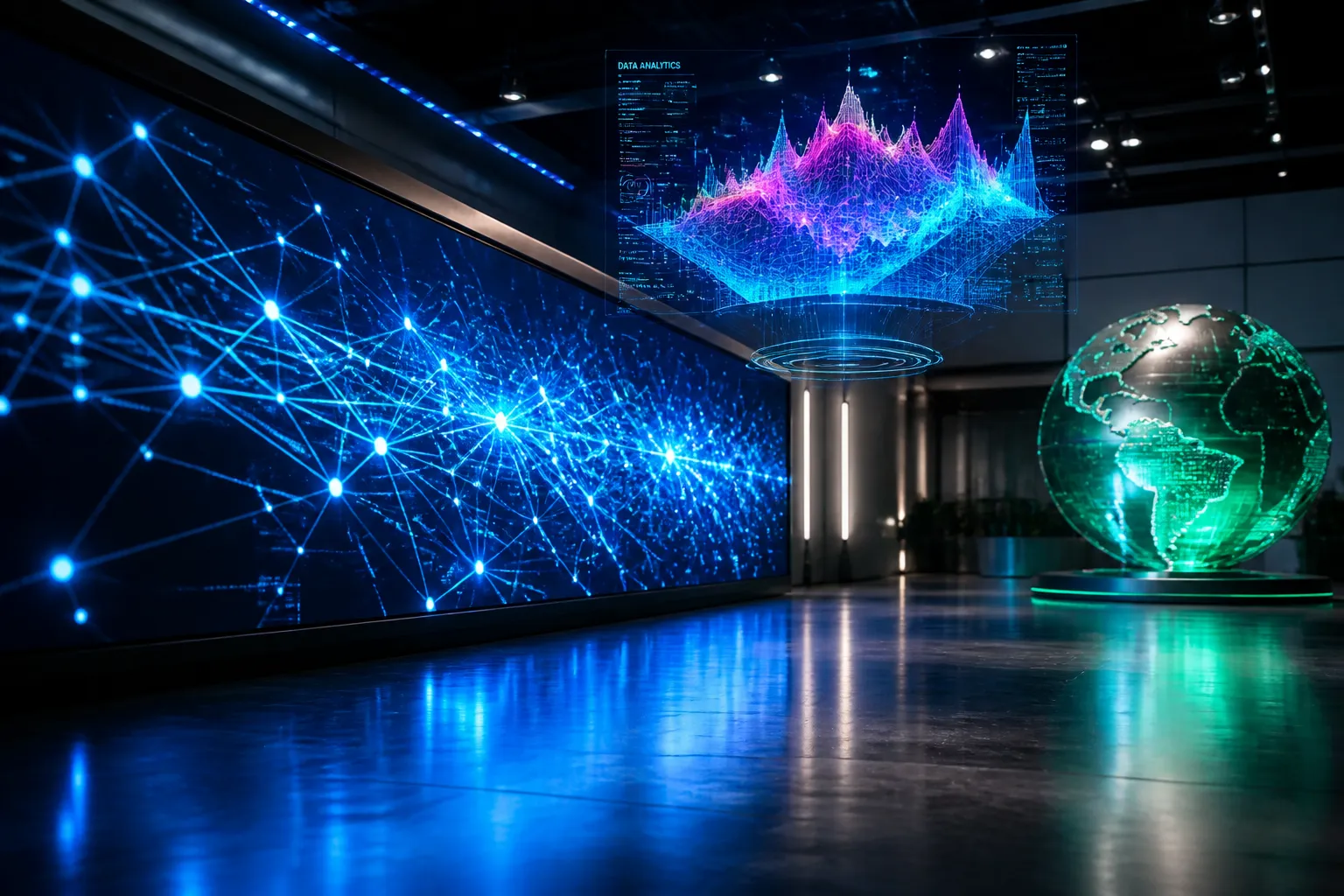
The Cyberheist room projected a floor‑to‑wall digital grid that placed leaders inside multi‑vector threat simulations. The simulation illustrated proactive, layered defenses that cover the entire technology stack, reinforcing the importance of integrated security.
Globe Business stressed that the summit’s message goes beyond technology demos. The company said that in a complex digital economy, competitiveness will be defined not by the size of an organization’s tech stack but by the intelligence and cohesion of its foundation. By orchestrating resilient infrastructure, real‑time APIs, layered security, and automated AI, Globe Business claims it is equipping Philippine enterprises to move from managing operational friction to leading sustainable, future‑proof growth.
The Intelligent Transformation framework is part of Globe Business’s broader strategy to support digital transformation across sectors, including hospitality. The company’s website notes that it offers secure connectivity, AI‑driven data analytics, and hyper‑personalized experiences to hotels and restaurants.
The summit concluded with a call to action for Philippine businesses to adopt the framework. Globe Business invites organizations to learn more about its intelligent transformation services at www.globe.com.ph/business.
The event received coverage from several Philippine tech outlets, including Telecom Review Asia and Philstar Life, which reported that Globe Business is positioning itself as a key enabler of enterprise agility in the region.
As of the summit’s conclusion, Globe Business has not announced any specific product launch dates or partnership agreements related to the framework. The company’s next steps appear to involve consulting and implementation services for enterprises seeking to integrate the described architecture.
The summit’s focus on unified, resilient architecture reflects a broader industry trend toward network orchestration and security automation. Analysts note that the approach aligns with emerging standards in enterprise architecture, such as the Federation of Enterprise Architecture Professional Organizations’ definition of a well‑defined practice for enterprise analysis and design.
In summary, Globe Business’s Intelligent Transformation framework presented at G Summit 2026 proposes a shift from isolated technology upgrades to an integrated, resilient enterprise architecture. The company’s demonstrations and case studies illustrate how such integration can reduce operational latency, enhance security, and accelerate digital service delivery. The framework’s adoption will likely depend on individual organizations’ readiness to overhaul their existing application ecosystems.
The Philippine technology community will watch closely to see how Globe Business supports enterprises in implementing the framework and whether the company will release new tools or services to facilitate the transition.
During the summit’s opening session, executives learned that Philippine enterprises now run an average of 120 separate applications. Globe Business framed the shift from simply adding more software to weaving those systems into a coherent “brain.” Vice President Glenn Estrella emphasized, “Enterprise scale demands seamless harmony across every layer of the technology stack,” and noted that the summit offers practical blueprints for managing increasingly complex systems.
The company used the event to demonstrate how integration can boost operational efficiency. Former Chief Innovation Officer of DBS Bank, Neal Cross, presented a case study from his tenure at the bank. Cross explained that “delivering frictionless customer interactions, such as instant onboarding and high‑availability digital banking, hinged on an always‑on network foundation built for real‑time data integration.” He added that linking customer‑facing channels directly to secure, automated backend infrastructure eliminated latency and accelerated feature deployment.
After the keynote talks, delegates moved into four interactive experience rooms that brought the framework’s core concepts to life.
In the Orchestrated Infrastructure room, executives watched live stress tests of self‑healing networks and quantum‑safe protocols. The demonstrations showed the system automatically mitigating hardware failures and security threats without service disruption. The room also highlighted infrastructure designed to democratize high‑performance computing and enterprise AI access.
The Cyberheist room projected a floor‑to‑wall digital grid that placed leaders inside multi‑vector threat simulations. The simulation illustrated proactive, layered defenses that cover the entire technology stack, reinforcing the importance of integrated security.
Globe Business stressed that the summit’s message goes beyond technology demos. The company said that in a complex digital economy, competitiveness will be defined not by the size of an organization’s tech stack but by the intelligence and cohesion of its foundation. By orchestrating resilient infrastructure, real‑time APIs, layered security, and automated AI, Globe Business claims it is equipping Philippine enterprises to move from managing operational friction to leading sustainable, future‑proof growth.
The Intelligent Transformation framework is part of Globe Business’s broader strategy to support digital transformation across sectors, including hospitality. The company’s website notes that it offers secure connectivity, AI‑driven data analytics, and hyper‑personalized experiences to hotels and restaurants.
The summit concluded with a call to action for Philippine businesses to adopt the framework. Globe Business invites organizations to learn more about its intelligent transformation services at www.globe.com.ph/business.
The event received coverage from several Philippine tech outlets, including Telecom Review Asia and Philstar Life, which reported that Globe Business is positioning itself as a key enabler of enterprise agility in the region.
As of the summit’s conclusion, Globe Business has not announced any specific product launch dates or partnership agreements related to the framework. The company’s next steps appear to involve consulting and implementation services for enterprises seeking to integrate the described architecture.
The summit’s focus on unified, resilient architecture reflects a broader industry trend toward network orchestration and security automation. Analysts note that the approach aligns with emerging standards in enterprise architecture, such as the Federation of Enterprise Architecture Professional Organizations’ definition of a well‑defined practice for enterprise analysis and design.
In summary, Globe Business’s Intelligent Transformation framework presented at G Summit 2026 proposes a shift from isolated technology upgrades to an integrated, resilient enterprise architecture. The company’s demonstrations and case studies illustrate how such integration can reduce operational latency, enhance security, and accelerate digital service delivery. The framework’s adoption will likely depend on individual organizations’ readiness to overhaul their existing application ecosystems.
The Philippine technology community will watch closely to see how Globe Business supports enterprises in implementing the framework and whether the company will release new tools or services to facilitate the transition.