Blab Tech
ASEs Packaging Empire Drives Jason Changs $22.4 B Fortune Amid AI Chip Demand
Jason Chang, chairman of ASE Technology Holding, and his brother Richard, vice‑chairman, have seen their combined wealth rise to $22.4 billion in June 2026, according to Forbes. The increase of about $14.5 billion in a single year reflects the surge in demand for advanced semiconductor packaging driven by artificial‑intelligence (AI) and high‑performance‑computing markets.
The brothers founded Advanced Semiconductor Engineering (ASE) in 1984 in Kaohsiung, Taiwan, after their mother, Chang Yao‑Hung‑Ying, had rebuilt the family business in real‑estate following the family’s move from Shanghai to Taiwan after the 1949 revolution. In the early 1980s, Richard identified Taiwan’s emerging electronics industry as a long‑term opportunity. The company’s first three years were difficult; the mother reportedly sold property assets to keep the venture afloat. ASE went public in Taiwan in 1989 and listed on the New York Stock Exchange in 2000. In 2018, ASE merged with Siliconware Precision Industries to form ASE Technology Holding, a publicly listed company on both the Taiwan Stock Exchange and the NYSE.
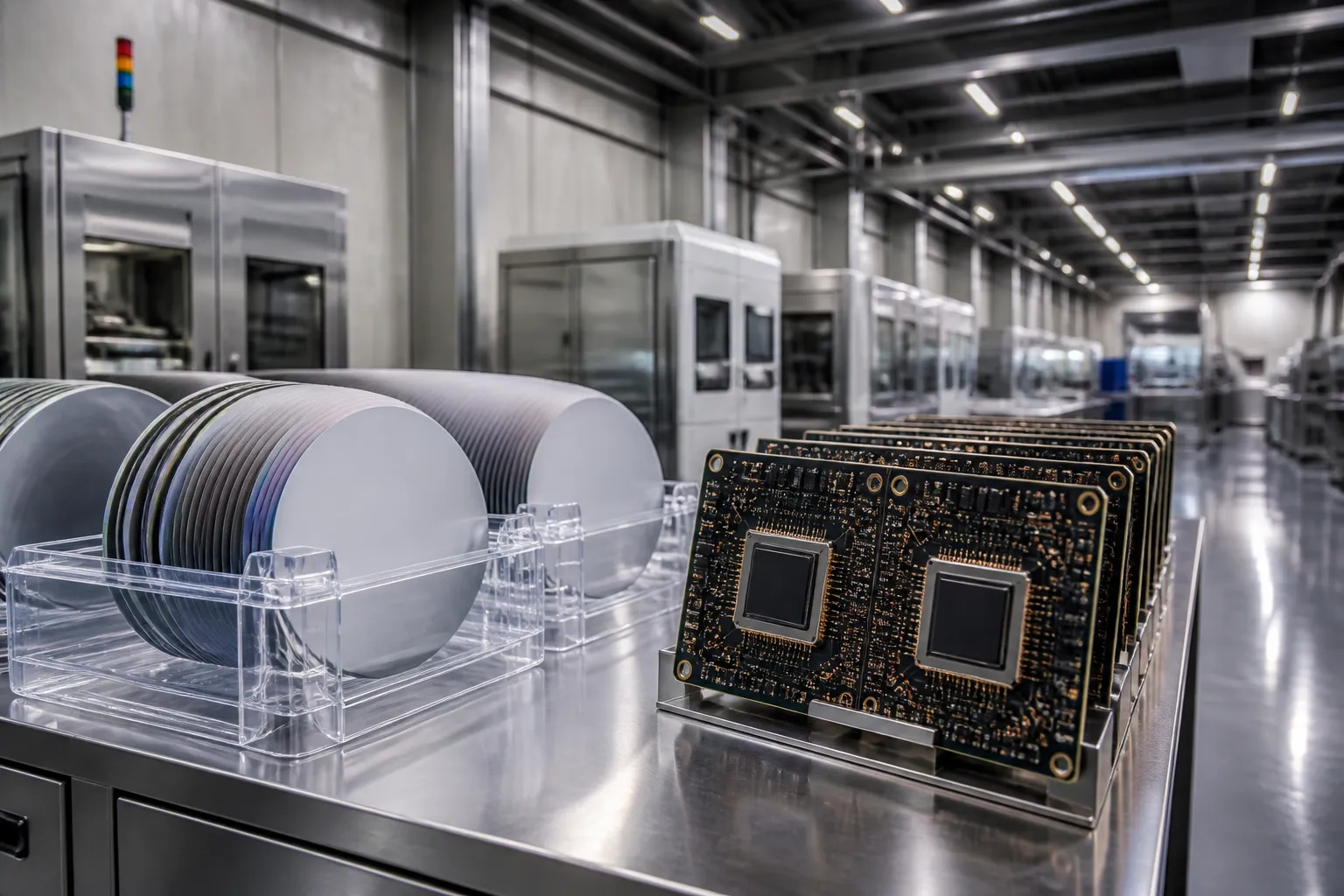
ASE’s business model focuses on semiconductor assembly, packaging, and testing rather than chip design. Packaging and testing are essential steps that protect a die and provide the electrical connections needed for a finished product. Advanced packaging techniques—such as 2.5‑D, 3‑D, fan‑out wafer‑level, and chip‑let integration—have become critical for AI accelerators, high‑bandwidth memory, and data‑center processors. The company’s customers include major chip designers and foundries, and its top ten customers accounted for 69 % of its net revenue in Q2 2026.
ASE reported net revenues of NT$126,148 million in the second quarter of 2026, a 36.3 % year‑over‑year increase and a 12.2 % sequential rise. The company’s earnings and revenue growth mirror the broader semiconductor industry’s expansion, which reached a record $791.7 billion in 2025 and is projected to approach $1 trillion in 2026.
In March 2026, ASE broke ground on a new high‑tech facility in Kaohsiung’s Nanzih Technology Industrial Park. The project, valued at NT$17.8 billion, is intended to expand advanced packaging and testing capacity for AI, high‑performance computing, and communications. The facility is scheduled for completion in the second quarter of 2028.
Later in 2026, ASE and WUS announced a new AI packaging hub in Kaohsiung. The hub will occupy more than 113,000 square meters and is expected to create over 2,000 jobs. Completion is targeted for September 2029.
Beyond semiconductors, the Chang brothers maintain significant real‑estate holdings. They are major investors in Sino Horizon Holdings, a Taiwan‑listed developer with properties in mainland China. Their wealth is therefore tied to both the semiconductor packaging sector and real‑estate assets.
ASE has also pursued environmental initiatives. In 2022 the company began a reforestation program on forest land in Taiwan. By 2023 it had expanded the program to 14.69 hectares, planting 31,723 seedlings with a goal of 100,000 trees.
Jason Chang is a Singapore citizen but resides in Taipei. While Singapore does not allow dual citizenship, there is no public evidence that he has renounced Chinese nationality.
According to Forbes, Jason’s real‑time net worth was about $20.4 billion and Richard’s about $3.7 billion in late July 2026. The brothers’ fortunes are now the largest in Taiwan, surpassing other prominent Taiwanese families such as the founders of Yageo and the Tsai brothers of Fubon Financial.
ASE’s continued expansion and the brothers’ diversified holdings illustrate how a focus on an essential layer of the semiconductor supply chain can generate substantial wealth, especially as AI hardware demand grows. The company’s performance remains a key indicator of the broader semiconductor industry’s health.
The Changs’ rise from a real‑estate family to the leading semiconductor packaging firm underscores the importance of packaging and testing in the modern chip ecosystem. Their fortunes and ASE’s growth trajectory will continue to be closely watched by investors, industry analysts, and policymakers interested in the AI‑driven semiconductor market.
The brothers founded Advanced Semiconductor Engineering (ASE) in 1984 in Kaohsiung, Taiwan, after their mother, Chang Yao‑Hung‑Ying, had rebuilt the family business in real‑estate following the family’s move from Shanghai to Taiwan after the 1949 revolution. In the early 1980s, Richard identified Taiwan’s emerging electronics industry as a long‑term opportunity. The company’s first three years were difficult; the mother reportedly sold property assets to keep the venture afloat. ASE went public in Taiwan in 1989 and listed on the New York Stock Exchange in 2000. In 2018, ASE merged with Siliconware Precision Industries to form ASE Technology Holding, a publicly listed company on both the Taiwan Stock Exchange and the NYSE.
ASE’s business model focuses on semiconductor assembly, packaging, and testing rather than chip design. Packaging and testing are essential steps that protect a die and provide the electrical connections needed for a finished product. Advanced packaging techniques—such as 2.5‑D, 3‑D, fan‑out wafer‑level, and chip‑let integration—have become critical for AI accelerators, high‑bandwidth memory, and data‑center processors. The company’s customers include major chip designers and foundries, and its top ten customers accounted for 69 % of its net revenue in Q2 2026.
ASE reported net revenues of NT$126,148 million in the second quarter of 2026, a 36.3 % year‑over‑year increase and a 12.2 % sequential rise. The company’s earnings and revenue growth mirror the broader semiconductor industry’s expansion, which reached a record $791.7 billion in 2025 and is projected to approach $1 trillion in 2026.
In March 2026, ASE broke ground on a new high‑tech facility in Kaohsiung’s Nanzih Technology Industrial Park. The project, valued at NT$17.8 billion, is intended to expand advanced packaging and testing capacity for AI, high‑performance computing, and communications. The facility is scheduled for completion in the second quarter of 2028.
Later in 2026, ASE and WUS announced a new AI packaging hub in Kaohsiung. The hub will occupy more than 113,000 square meters and is expected to create over 2,000 jobs. Completion is targeted for September 2029.
Beyond semiconductors, the Chang brothers maintain significant real‑estate holdings. They are major investors in Sino Horizon Holdings, a Taiwan‑listed developer with properties in mainland China. Their wealth is therefore tied to both the semiconductor packaging sector and real‑estate assets.
ASE has also pursued environmental initiatives. In 2022 the company began a reforestation program on forest land in Taiwan. By 2023 it had expanded the program to 14.69 hectares, planting 31,723 seedlings with a goal of 100,000 trees.
Jason Chang is a Singapore citizen but resides in Taipei. While Singapore does not allow dual citizenship, there is no public evidence that he has renounced Chinese nationality.
According to Forbes, Jason’s real‑time net worth was about $20.4 billion and Richard’s about $3.7 billion in late July 2026. The brothers’ fortunes are now the largest in Taiwan, surpassing other prominent Taiwanese families such as the founders of Yageo and the Tsai brothers of Fubon Financial.
ASE’s continued expansion and the brothers’ diversified holdings illustrate how a focus on an essential layer of the semiconductor supply chain can generate substantial wealth, especially as AI hardware demand grows. The company’s performance remains a key indicator of the broader semiconductor industry’s health.
The Changs’ rise from a real‑estate family to the leading semiconductor packaging firm underscores the importance of packaging and testing in the modern chip ecosystem. Their fortunes and ASE’s growth trajectory will continue to be closely watched by investors, industry analysts, and policymakers interested in the AI‑driven semiconductor market.








