Blab Tech
IBM Shares Plunge 25% as CEO Highlights Quantum Computing Outlook
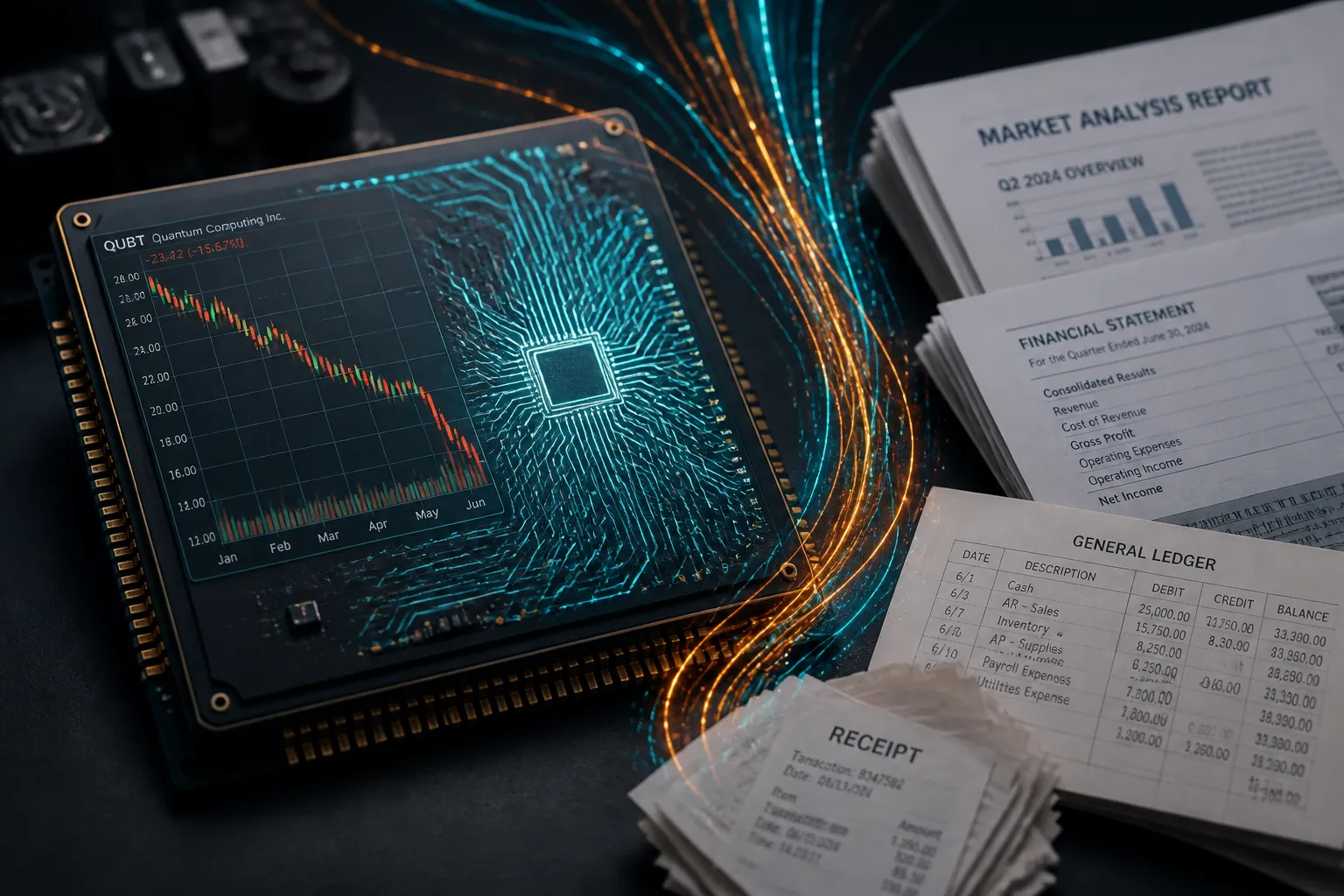
On July 14 2026, International Business Machines Corporation’s stock plunged 25.21 %, the steepest one‑day drop in its history. The fall erased roughly $68 billion of market value and pushed shares below $220 per share, according to Yahoo Finance. The decline followed a report that IBM’s second‑quarter revenue of $17.2 billion missed consensus estimates of $17.86 billion.
Investors reacted sharply to growing worries that IBM’s long‑standing enterprise‑software and consulting arms are losing steam to AI‑enabled hardware. Analysts noted that chief information officers are shifting budgets toward GPUs and other AI infrastructure, rather than IBM’s software solutions.
In the same week, IBM’s chief executive, Arvind Krishna, told reporters that quantum computing would have a "measurable impact" on the company’s revenue and earnings by 2028 or 2029, and that by the end of the 2030s the technology could generate "a trillion dollars of value." The statements were interpreted by some as an attempt to divert attention from the company’s current performance.
The phrase "measurable impact" is vague. IBM’s trailing‑twelve‑month revenue hovers around $69 billion. Even if the firm captured the entire global AI market—estimated at $1.3 billion—the resulting increase would be less than 4 % of total revenue.
IBM’s quantum‑computing market remains in its infancy. Current estimates place the size of the market at $1.3 billion, while McKinsey’s analysis suggests $4 billion. The firm projects the market could reach $72 billion by 2035. To reach a trillion‑dollar valuation by the end of the 2030s would require an annual growth rate of roughly 93 %, far beyond current projections.
Quantum processors at IBM use superconducting transmon qubits housed in dilution refrigerators at the Thomas J. Watson Research Center. The IBM Quantum Platform, which offers cloud access to 12 devices as of June 2025, allows researchers to run algorithms and tutorials. While recent demonstrations have shown quantum advantage for specific tasks, the technology remains experimental and is not yet ready for commercial deployment.
Global investment in quantum computing reached $7.1 billion in 2026, a 340 % increase from 2025, according to industry reports. The number of companies offering quantum‑related services has grown from 156 in early 2025 to 847, reflecting broader industry interest.
IBM’s CEO has framed quantum computing as a long‑term growth engine. However, the company’s current financials suggest that any contribution to revenue will be modest in the near term. The 2026 Q2 results, which fell short of expectations, underscore the challenge of balancing investment in emerging technologies with the profitability of established businesses.
Industry observers note that IBM’s focus on quantum computing is part of a broader strategy to remain relevant in an AI‑driven market. The company’s history of innovation—from the System/360 mainframes to the IBM Personal Computer—has built a reputation for long‑term research. Yet the shift toward AI hardware has exposed gaps in IBM’s software portfolio.
In summary, IBM’s 25 % share decline reflects market concerns over its core business performance and the pace of its AI and quantum initiatives. While the CEO’s optimistic outlook on quantum computing may signal future opportunities, the current data indicate that any measurable impact on revenue will be limited for several years. Investors and analysts will likely continue to monitor IBM’s quarterly earnings, the pace of quantum‑hardware development, and the company’s ability to integrate AI solutions into its enterprise offerings.
The company has not announced any immediate changes to its product roadmap or pricing strategy. IBM’s next earnings release, scheduled for the end of September 2026, will provide further insight into the company’s financial trajectory and the progress of its quantum‑computing investments.
Investors reacted sharply to growing worries that IBM’s long‑standing enterprise‑software and consulting arms are losing steam to AI‑enabled hardware. Analysts noted that chief information officers are shifting budgets toward GPUs and other AI infrastructure, rather than IBM’s software solutions.
In the same week, IBM’s chief executive, Arvind Krishna, told reporters that quantum computing would have a "measurable impact" on the company’s revenue and earnings by 2028 or 2029, and that by the end of the 2030s the technology could generate "a trillion dollars of value." The statements were interpreted by some as an attempt to divert attention from the company’s current performance.
The phrase "measurable impact" is vague. IBM’s trailing‑twelve‑month revenue hovers around $69 billion. Even if the firm captured the entire global AI market—estimated at $1.3 billion—the resulting increase would be less than 4 % of total revenue.
IBM’s quantum‑computing market remains in its infancy. Current estimates place the size of the market at $1.3 billion, while McKinsey’s analysis suggests $4 billion. The firm projects the market could reach $72 billion by 2035. To reach a trillion‑dollar valuation by the end of the 2030s would require an annual growth rate of roughly 93 %, far beyond current projections.
Quantum processors at IBM use superconducting transmon qubits housed in dilution refrigerators at the Thomas J. Watson Research Center. The IBM Quantum Platform, which offers cloud access to 12 devices as of June 2025, allows researchers to run algorithms and tutorials. While recent demonstrations have shown quantum advantage for specific tasks, the technology remains experimental and is not yet ready for commercial deployment.
Global investment in quantum computing reached $7.1 billion in 2026, a 340 % increase from 2025, according to industry reports. The number of companies offering quantum‑related services has grown from 156 in early 2025 to 847, reflecting broader industry interest.
IBM’s CEO has framed quantum computing as a long‑term growth engine. However, the company’s current financials suggest that any contribution to revenue will be modest in the near term. The 2026 Q2 results, which fell short of expectations, underscore the challenge of balancing investment in emerging technologies with the profitability of established businesses.
Industry observers note that IBM’s focus on quantum computing is part of a broader strategy to remain relevant in an AI‑driven market. The company’s history of innovation—from the System/360 mainframes to the IBM Personal Computer—has built a reputation for long‑term research. Yet the shift toward AI hardware has exposed gaps in IBM’s software portfolio.
In summary, IBM’s 25 % share decline reflects market concerns over its core business performance and the pace of its AI and quantum initiatives. While the CEO’s optimistic outlook on quantum computing may signal future opportunities, the current data indicate that any measurable impact on revenue will be limited for several years. Investors and analysts will likely continue to monitor IBM’s quarterly earnings, the pace of quantum‑hardware development, and the company’s ability to integrate AI solutions into its enterprise offerings.
The company has not announced any immediate changes to its product roadmap or pricing strategy. IBM’s next earnings release, scheduled for the end of September 2026, will provide further insight into the company’s financial trajectory and the progress of its quantum‑computing investments.