Blab Tech
Investors Question Big Tech AI Spending as Free Cash Flow Turns Negative
Investors are putting Big Tech’s AI spending under a microscope. In the latest quarterly earnings from Alphabet, Meta and Microsoft, the market is reacting sharply to the cash‑flow consequences of the companies’ heavy investments in artificial‑intelligence infrastructure.
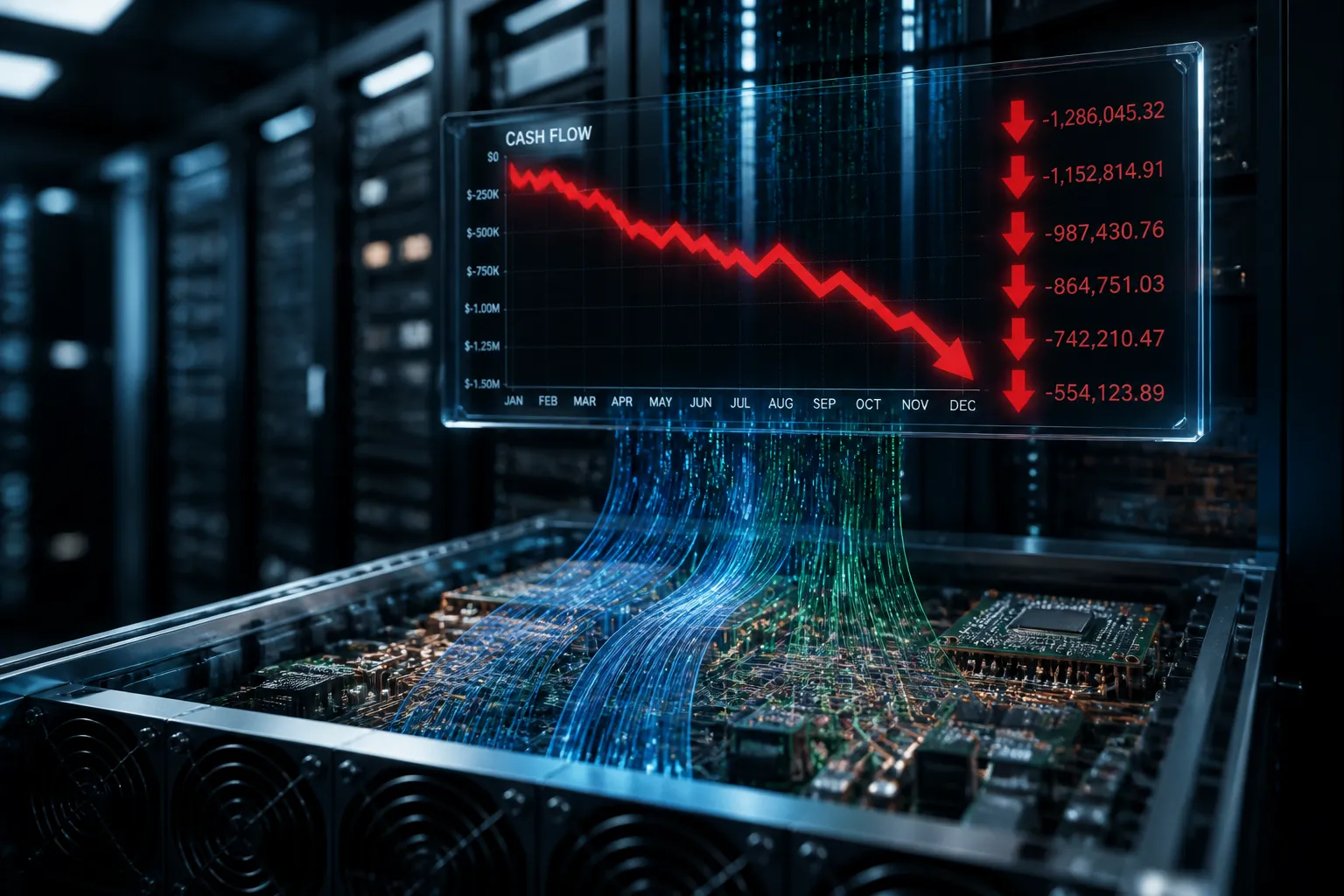
Alphabet’s second‑quarter 2026 results marked a historic low: free cash flow turned negative for the first time since the company’s 2004 IPO, slipping to –$5.9 billion. Revenue, however, grew 24 percent year‑over‑year, a rise that still falls short of the cash‑generating power that investors expect. The loss is tied to continued spending on data‑centre expansion, chip development and AI‑related services.
Meta’s free cash flow took a dramatic plunge, falling 91 percent to $784 million from $8.5 billion a year earlier. The decline follows a sharp jump in AI‑related capital expenditures, which the company reported at $31 billion for the quarter. In response, Meta raised the lower end of its 2026 capital‑expenditure guidance to a $130‑$145 billion range, up from $125‑$145 billion.
Microsoft’s story was the odd one out. After an accounting adjustment that moved certain finance leases to operating leases, the company kept its calendar‑year 2026 capex guidance at roughly $175 billion. The announcement sent Microsoft’s share price higher by 8 percent.
These divergent reactions underline a shift in investor sentiment. According to Jefferies’ Head of Global Equity Strategy Chris Wood, the market is now demanding evidence that AI spending can translate into revenue and cash‑flow growth. Wood noted that while the results have not yet signalled a decline in hyperscaler capex, the negative response to higher spending represents an important change in behaviour.
The broader market has also reflected the uncertainty. Semiconductor stocks have experienced a significant unwind, with some companies approaching their 200‑day moving averages. Wood cautioned that the correction could be limited if it merely reflects a technical flushing of leveraged positions built by momentum traders, but warned that a sustained sell‑off could indicate an eventual slowdown in hyperscaler spending.
The impact is visible beyond the United States. South Korea’s Kospi index fell 40 percent from its all‑time high of 9,385.6 reached on June 19. Foreign investors have sold a net $116 billion of Korean equities this year, with technology stocks accounting for $104 billion of that outflow. Domestic leveraged exchange‑traded funds tracking Korean equities have collapsed to $17 billion, down 66 percent from their $50 billion peak on June 22. Retail margin‑loan balances remain elevated at $22.8 billion.
In contrast, China’s semiconductor sector has seen a rally. China‑based DRAM manufacturer CXMT surged 500 percent after its listing, reaching a market capitalisation of $523 billion. The valuation made CXMT the most valuable company listed in mainland China for a brief period, surpassing Industrial and Commercial Bank of China and approaching the level of Hong Kong‑listed Tencent.
Wood argues that China is best positioned to capture the economics of AI demand, particularly in the mass consumer market. He notes that while AI demand is likely to continue expanding, the companies spending the most may not become the biggest winners.
The current environment suggests that investors are becoming more selective about AI spending. Companies can still commit billions to infrastructure, but the market increasingly wants proof that such spending will support revenue and cash‑flow growth. The next few quarters will test whether the hyperscalers can deliver the returns that investors now demand.
As of today, Alphabet, Meta and Microsoft have not announced any cuts to their 2026 capital‑expenditure plans. The market’s reaction to their earnings, however, signals a growing scrutiny of AI‑related spending and its impact on financial performance.
The story remains under close observation as the tech sector navigates the balance between AI investment and shareholder expectations for profitability.
Alphabet’s second‑quarter 2026 results marked a historic low: free cash flow turned negative for the first time since the company’s 2004 IPO, slipping to –$5.9 billion. Revenue, however, grew 24 percent year‑over‑year, a rise that still falls short of the cash‑generating power that investors expect. The loss is tied to continued spending on data‑centre expansion, chip development and AI‑related services.
Meta’s free cash flow took a dramatic plunge, falling 91 percent to $784 million from $8.5 billion a year earlier. The decline follows a sharp jump in AI‑related capital expenditures, which the company reported at $31 billion for the quarter. In response, Meta raised the lower end of its 2026 capital‑expenditure guidance to a $130‑$145 billion range, up from $125‑$145 billion.
Microsoft’s story was the odd one out. After an accounting adjustment that moved certain finance leases to operating leases, the company kept its calendar‑year 2026 capex guidance at roughly $175 billion. The announcement sent Microsoft’s share price higher by 8 percent.
These divergent reactions underline a shift in investor sentiment. According to Jefferies’ Head of Global Equity Strategy Chris Wood, the market is now demanding evidence that AI spending can translate into revenue and cash‑flow growth. Wood noted that while the results have not yet signalled a decline in hyperscaler capex, the negative response to higher spending represents an important change in behaviour.
The broader market has also reflected the uncertainty. Semiconductor stocks have experienced a significant unwind, with some companies approaching their 200‑day moving averages. Wood cautioned that the correction could be limited if it merely reflects a technical flushing of leveraged positions built by momentum traders, but warned that a sustained sell‑off could indicate an eventual slowdown in hyperscaler spending.
The impact is visible beyond the United States. South Korea’s Kospi index fell 40 percent from its all‑time high of 9,385.6 reached on June 19. Foreign investors have sold a net $116 billion of Korean equities this year, with technology stocks accounting for $104 billion of that outflow. Domestic leveraged exchange‑traded funds tracking Korean equities have collapsed to $17 billion, down 66 percent from their $50 billion peak on June 22. Retail margin‑loan balances remain elevated at $22.8 billion.
In contrast, China’s semiconductor sector has seen a rally. China‑based DRAM manufacturer CXMT surged 500 percent after its listing, reaching a market capitalisation of $523 billion. The valuation made CXMT the most valuable company listed in mainland China for a brief period, surpassing Industrial and Commercial Bank of China and approaching the level of Hong Kong‑listed Tencent.
Wood argues that China is best positioned to capture the economics of AI demand, particularly in the mass consumer market. He notes that while AI demand is likely to continue expanding, the companies spending the most may not become the biggest winners.
The current environment suggests that investors are becoming more selective about AI spending. Companies can still commit billions to infrastructure, but the market increasingly wants proof that such spending will support revenue and cash‑flow growth. The next few quarters will test whether the hyperscalers can deliver the returns that investors now demand.
As of today, Alphabet, Meta and Microsoft have not announced any cuts to their 2026 capital‑expenditure plans. The market’s reaction to their earnings, however, signals a growing scrutiny of AI‑related spending and its impact on financial performance.
The story remains under close observation as the tech sector navigates the balance between AI investment and shareholder expectations for profitability.