Blab Tech
Punjab Launches Mobile Lab on Wheels to Bring On-Site Soil and Water Testing to Farmers
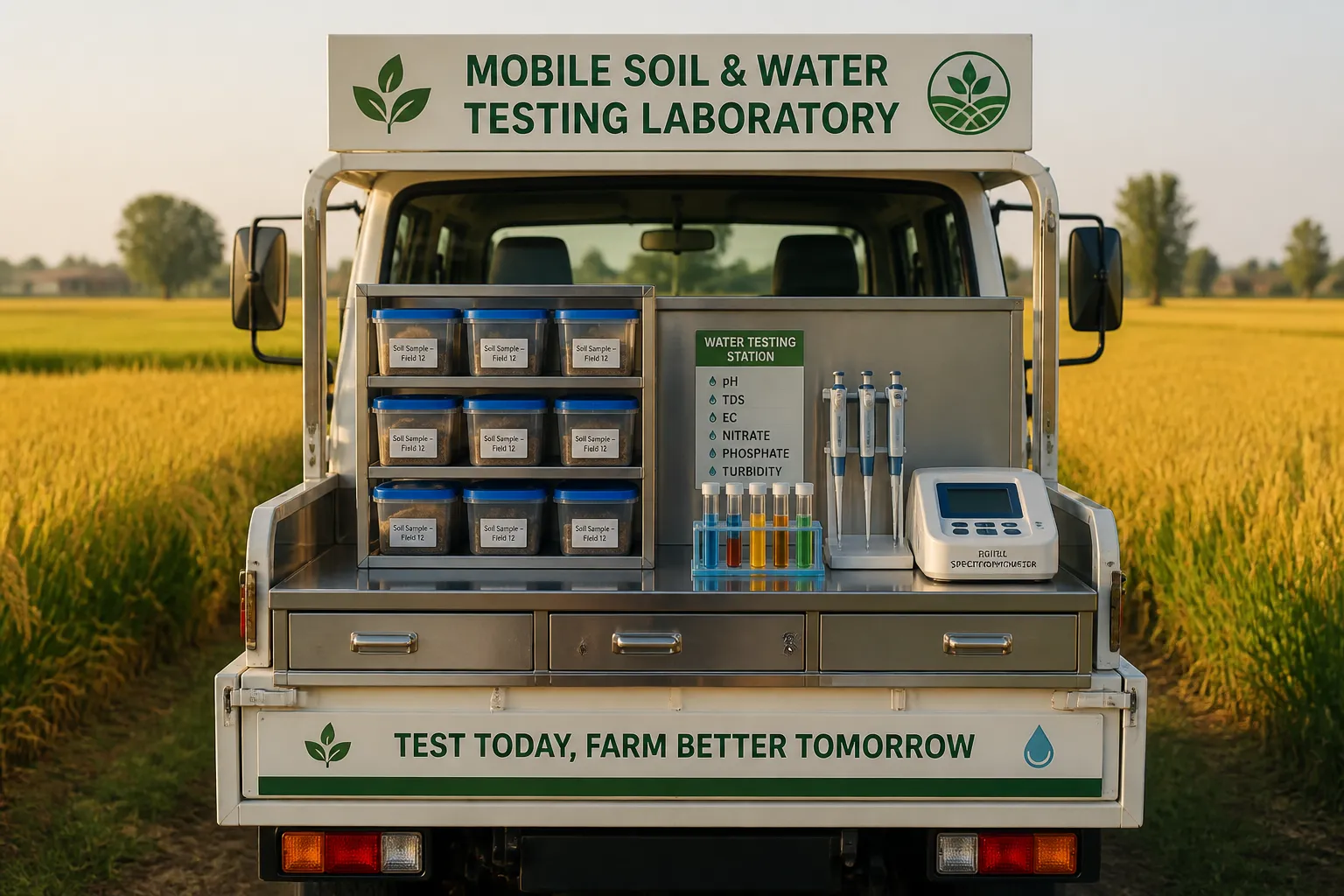
The Punjab government has announced the launch of a mobile laboratory service, dubbed “Lab on Wheels,” designed to provide farmers with on‑site soil and water testing and advisory services. The initiative, unveiled on 14 January 2026, will deploy mobile labs in 15 districts of the province in its first phase.
Farmers can request a mobile lab by calling a single number. Trained field teams will travel to the requested farm, collect soil and water samples, conduct on‑site analysis, and deliver instant test reports via SMS and WhatsApp. The reports include measurements of soil pH, electrical conductivity (EC), and nitrogen, phosphorus, and potassium (NPK) levels. Based on the results, agricultural experts will provide crop and fertilizer recommendations tailored to the specific soil conditions.
Chief Minister Maryam Nawaz said at the launch that accurate soil testing and balanced fertilizer use are essential for increasing agricultural productivity and achieving food self‑sufficiency. She added that the project aims to shift Punjab’s farming sector from conventional practices to a modern, science‑driven model while reducing production costs and raising farmers’ income per acre.
To ensure transparency and efficient operations, the project will be monitored from a central control room. Each mobile laboratory will be equipped with GPS tracking, live camera streaming, and a real‑time dashboard. Service requests will be processed digitally, and field staff attendance will be managed through a dedicated mobile application.
The Punjab government has set ambitious annual targets for the initiative. These include collecting 20,000 soil samples, organizing 500 farmers’ field days, training 15,000 farmers, and developing a GPS‑based digital soil map of the province using real‑time cloud data.
The “Lab on Wheels” project is part of a broader set of reforms introduced by the Punjab administration under Chief Minister Nawaz. Earlier in 2026, the government approved the “Apna Khet, Apna Rozgar” land‑lease scheme and announced a high‑tech farm mechanization bank financing program. Together, these measures aim to modernize Punjab’s agriculture, which accounts for a significant share of Pakistan’s GDP and employs a large portion of the province’s workforce.
Agriculture remains a critical sector in Punjab, the country’s most fertile and industrialised province. The province’s extensive network of wheat, rice, and cotton farms has historically relied on traditional input practices. The introduction of mobile testing laboratories seeks to provide farmers with timely, site‑specific data that can improve soil health, optimize fertilizer use, and reduce input costs.
While the initiative has received positive attention from provincial officials, its success will depend on the reliability of the on‑site equipment, the responsiveness of the field teams, and the adoption of the recommendations by farmers. The government has indicated that it will monitor the program’s impact through the digital dashboard and adjust operations as needed.
As of now, the “Lab on Wheels” service is operational in the 15 pilot districts, and the first batch of mobile laboratories has begun visiting farms. The Punjab government has not yet released detailed performance metrics, but it has stated that the program will continue to expand as resources allow.
The project represents a concrete step toward integrating digital technology into Punjab’s agricultural practices. By providing farmers with immediate, data‑driven guidance, the initiative aims to enhance productivity, promote sustainable fertilizer use, and support the province’s goal of becoming a more efficient and self‑sufficient food producer.
The Punjab government will likely report on the program’s progress in upcoming agricultural policy briefings and may release updated targets as the initiative scales up beyond the initial 15 districts.
Farmers can request a mobile lab by calling a single number. Trained field teams will travel to the requested farm, collect soil and water samples, conduct on‑site analysis, and deliver instant test reports via SMS and WhatsApp. The reports include measurements of soil pH, electrical conductivity (EC), and nitrogen, phosphorus, and potassium (NPK) levels. Based on the results, agricultural experts will provide crop and fertilizer recommendations tailored to the specific soil conditions.
Chief Minister Maryam Nawaz said at the launch that accurate soil testing and balanced fertilizer use are essential for increasing agricultural productivity and achieving food self‑sufficiency. She added that the project aims to shift Punjab’s farming sector from conventional practices to a modern, science‑driven model while reducing production costs and raising farmers’ income per acre.
To ensure transparency and efficient operations, the project will be monitored from a central control room. Each mobile laboratory will be equipped with GPS tracking, live camera streaming, and a real‑time dashboard. Service requests will be processed digitally, and field staff attendance will be managed through a dedicated mobile application.
The Punjab government has set ambitious annual targets for the initiative. These include collecting 20,000 soil samples, organizing 500 farmers’ field days, training 15,000 farmers, and developing a GPS‑based digital soil map of the province using real‑time cloud data.
The “Lab on Wheels” project is part of a broader set of reforms introduced by the Punjab administration under Chief Minister Nawaz. Earlier in 2026, the government approved the “Apna Khet, Apna Rozgar” land‑lease scheme and announced a high‑tech farm mechanization bank financing program. Together, these measures aim to modernize Punjab’s agriculture, which accounts for a significant share of Pakistan’s GDP and employs a large portion of the province’s workforce.
Agriculture remains a critical sector in Punjab, the country’s most fertile and industrialised province. The province’s extensive network of wheat, rice, and cotton farms has historically relied on traditional input practices. The introduction of mobile testing laboratories seeks to provide farmers with timely, site‑specific data that can improve soil health, optimize fertilizer use, and reduce input costs.
While the initiative has received positive attention from provincial officials, its success will depend on the reliability of the on‑site equipment, the responsiveness of the field teams, and the adoption of the recommendations by farmers. The government has indicated that it will monitor the program’s impact through the digital dashboard and adjust operations as needed.
As of now, the “Lab on Wheels” service is operational in the 15 pilot districts, and the first batch of mobile laboratories has begun visiting farms. The Punjab government has not yet released detailed performance metrics, but it has stated that the program will continue to expand as resources allow.
The project represents a concrete step toward integrating digital technology into Punjab’s agricultural practices. By providing farmers with immediate, data‑driven guidance, the initiative aims to enhance productivity, promote sustainable fertilizer use, and support the province’s goal of becoming a more efficient and self‑sufficient food producer.
The Punjab government will likely report on the program’s progress in upcoming agricultural policy briefings and may release updated targets as the initiative scales up beyond the initial 15 districts.