Blab Tech
Symbotics $22.7 B Backlog Anchors Warehouse Automation Growth Amid Rising Margins
Symbotic Inc. (NASDAQ: SYM) reported a $22.7 billion backlog in its most recent filing—an amount almost identical to its $25.37 billion market capitalization—underscoring the company’s growing influence in the warehouse automation space. The backlog has stayed flat since the March 28, 2025 filing, giving analysts a clear view of the firm’s long‑term revenue pipeline.
At roughly ten times the company’s fiscal 2025 revenue and more than twelve times its 2024 figure, the backlog signals robust demand. Of the $22.7 billion in remaining performance obligations, about 13 % is expected to translate into revenue within the next year, while roughly 62 % is projected to be realized between 13 and 60 months later. The bulk of the backlog comes from contracts with major retailers, including Walmart, Target, Albertsons, and C&S Wholesale Grocers.
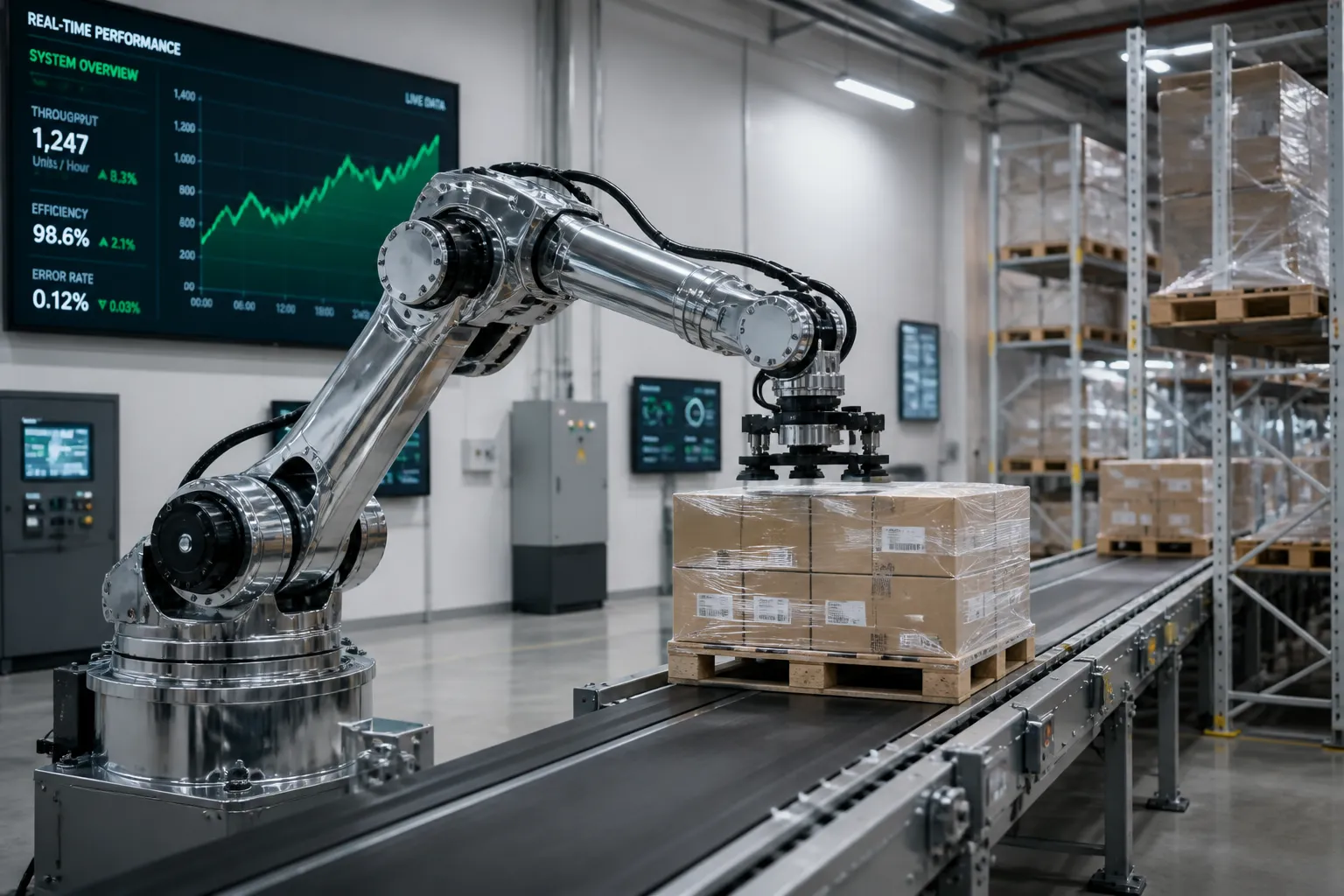
Symbotic’s business model revolves around designing, installing, and operating AI‑driven warehouse automation systems. The company earns from three primary streams: the initial sale of robotic systems, ongoing software maintenance and support, and operation services. In fiscal 2025, revenue from service and spare parts grew roughly 18 % year‑over‑year, a trend that has helped stabilize cash flow.
The second quarter of fiscal 2026 reflected the strength of that pipeline. Symbotic posted revenue of $676 million, beating analyst forecasts of $662.66 million by 2.09 %. Gross margin for the quarter rose to 22.17 %, up from 21.18 % at the end of the previous quarter. Management attributes the margin lift to a shift toward higher‑margin service contracts and the continued scaling of its automation platforms.
Despite solid growth, the company’s valuation remains lofty. Symbotic’s forward‑looking GAAP earnings per share are priced at 131 times, according to recent analyst reports. The high multiple has led many to maintain a hold rating, citing the need for the company to convert its backlog into sustainable profitability.
The backlog also illustrates a broader trend of increased spending in logistics and supply‑chain automation. Symbotic’s platform currently operates in 1,400 stores across the United States and Canada, and its AI software is engineered to optimize the movement of goods within warehouses. As retailers seek to reduce labor costs and improve order‑fulfillment speed, demand for such systems is expected to grow.
With a market cap of $25.37 billion, Symbotic ranks among the larger players in the warehouse automation arena, while its enterprise value of $23.61 billion reflects the premium investors are willing to pay for the backlog and the company’s recurring service revenue.
Looking ahead, Symbotic’s management has indicated a focus on executing the backlog and improving margins to support growth toward its current market cap by fiscal year 2028. Ongoing contracts with Walmart and other large retailers provide a foundation for that growth, but the company must continue to demonstrate profitability from its installations.
In summary, Symbotic’s $22.7 billion backlog, combined with rising gross margins and strong quarterly revenue, reinforces its position as a leader in warehouse automation. The backlog’s conversion timeline and the company’s valuation multiples will remain key factors for investors and analysts as Symbotic moves toward its projected growth trajectory.
At roughly ten times the company’s fiscal 2025 revenue and more than twelve times its 2024 figure, the backlog signals robust demand. Of the $22.7 billion in remaining performance obligations, about 13 % is expected to translate into revenue within the next year, while roughly 62 % is projected to be realized between 13 and 60 months later. The bulk of the backlog comes from contracts with major retailers, including Walmart, Target, Albertsons, and C&S Wholesale Grocers.
Symbotic’s business model revolves around designing, installing, and operating AI‑driven warehouse automation systems. The company earns from three primary streams: the initial sale of robotic systems, ongoing software maintenance and support, and operation services. In fiscal 2025, revenue from service and spare parts grew roughly 18 % year‑over‑year, a trend that has helped stabilize cash flow.
The second quarter of fiscal 2026 reflected the strength of that pipeline. Symbotic posted revenue of $676 million, beating analyst forecasts of $662.66 million by 2.09 %. Gross margin for the quarter rose to 22.17 %, up from 21.18 % at the end of the previous quarter. Management attributes the margin lift to a shift toward higher‑margin service contracts and the continued scaling of its automation platforms.
Despite solid growth, the company’s valuation remains lofty. Symbotic’s forward‑looking GAAP earnings per share are priced at 131 times, according to recent analyst reports. The high multiple has led many to maintain a hold rating, citing the need for the company to convert its backlog into sustainable profitability.
The backlog also illustrates a broader trend of increased spending in logistics and supply‑chain automation. Symbotic’s platform currently operates in 1,400 stores across the United States and Canada, and its AI software is engineered to optimize the movement of goods within warehouses. As retailers seek to reduce labor costs and improve order‑fulfillment speed, demand for such systems is expected to grow.
With a market cap of $25.37 billion, Symbotic ranks among the larger players in the warehouse automation arena, while its enterprise value of $23.61 billion reflects the premium investors are willing to pay for the backlog and the company’s recurring service revenue.
Looking ahead, Symbotic’s management has indicated a focus on executing the backlog and improving margins to support growth toward its current market cap by fiscal year 2028. Ongoing contracts with Walmart and other large retailers provide a foundation for that growth, but the company must continue to demonstrate profitability from its installations.
In summary, Symbotic’s $22.7 billion backlog, combined with rising gross margins and strong quarterly revenue, reinforces its position as a leader in warehouse automation. The backlog’s conversion timeline and the company’s valuation multiples will remain key factors for investors and analysts as Symbotic moves toward its projected growth trajectory.