Blab Tech
Haryana Government Approves Rs 35 Lakh Bionic Limbs for Panipat Child After Electrocution
The Haryana government has approved the purchase of advanced bionic limbs worth approximately Rs 35 lakh for a child from Panipat who lost both arms and one leg in an electrocution incident. The decision was made during the 40th Board of Directors meeting of the Haryana Medical Services Corporation Limited (HMSCL), which was chaired by Additional Chief Secretary, Health and Family Welfare, Sumita Misra.
The child, who was injured in 2011 when a high‑voltage power line struck him while he was playing near a street in Panipat, suffered the loss of both upper limbs and one lower limb. The injury left him with severe mobility challenges and limited independence. The government’s approval of bionic prostheses is intended to restore functional movement and improve the child’s quality of life.
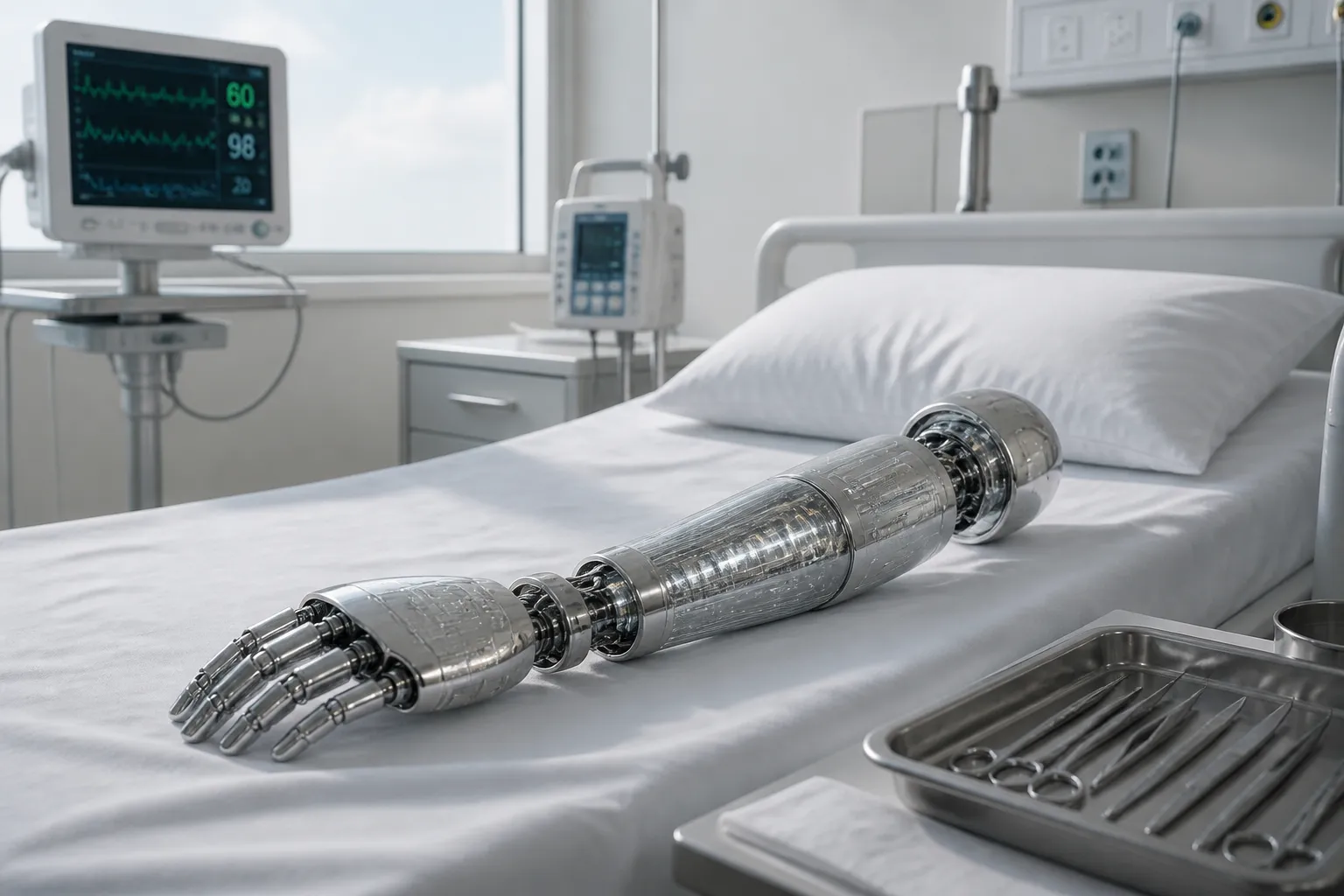
Bionic limbs are electronic prosthetic devices that use muscle‑signal detection and micro‑electronic control to provide more natural movement than conventional prostheses. According to medical experts, myoelectric bionic arms can translate the wearer’s residual muscle signals into precise motions, allowing tasks such as grasping, pinching, and even fine manipulation. The procurement will provide the child with a pair of such devices, which are expected to enable greater autonomy in daily activities.
In the same meeting, the HMSCL board cleared additional proposals to strengthen Haryana’s health infrastructure. The board approved the purchase of a Rs 82 lakh 3‑D Cone Beam Computed Tomography (CBCT) X‑ray machine for the Centre of Excellence at the Post‑Graduate Institute of Dental Sciences in Rohtak. The CBCT system will provide detailed three‑dimensional imaging of dental and jaw structures, improving diagnosis of complex conditions.
The board also approved the procurement of 30 micro‑centrifuge machines, valued at roughly Rs 20 lakh, for government health facilities across the state. Micro‑centrifuges are essential laboratory instruments that separate components of a sample by spinning it at high speeds, enabling tests such as blood analysis, viral load measurement, and other diagnostic procedures.
The decision to fund the child’s prostheses follows a directive from the Punjab and Haryana High Court, which had given the state six weeks to float a tender for artificial limbs for the Panipat boy. The board’s approval satisfies that judicial order and demonstrates the state’s commitment to providing timely medical assistance to victims of accidental injuries.
For the child, the new bionic limbs represent a significant step toward regaining mobility and independence. For Haryana, the procurement of advanced imaging and laboratory equipment signals a broader effort to modernize public health services. By investing in cutting‑edge technology, the state aims to improve diagnostic accuracy, treatment outcomes, and overall patient care.
The next steps involve the tendering process for the prosthetic devices, selection of a qualified manufacturer, and installation of the equipment. Once the limbs are fitted, the child will undergo rehabilitation and training to learn how to use the devices effectively. The state will monitor the child’s progress and report on the impact of the intervention.
At present, the procurement is complete and the project is in the implementation phase. No further legal or regulatory actions are pending. The Haryana government’s move underscores its focus on enhancing medical technology access for patients across the state.
The child, who was injured in 2011 when a high‑voltage power line struck him while he was playing near a street in Panipat, suffered the loss of both upper limbs and one lower limb. The injury left him with severe mobility challenges and limited independence. The government’s approval of bionic prostheses is intended to restore functional movement and improve the child’s quality of life.
Bionic limbs are electronic prosthetic devices that use muscle‑signal detection and micro‑electronic control to provide more natural movement than conventional prostheses. According to medical experts, myoelectric bionic arms can translate the wearer’s residual muscle signals into precise motions, allowing tasks such as grasping, pinching, and even fine manipulation. The procurement will provide the child with a pair of such devices, which are expected to enable greater autonomy in daily activities.
In the same meeting, the HMSCL board cleared additional proposals to strengthen Haryana’s health infrastructure. The board approved the purchase of a Rs 82 lakh 3‑D Cone Beam Computed Tomography (CBCT) X‑ray machine for the Centre of Excellence at the Post‑Graduate Institute of Dental Sciences in Rohtak. The CBCT system will provide detailed three‑dimensional imaging of dental and jaw structures, improving diagnosis of complex conditions.
The board also approved the procurement of 30 micro‑centrifuge machines, valued at roughly Rs 20 lakh, for government health facilities across the state. Micro‑centrifuges are essential laboratory instruments that separate components of a sample by spinning it at high speeds, enabling tests such as blood analysis, viral load measurement, and other diagnostic procedures.
The decision to fund the child’s prostheses follows a directive from the Punjab and Haryana High Court, which had given the state six weeks to float a tender for artificial limbs for the Panipat boy. The board’s approval satisfies that judicial order and demonstrates the state’s commitment to providing timely medical assistance to victims of accidental injuries.
For the child, the new bionic limbs represent a significant step toward regaining mobility and independence. For Haryana, the procurement of advanced imaging and laboratory equipment signals a broader effort to modernize public health services. By investing in cutting‑edge technology, the state aims to improve diagnostic accuracy, treatment outcomes, and overall patient care.
The next steps involve the tendering process for the prosthetic devices, selection of a qualified manufacturer, and installation of the equipment. Once the limbs are fitted, the child will undergo rehabilitation and training to learn how to use the devices effectively. The state will monitor the child’s progress and report on the impact of the intervention.
At present, the procurement is complete and the project is in the implementation phase. No further legal or regulatory actions are pending. The Haryana government’s move underscores its focus on enhancing medical technology access for patients across the state.