Blab Tech
US Navys AN/SPY-6 Radar Sets New Standard for Multi-Target Tracking, Global Adoption Grows
When the first AN/SPY‑6 unit lit up the night sky over the Pacific in July 2020, it marked the debut of a sensor that would soon become the backbone of the U.S. Navy’s air‑ and missile‑defense architecture. Today the radar powers a diverse fleet, from Flight III Arleigh Burke‑class destroyers to Gerald R. Ford‑class aircraft carriers and America‑class amphibious assault ships.
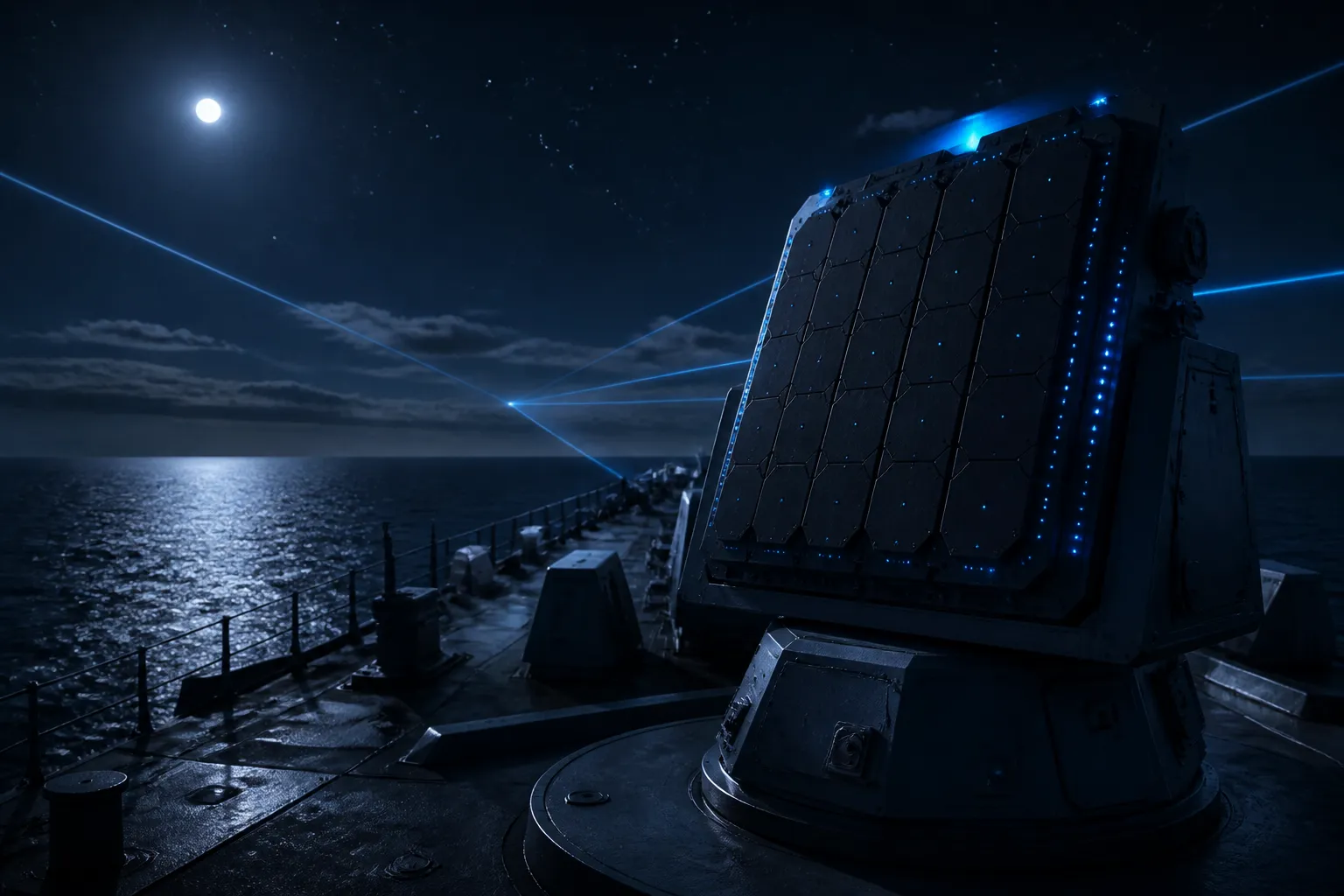
Unlike the mechanically steered radars of the past, the AN/SPY‑6 relies on digital beamforming to steer multiple beams simultaneously. That design lets the system lock onto hundreds of targets at once—an essential capability when a ship must track aircraft, missiles, and swarming drones in the same airspace. The radar’s core is built around Radar Modular Assembly (RMA) technology, which groups self‑contained antenna modules that can be scaled to fit a vessel’s mission profile.
A decisive advantage comes from gallium nitride (GaN) transistors. GaN delivers higher power efficiency and can produce up to five times the output of older silicon‑based radars. The result is a sensor that maintains high‑resolution tracking over longer ranges while consuming less energy.
Hardware alone isn’t enough. On destroyers, the AN/SPY‑6 feeds data into Lockheed Martin’s Aegis combat system, which coordinates both defensive and offensive actions that depend on radar‑based targeting. Aircraft carriers use a more streamlined Ship Self‑Defense System (SSDS) focused on self‑protection. The Navy is also advancing the Overmatch program, which will fuse radar data with other intelligence sources to paint a global picture of enemy movements.
Raytheon, a division of RTX, has been the exclusive builder of the AN/SPY‑6. In June 2026 the company received a $515.8 million contract modification from the Navy to sustain integration and production support for the radar family. The award follows a series of earlier contracts that have taken the system from prototype to full‑rate production.
Other navies are following suit. The United Kingdom’s Royal Navy equips its Type 45 destroyers with the SAMPSON AESA radar, capable of tracking hundreds of targets at ranges up to 250 miles. France and Italy are rolling out Leonardo’s Kronos Grand Naval radar, another GaN‑based AESA platform with comparable performance. China’s Type 346 radar, mounted on the Type 052D Luyang III destroyers, and Russia’s Poliment AESA radar are also in service.
The growing prevalence of AESA radars mirrors an escalating threat environment. Modern warships must detect and counter ballistic missiles—such as Russia’s Avangard hypersonic missile—as well as aircraft and dense drone swarms. Maintaining a comprehensive multi‑target picture is now a defensive and offensive necessity for effective combat operations.
As the U.S. Navy pushes the AN/SPY‑6 across its fleet and other nations expand their AESA arsenals, the maritime domain is approaching a new baseline of sensor performance. The combination of high‑power GaN technology, digital beamforming, and integrated combat systems establishes a benchmark that future naval radars will have to meet.
Unlike the mechanically steered radars of the past, the AN/SPY‑6 relies on digital beamforming to steer multiple beams simultaneously. That design lets the system lock onto hundreds of targets at once—an essential capability when a ship must track aircraft, missiles, and swarming drones in the same airspace. The radar’s core is built around Radar Modular Assembly (RMA) technology, which groups self‑contained antenna modules that can be scaled to fit a vessel’s mission profile.
A decisive advantage comes from gallium nitride (GaN) transistors. GaN delivers higher power efficiency and can produce up to five times the output of older silicon‑based radars. The result is a sensor that maintains high‑resolution tracking over longer ranges while consuming less energy.
Hardware alone isn’t enough. On destroyers, the AN/SPY‑6 feeds data into Lockheed Martin’s Aegis combat system, which coordinates both defensive and offensive actions that depend on radar‑based targeting. Aircraft carriers use a more streamlined Ship Self‑Defense System (SSDS) focused on self‑protection. The Navy is also advancing the Overmatch program, which will fuse radar data with other intelligence sources to paint a global picture of enemy movements.
Raytheon, a division of RTX, has been the exclusive builder of the AN/SPY‑6. In June 2026 the company received a $515.8 million contract modification from the Navy to sustain integration and production support for the radar family. The award follows a series of earlier contracts that have taken the system from prototype to full‑rate production.
Other navies are following suit. The United Kingdom’s Royal Navy equips its Type 45 destroyers with the SAMPSON AESA radar, capable of tracking hundreds of targets at ranges up to 250 miles. France and Italy are rolling out Leonardo’s Kronos Grand Naval radar, another GaN‑based AESA platform with comparable performance. China’s Type 346 radar, mounted on the Type 052D Luyang III destroyers, and Russia’s Poliment AESA radar are also in service.
The growing prevalence of AESA radars mirrors an escalating threat environment. Modern warships must detect and counter ballistic missiles—such as Russia’s Avangard hypersonic missile—as well as aircraft and dense drone swarms. Maintaining a comprehensive multi‑target picture is now a defensive and offensive necessity for effective combat operations.
As the U.S. Navy pushes the AN/SPY‑6 across its fleet and other nations expand their AESA arsenals, the maritime domain is approaching a new baseline of sensor performance. The combination of high‑power GaN technology, digital beamforming, and integrated combat systems establishes a benchmark that future naval radars will have to meet.