Blab Tech
Heritage Vehicle Apprenticeships Blend Traditional Craft with 3D Printing and CAD
At 29, apprentice Ollie Priestley is learning to fuse classic car restoration with cutting‑edge digital tools at Tolman, a specialist shop in Leicestershire.
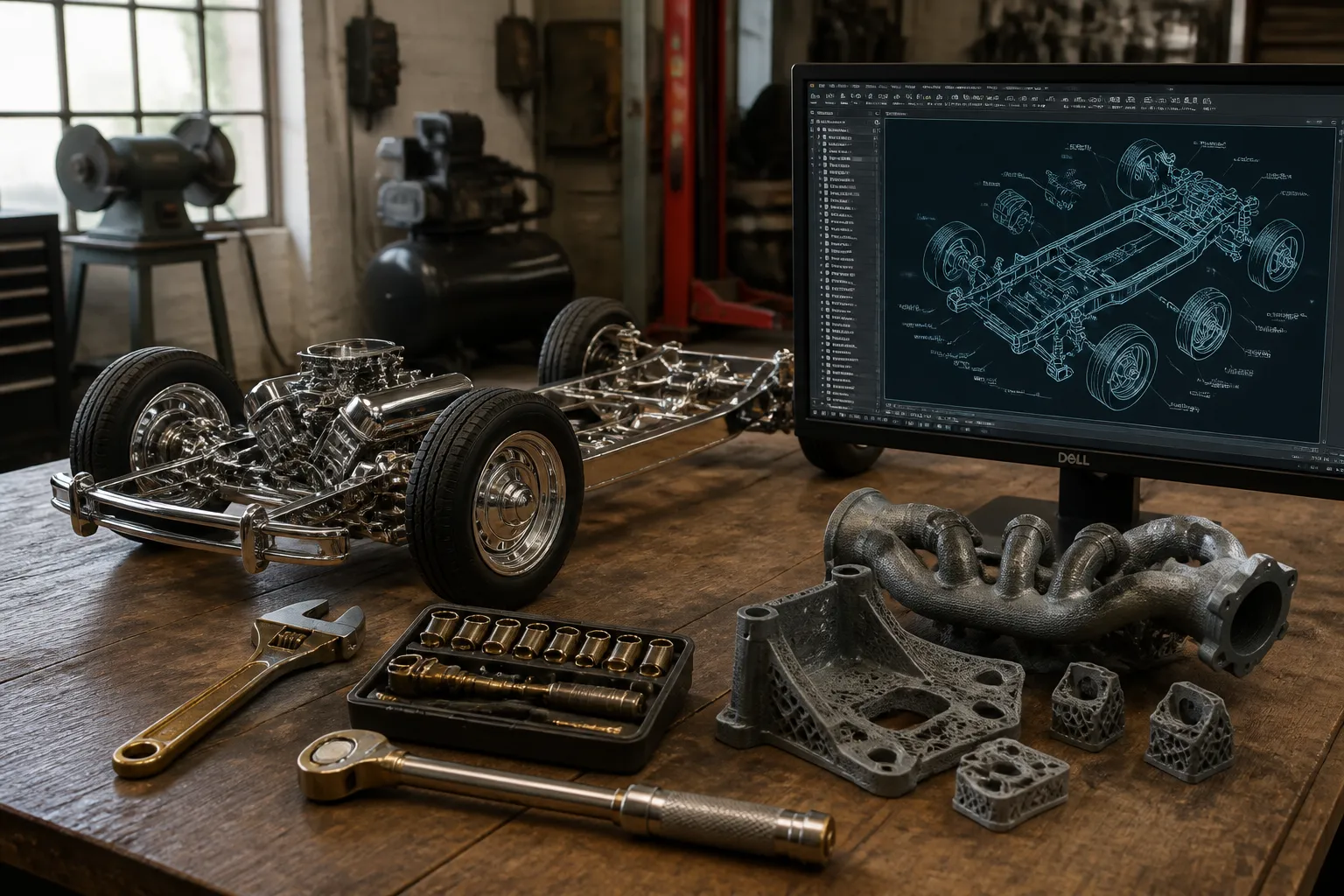
He trains as a heritage vehicle technician, a role that blends knowledge of vintage automobiles with proficiency in computer‑aided design (CAD) and 3D printing to fabricate replacement parts.
Priestley says he chose the apprenticeship because he wants to work on cars he loves, such as the Peugeot 205 GTi. He has already fabricated a gearbox mount for a classic BMW, a task that would have been impossible without the ability to design the part in CAD and produce it with a 3D printer.
Chris Tolman, the shop’s founder, argues that the apprenticeship gives technicians a depth of understanding that many mainstream dealerships lack. He notes that larger shops rely on computers to identify faults and swap parts, whereas specialist businesses must diagnose problems and then devise creative solutions.
The apprenticeship is part of a three‑year programme run by the Heritage Skills Academy (HSA) in Bicester. Introduced in 2018, the level‑three route replaces the older classic vehicle framework and incorporates 3D printing, CAD and other digital skills alongside welding and glazing. HSA’s managing director John Pitchforth describes the course as “radically improved” because it blends modern technology with engineering fundamentals.
Government data shows a shift in the apprenticeship market. The number of people starting level‑two intermediate apprenticeships fell by almost a quarter in the past year, while enrolments in higher‑level apprenticeships (levels four to seven, equivalent to bachelor’s and master’s degrees) have risen. Level‑three apprenticeship numbers have stayed steady.
Pitchforth argues that the graduates of HSA’s programme are highly skilled. He says that modern engineers who move into the sector often lack basic engineering principles and cannot diagnose vehicle systems without computer assistance.
The trend of combining practical and digital skills is not limited to automotive restoration. In Sheffield, FourJaw Manufacturing Analytics CEO Chris Iveson explains that apprentices now learn CNC programming, CAD, robotics, additive manufacturing and production monitoring. He warns that if training becomes too narrow, apprentices may miss essential knowledge of materials, tooling and quality control.
Ernest Wright, a scissor‑maker founded in 1902, has also adopted 3D metal printing in partnership with the University of Sheffield. The technology allows the company to produce accurate prototypes quickly and cheaply. The firm used 3D printing to revive a 1960s “nurseryman scissors” design and now creates a new product each year based on vintage models.
Trainee Elliott Nurcombe, who works part‑time at Ernest Wright while studying aerospace engineering, says that CAD and 3D printing help replace parts that are no longer manufactured. He stresses that technology does not replace the hands‑on work done in the workshop.
Whiteley Scissors, another Sheffield‑based company that has been in business since 1760, has also embraced 3D printing after a change of ownership in 2024. Managing director Mark White says he is recruiting trainee scissor manufacturers rather than investing in more automation, to preserve craftsmanship.
Platts & Nisbett, a surgical‑instrument maker in Sheffield city centre, uses CNC for the first stage of production and then finishes components by hand. The company also laser‑tags each instrument for traceability. Business development manager Julie Topham notes that recruiting craftsmen who prefer hands‑on work over computer‑based tasks is becoming more difficult.
The apprenticeship model reflects a broader industry shift toward higher‑level training that incorporates digital tools. While the integration of CAD, 3D printing and other technologies offers new opportunities for precision and efficiency, experts caution that the core skills of diagnosing and repairing systems must remain central to training.
At present, the Heritage Skills Academy continues to run its level‑three programme, and other specialist firms are adopting additive manufacturing to support niche markets. No new regulatory actions or court proceedings are reported, and the apprenticeship framework remains unchanged.
The current situation shows a stable demand for heritage‑vehicle technicians who can blend traditional craftsmanship with modern digital techniques. Apprenticeships at higher levels are growing, but level‑three programmes like HSA’s maintain steady enrolments, ensuring that skilled technicians continue to be produced for specialist restoration and manufacturing sectors.
He trains as a heritage vehicle technician, a role that blends knowledge of vintage automobiles with proficiency in computer‑aided design (CAD) and 3D printing to fabricate replacement parts.
Priestley says he chose the apprenticeship because he wants to work on cars he loves, such as the Peugeot 205 GTi. He has already fabricated a gearbox mount for a classic BMW, a task that would have been impossible without the ability to design the part in CAD and produce it with a 3D printer.
Chris Tolman, the shop’s founder, argues that the apprenticeship gives technicians a depth of understanding that many mainstream dealerships lack. He notes that larger shops rely on computers to identify faults and swap parts, whereas specialist businesses must diagnose problems and then devise creative solutions.
The apprenticeship is part of a three‑year programme run by the Heritage Skills Academy (HSA) in Bicester. Introduced in 2018, the level‑three route replaces the older classic vehicle framework and incorporates 3D printing, CAD and other digital skills alongside welding and glazing. HSA’s managing director John Pitchforth describes the course as “radically improved” because it blends modern technology with engineering fundamentals.
Government data shows a shift in the apprenticeship market. The number of people starting level‑two intermediate apprenticeships fell by almost a quarter in the past year, while enrolments in higher‑level apprenticeships (levels four to seven, equivalent to bachelor’s and master’s degrees) have risen. Level‑three apprenticeship numbers have stayed steady.
Pitchforth argues that the graduates of HSA’s programme are highly skilled. He says that modern engineers who move into the sector often lack basic engineering principles and cannot diagnose vehicle systems without computer assistance.
The trend of combining practical and digital skills is not limited to automotive restoration. In Sheffield, FourJaw Manufacturing Analytics CEO Chris Iveson explains that apprentices now learn CNC programming, CAD, robotics, additive manufacturing and production monitoring. He warns that if training becomes too narrow, apprentices may miss essential knowledge of materials, tooling and quality control.
Ernest Wright, a scissor‑maker founded in 1902, has also adopted 3D metal printing in partnership with the University of Sheffield. The technology allows the company to produce accurate prototypes quickly and cheaply. The firm used 3D printing to revive a 1960s “nurseryman scissors” design and now creates a new product each year based on vintage models.
Trainee Elliott Nurcombe, who works part‑time at Ernest Wright while studying aerospace engineering, says that CAD and 3D printing help replace parts that are no longer manufactured. He stresses that technology does not replace the hands‑on work done in the workshop.
Whiteley Scissors, another Sheffield‑based company that has been in business since 1760, has also embraced 3D printing after a change of ownership in 2024. Managing director Mark White says he is recruiting trainee scissor manufacturers rather than investing in more automation, to preserve craftsmanship.
Platts & Nisbett, a surgical‑instrument maker in Sheffield city centre, uses CNC for the first stage of production and then finishes components by hand. The company also laser‑tags each instrument for traceability. Business development manager Julie Topham notes that recruiting craftsmen who prefer hands‑on work over computer‑based tasks is becoming more difficult.
The apprenticeship model reflects a broader industry shift toward higher‑level training that incorporates digital tools. While the integration of CAD, 3D printing and other technologies offers new opportunities for precision and efficiency, experts caution that the core skills of diagnosing and repairing systems must remain central to training.
At present, the Heritage Skills Academy continues to run its level‑three programme, and other specialist firms are adopting additive manufacturing to support niche markets. No new regulatory actions or court proceedings are reported, and the apprenticeship framework remains unchanged.
The current situation shows a stable demand for heritage‑vehicle technicians who can blend traditional craftsmanship with modern digital techniques. Apprenticeships at higher levels are growing, but level‑three programmes like HSA’s maintain steady enrolments, ensuring that skilled technicians continue to be produced for specialist restoration and manufacturing sectors.