Blab Tech
Chinas Green-Tech Exports Surge 37-68% in First Half of 2026, Driven by Global Clean-Energy Demand
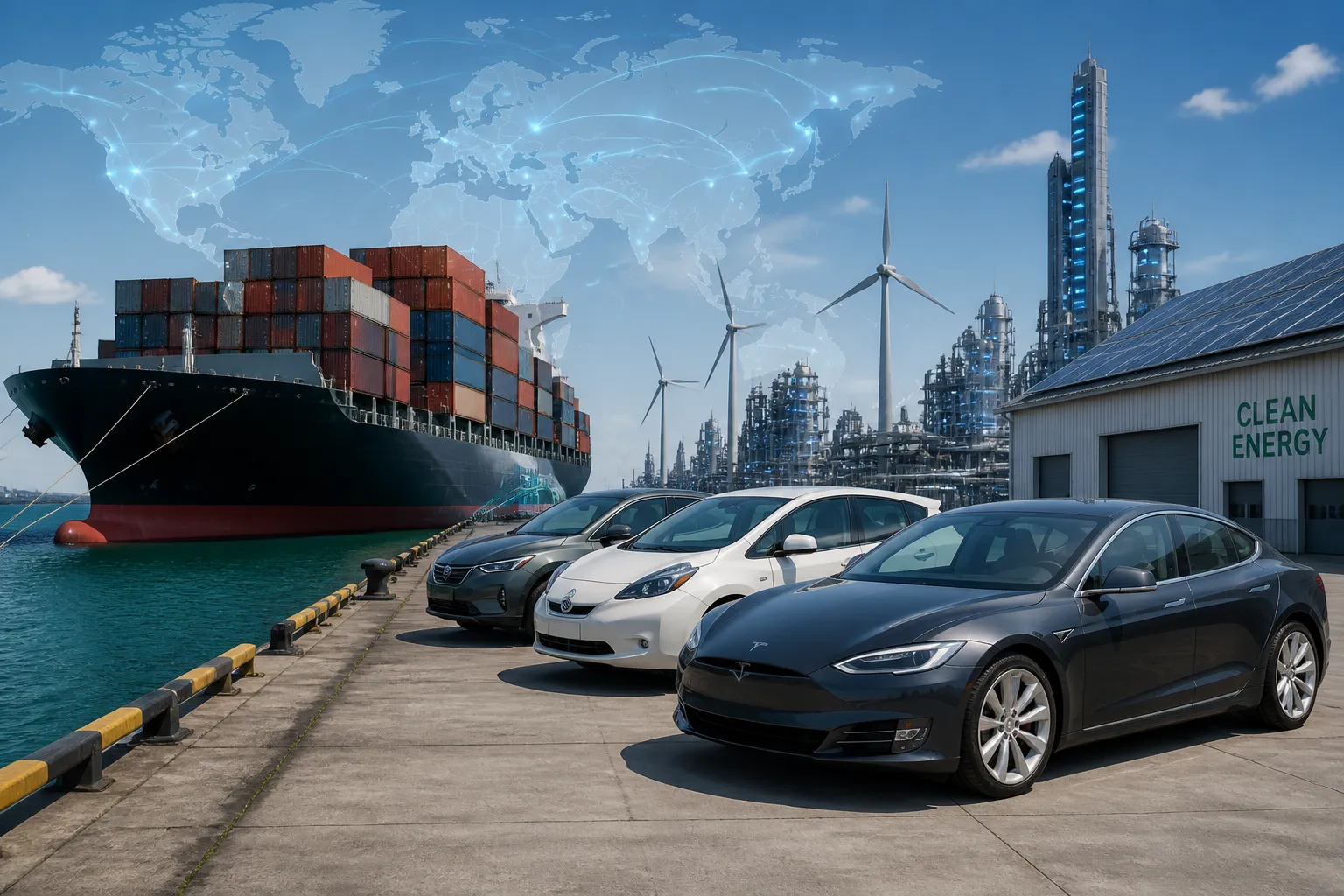
China’s exports of green‑technology products grew sharply in the first half of 2026, according to customs officials. Lithium‑ion battery shipments rose 37.6 %, wind turbine exports increased 35.6 %, and exports of electric‑vehicle products—including passenger cars, buses, light commercial vehicles, electric locomotives, motorcycles and bicycles—climbed between 31.5 % and 68.7 %. The rise reflects rising global demand for clean energy and low‑carbon transport.
Wang Jun, deputy head of the General Administration of Customs, said the growth was driven by investment and consumption in the renewable‑energy sector. He added that exports of basic organic chemicals and primary‑form plastics also rose 25 % and 35 % respectively, as global supplies of chemical products remain tight.
China’s overall foreign trade grew 16.9 % in the first half of 2026, according to data released by the customs agency. The increase in green‑tech exports contributed to the trade surplus, although imports grew faster than exports during the same period.
The lithium‑battery increase of 37.6 % is consistent with the country’s position as the world’s largest producer of lithium‑ion batteries. China’s battery makers have expanded capacity to meet demand from electric‑vehicle manufacturers and energy‑storage projects abroad.
Wind‑turbine exports grew 35.6 % as global wind‑power installations accelerate. China’s manufacturers have become the dominant suppliers for both on‑shore and offshore turbines, benefiting from economies of scale and lower production costs.
Electric‑vehicle exports, including passenger cars, buses and light commercial vehicles, rose 31.5 % to 68.7 %. The range of growth figures reflects the different product categories: electric locomotives, motorcycles and bicycles saw the highest increases, while passenger cars grew on the lower end of the spectrum.
The rise in exports of industrial materials such as basic organic chemicals and primary plastics is linked to the limited global supply of these inputs. China’s chemical industry has expanded capacity in recent years, allowing it to meet the needs of renewable‑energy and automotive sectors abroad.
Industry analysts say the data underscores China’s role as a key supplier in the global clean‑energy supply chain. The country’s policy framework, which supports research, development and manufacturing of renewable technologies, has helped maintain competitive pricing and high production volumes. According to the 2026 Government Work Report, the policy environment remains supportive of innovation, digital transformation and industrial upgrading.
The customs data also highlights the continued shift in global trade patterns, with China exporting more green‑technology products while importing a larger share of goods overall. The trade imbalance suggests that China’s domestic demand for high‑tech inputs remains strong.
The growth in green‑tech exports is expected to continue as governments worldwide set targets for carbon neutrality and increase investment in renewable‑energy infrastructure. China’s manufacturers are expanding production lines for lithium‑ion batteries, wind turbines and electric‑vehicle components to meet projected demand.
The customs agency will release full trade statistics for the second half of 2026 in September. Analysts will watch the data for signs of continued momentum or any slowdown that could signal changes in global demand or supply constraints.
At present, China’s green‑technology exports have risen significantly in the first half of 2026, driven by global clean‑energy demand and supported by the country’s manufacturing capacity. The data suggest that China will remain a central player in the renewable‑energy supply chain, although the trade balance indicates that imports are growing faster than exports overall.
Wang Jun, deputy head of the General Administration of Customs, said the growth was driven by investment and consumption in the renewable‑energy sector. He added that exports of basic organic chemicals and primary‑form plastics also rose 25 % and 35 % respectively, as global supplies of chemical products remain tight.
China’s overall foreign trade grew 16.9 % in the first half of 2026, according to data released by the customs agency. The increase in green‑tech exports contributed to the trade surplus, although imports grew faster than exports during the same period.
The lithium‑battery increase of 37.6 % is consistent with the country’s position as the world’s largest producer of lithium‑ion batteries. China’s battery makers have expanded capacity to meet demand from electric‑vehicle manufacturers and energy‑storage projects abroad.
Wind‑turbine exports grew 35.6 % as global wind‑power installations accelerate. China’s manufacturers have become the dominant suppliers for both on‑shore and offshore turbines, benefiting from economies of scale and lower production costs.
Electric‑vehicle exports, including passenger cars, buses and light commercial vehicles, rose 31.5 % to 68.7 %. The range of growth figures reflects the different product categories: electric locomotives, motorcycles and bicycles saw the highest increases, while passenger cars grew on the lower end of the spectrum.
The rise in exports of industrial materials such as basic organic chemicals and primary plastics is linked to the limited global supply of these inputs. China’s chemical industry has expanded capacity in recent years, allowing it to meet the needs of renewable‑energy and automotive sectors abroad.
Industry analysts say the data underscores China’s role as a key supplier in the global clean‑energy supply chain. The country’s policy framework, which supports research, development and manufacturing of renewable technologies, has helped maintain competitive pricing and high production volumes. According to the 2026 Government Work Report, the policy environment remains supportive of innovation, digital transformation and industrial upgrading.
The customs data also highlights the continued shift in global trade patterns, with China exporting more green‑technology products while importing a larger share of goods overall. The trade imbalance suggests that China’s domestic demand for high‑tech inputs remains strong.
The growth in green‑tech exports is expected to continue as governments worldwide set targets for carbon neutrality and increase investment in renewable‑energy infrastructure. China’s manufacturers are expanding production lines for lithium‑ion batteries, wind turbines and electric‑vehicle components to meet projected demand.
The customs agency will release full trade statistics for the second half of 2026 in September. Analysts will watch the data for signs of continued momentum or any slowdown that could signal changes in global demand or supply constraints.
At present, China’s green‑technology exports have risen significantly in the first half of 2026, driven by global clean‑energy demand and supported by the country’s manufacturing capacity. The data suggest that China will remain a central player in the renewable‑energy supply chain, although the trade balance indicates that imports are growing faster than exports overall.