Blab Tech
ATF Ruling Reclassifies Wrap Technologies BolaWrap 150 as Restraint Tool, Removing Federal Firearm Classification
On July 2, 2026, the Bureau of Alcohol, Tobacco, Firearms and Explosives (ATF) issued Ruling 2026‑2, declaring that Wrap Technologies, Inc.’s BolaWrap 150 is not a “firearm” under the Gun Control Act (18 U.S.C. § 921(a)(3)) and not an “any other weapon” under the National Firearms Act (NFA). Signed by ATF Director Robert Cekada, the ruling affirms that the device is an instrument of restraint, not an instrument of offensive or defensive combat.
The decision follows the U.S. Supreme Court’s 2025 ruling in Bondi v. VanDerStok, which clarified the ATF’s 2021 expansion of the definition of “firearm.” The ATF’s classification supersedes any prior determination that the BolaWrap 150 fell under federal weapon statutes, eliminating the regulatory ambiguity that had complicated procurement in several market segments.
Wrap Technologies, a public‑safety company listed on Nasdaq (WRAP), said the ruling “confirms at the federal level what our company has demonstrated in the field: BolaWrap 150 is not regulated as a firearm or an ‘any other weapon’ under the federal statutes addressed by the ruling.” Founder and CEO Scot Cohen added that the decision “may improve our ability to compete in segments that were structurally inaccessible before this ruling was issued.”
Four procurement categories are expected to be affected:
1. Corrections and Detention – The device can now be purchased through standard non‑lethal equipment channels in more than 5,000 federal and state facilities, removing weapons‑compliance burdens. 2. Civilian Safety Environments – Schools, universities, hospitals, federal buildings, courthouses, and stadiums can evaluate the BolaWrap 150 under civilian safety procurement, a channel previously limited by weapons classification. 3. International Deployment – The ruling removes dual‑layer compliance friction at both U.S. export controls and importing nations’ domestic law, simplifying sales to Wrap’s 60‑plus‑country network. 4. Autonomous Response Platforms – The DFR‑X drone system, which deploys the BolaWrap 150 as a non‑lethal payload, may no longer need to navigate weapons‑carriage regulatory complexity across FAA, state drone law, and international aviation frameworks.
Wrap estimates that the reclassification will shorten domestic sales cycles from 3–9 months to 4–8 weeks and international cycles from 4–6 months to 4–8 weeks. The company projects a combined addressable opportunity of $3 billion or more across the four unlocked segments.
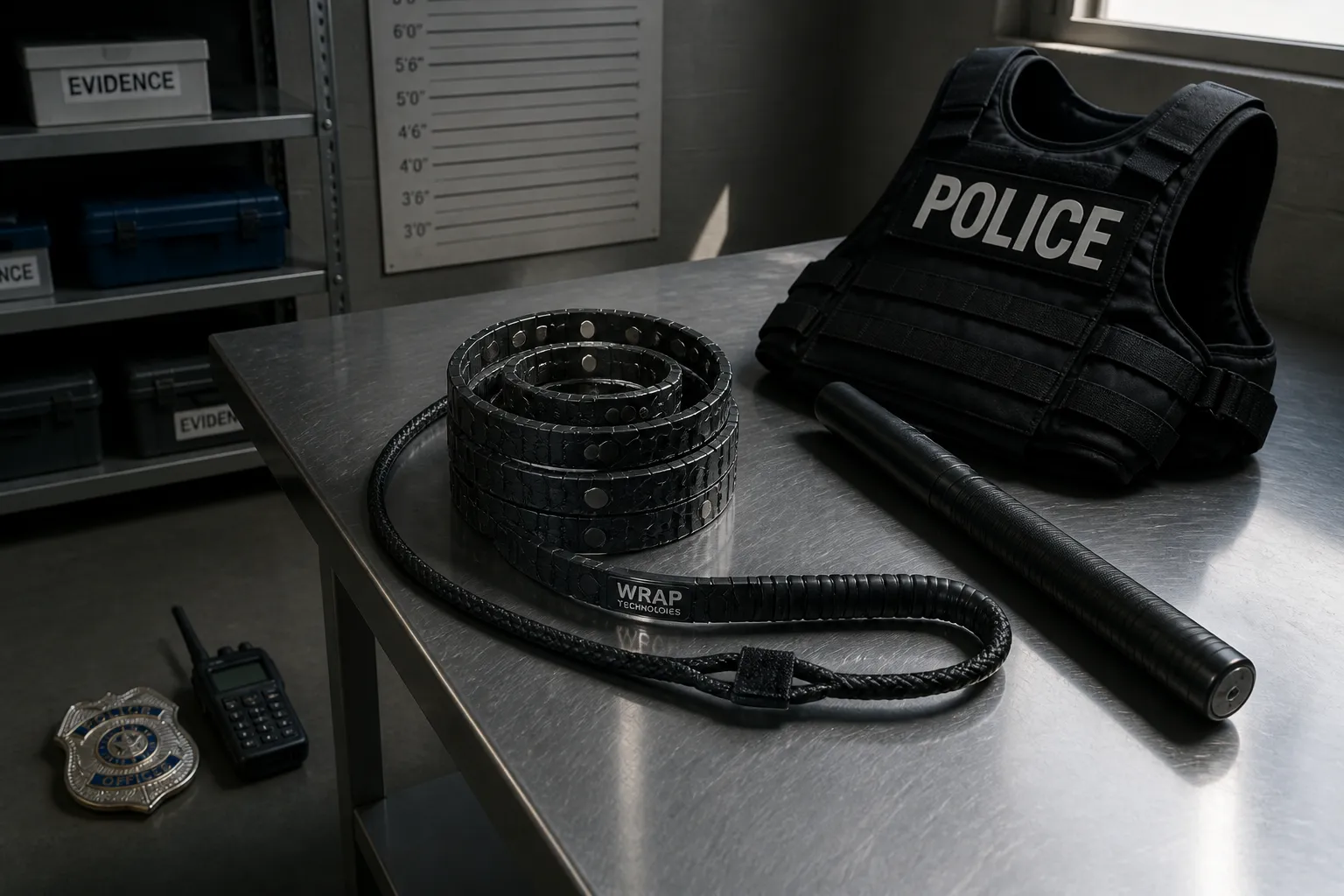
The ATF ruling also reinforces Wrap’s view that the BolaWrap 150 occupies a distinct position in the law‑enforcement use‑of‑force continuum. According to Wrap, the device fills a gap between verbal commands and pain‑compliance tools—what the company calls the “Wrap Window.” The BolaWrap 150 operates at distances of 10 to 25 feet, allowing officers to physically contain a non‑compliant subject before close‑quarters contact or pain compliance is required. The restraint is delivered by a Kevlar tether rather than a force‑based weapon.
Wrap Technologies’ portfolio extends beyond the BolaWrap 150. The company also offers Wrap Reality, an immersive training platform; WrapVision, a body‑worn camera system; WrapTactics, a training program; and counter‑unmanned‑air‑system solutions such as PAN‑DA and the 1KC Kinetic Anti‑Drone Cassette. The company says its products are designed to provide safer, scalable, and cost‑effective options for public safety, defense, and critical‑infrastructure markets.
The ruling is expected to influence procurement practices across federal, state, and local agencies. While the ATF’s decision removes the federal classification barrier, agencies will still need to evaluate the device against their own use‑of‑force policies and training requirements. Wrap has indicated that it will continue to support agencies with certification and training through its partnership with the International Association of Directors of Law Enforcement Standards and Training.
In summary, the ATF’s Ruling 2026‑2 reclassifies the BolaWrap 150 as a restraint instrument, removing it from federal firearm and weapon categories. The decision is poised to streamline procurement in corrections, civilian safety, international markets, and autonomous response systems, potentially accelerating sales cycles and unlocking a multi‑billion‑dollar opportunity. Wrap Technologies is preparing to launch an integrated detection, response, and command ecosystem that will build on the new regulatory footing established by the ruling.
The decision follows the U.S. Supreme Court’s 2025 ruling in Bondi v. VanDerStok, which clarified the ATF’s 2021 expansion of the definition of “firearm.” The ATF’s classification supersedes any prior determination that the BolaWrap 150 fell under federal weapon statutes, eliminating the regulatory ambiguity that had complicated procurement in several market segments.
Wrap Technologies, a public‑safety company listed on Nasdaq (WRAP), said the ruling “confirms at the federal level what our company has demonstrated in the field: BolaWrap 150 is not regulated as a firearm or an ‘any other weapon’ under the federal statutes addressed by the ruling.” Founder and CEO Scot Cohen added that the decision “may improve our ability to compete in segments that were structurally inaccessible before this ruling was issued.”
Four procurement categories are expected to be affected:
1. Corrections and Detention – The device can now be purchased through standard non‑lethal equipment channels in more than 5,000 federal and state facilities, removing weapons‑compliance burdens. 2. Civilian Safety Environments – Schools, universities, hospitals, federal buildings, courthouses, and stadiums can evaluate the BolaWrap 150 under civilian safety procurement, a channel previously limited by weapons classification. 3. International Deployment – The ruling removes dual‑layer compliance friction at both U.S. export controls and importing nations’ domestic law, simplifying sales to Wrap’s 60‑plus‑country network. 4. Autonomous Response Platforms – The DFR‑X drone system, which deploys the BolaWrap 150 as a non‑lethal payload, may no longer need to navigate weapons‑carriage regulatory complexity across FAA, state drone law, and international aviation frameworks.
Wrap estimates that the reclassification will shorten domestic sales cycles from 3–9 months to 4–8 weeks and international cycles from 4–6 months to 4–8 weeks. The company projects a combined addressable opportunity of $3 billion or more across the four unlocked segments.
The ATF ruling also reinforces Wrap’s view that the BolaWrap 150 occupies a distinct position in the law‑enforcement use‑of‑force continuum. According to Wrap, the device fills a gap between verbal commands and pain‑compliance tools—what the company calls the “Wrap Window.” The BolaWrap 150 operates at distances of 10 to 25 feet, allowing officers to physically contain a non‑compliant subject before close‑quarters contact or pain compliance is required. The restraint is delivered by a Kevlar tether rather than a force‑based weapon.
Wrap Technologies’ portfolio extends beyond the BolaWrap 150. The company also offers Wrap Reality, an immersive training platform; WrapVision, a body‑worn camera system; WrapTactics, a training program; and counter‑unmanned‑air‑system solutions such as PAN‑DA and the 1KC Kinetic Anti‑Drone Cassette. The company says its products are designed to provide safer, scalable, and cost‑effective options for public safety, defense, and critical‑infrastructure markets.
The ruling is expected to influence procurement practices across federal, state, and local agencies. While the ATF’s decision removes the federal classification barrier, agencies will still need to evaluate the device against their own use‑of‑force policies and training requirements. Wrap has indicated that it will continue to support agencies with certification and training through its partnership with the International Association of Directors of Law Enforcement Standards and Training.
In summary, the ATF’s Ruling 2026‑2 reclassifies the BolaWrap 150 as a restraint instrument, removing it from federal firearm and weapon categories. The decision is poised to streamline procurement in corrections, civilian safety, international markets, and autonomous response systems, potentially accelerating sales cycles and unlocking a multi‑billion‑dollar opportunity. Wrap Technologies is preparing to launch an integrated detection, response, and command ecosystem that will build on the new regulatory footing established by the ruling.