Blab Tech
Merlin Bird ID App to Feed Data Directly into eBird, Expanding Citizen-Science Contributions
In a move that could reshape how hobbyists help track wildlife, the Cornell Lab of Ornithology’s free Merlin Bird ID app is set to push real‑time bird‑song identifications straight into eBird, the planet’s largest citizen‑science database. The announcement, reported by The Guardian on July 4 2026, means that the millions of users who tap their phones on a bird feeder or hike a trail will be able to add their observations to a global repository without leaving the app.
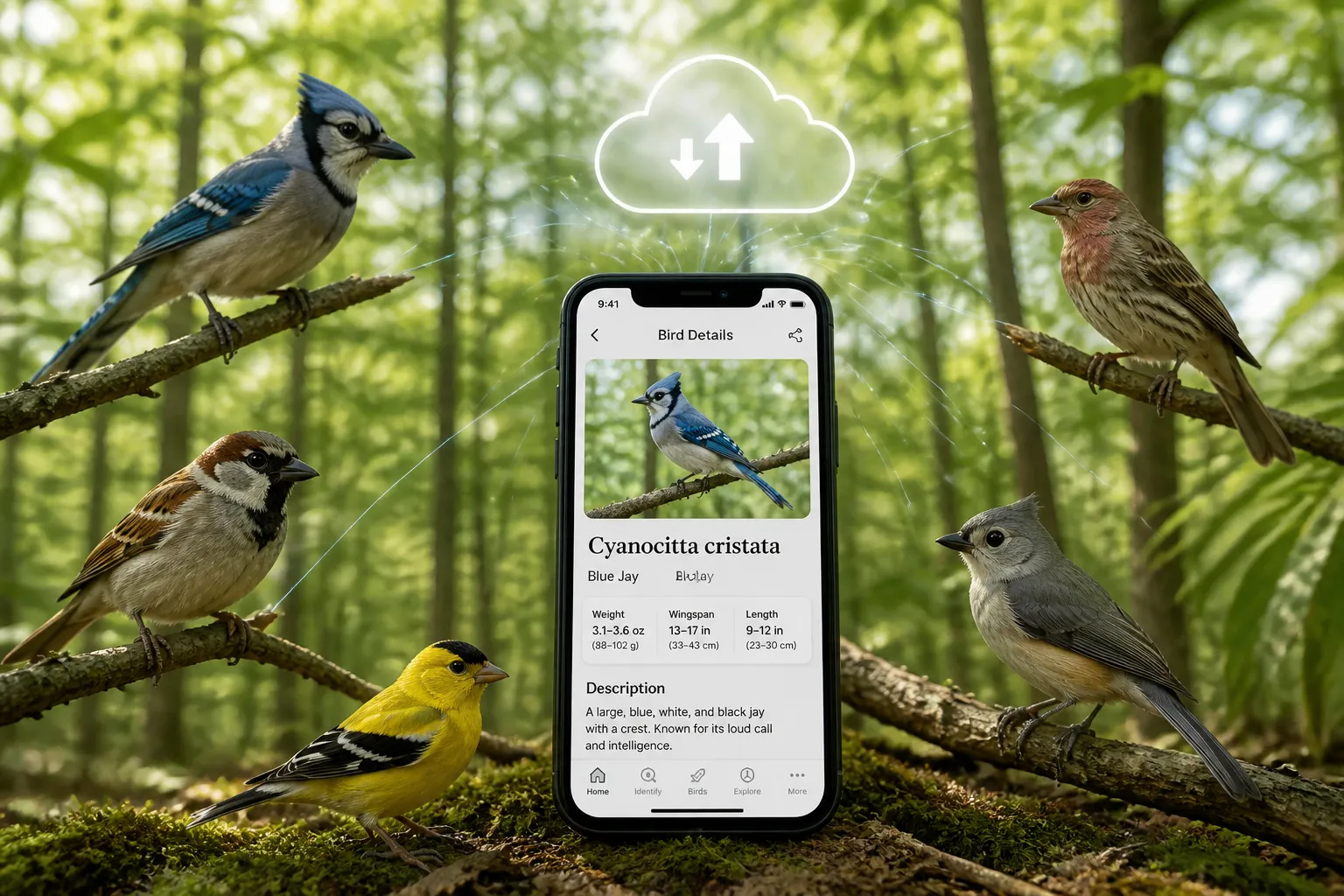
Merlin’s AI‑powered Sound ID, launched in 2021, has already earned a reputation for speed and breadth. Within seconds of a recording, the machine‑learning model lists likely species, covering 2,066 species across North America, Europe, parts of Asia and Latin America. New entries appear regularly, and the app also offers photo identification, GPS‑based suggestions and downloadable offline bird packs. Its mix of accessibility and depth has made it a favorite for both novices and seasoned birders.
The upcoming integration focuses on the recording side. According to the Guardian report, the eBird mobile app will soon accept audio uploads that can be captured in Merlin. Users will be able to attach their song clips to entries in the eBird Life List—a personal log of species a user has seen—streamlining the workflow that previously required manual transfer between apps.
eBird, which debuted in 2002, now houses over two billion bird records worldwide. Researchers, conservationists and policymakers rely on that data to chart population trends, identify critical habitats and inform legislation. By funneling Merlin’s instant identifications into eBird, the Cornell Lab hopes to boost both the volume and geographic spread of citizen‑science data.
The app’s reach is impressive. With more than 40 million downloads across 240 countries and nearly 2 million UK users logging in during May alone, Merlin has carved a substantial niche. In the UK, the British Trust for Ornithology reports that the national bird population has fallen by more than 70 million in the past half‑century—a decline that underscores the need for comprehensive monitoring.
Conservationists have greeted the expansion with enthusiasm, but experts remind readers that AI is not infallible. The European Bird Census Council cautions against relying solely on Merlin during official breeding surveys. A story highlighted by The Guardian—RSPB conservation scientist Richard Gregory once saw the app misidentify his dachshund as a mallard—illustrates that errors still occur.
Merlin’s data will not bypass scrutiny. Like other citizen‑science observations, it will undergo the same validation pipeline used by eBird before researchers incorporate it into studies. The community review process, combined with larger datasets, can refine both scientific analyses and the AI model’s accuracy over time.
The partnership also dovetails with eBird’s mission to democratise science. By lowering technical barriers, the Cornell Lab and eBird reinforce the idea that everyday observers can contribute meaningfully to biodiversity monitoring.
Merlin’s integration is part of a broader trend: machine‑learning tools are increasingly woven into conservation workflows, offering near‑instant species identification that expands participation. As models improve, the potential for rapid, large‑scale data collection grows.
At this stage, the Merlin‑eBird integration remains in development, and no release date has been announced. The Cornell Lab has signaled that the feature will appear in a future app update, but users are advised to keep an eye on official channels for confirmation.
In short, the planned link between Merlin and eBird promises to let millions of users upload bird‑song recordings directly to a global database, potentially enriching population monitoring and supporting conservation efforts. While the feature is still in the works and AI’s limits remain, the collaboration marks a concrete step toward more robust, real‑time wildlife data collection.
Merlin’s AI‑powered Sound ID, launched in 2021, has already earned a reputation for speed and breadth. Within seconds of a recording, the machine‑learning model lists likely species, covering 2,066 species across North America, Europe, parts of Asia and Latin America. New entries appear regularly, and the app also offers photo identification, GPS‑based suggestions and downloadable offline bird packs. Its mix of accessibility and depth has made it a favorite for both novices and seasoned birders.
The upcoming integration focuses on the recording side. According to the Guardian report, the eBird mobile app will soon accept audio uploads that can be captured in Merlin. Users will be able to attach their song clips to entries in the eBird Life List—a personal log of species a user has seen—streamlining the workflow that previously required manual transfer between apps.
eBird, which debuted in 2002, now houses over two billion bird records worldwide. Researchers, conservationists and policymakers rely on that data to chart population trends, identify critical habitats and inform legislation. By funneling Merlin’s instant identifications into eBird, the Cornell Lab hopes to boost both the volume and geographic spread of citizen‑science data.
The app’s reach is impressive. With more than 40 million downloads across 240 countries and nearly 2 million UK users logging in during May alone, Merlin has carved a substantial niche. In the UK, the British Trust for Ornithology reports that the national bird population has fallen by more than 70 million in the past half‑century—a decline that underscores the need for comprehensive monitoring.
Conservationists have greeted the expansion with enthusiasm, but experts remind readers that AI is not infallible. The European Bird Census Council cautions against relying solely on Merlin during official breeding surveys. A story highlighted by The Guardian—RSPB conservation scientist Richard Gregory once saw the app misidentify his dachshund as a mallard—illustrates that errors still occur.
Merlin’s data will not bypass scrutiny. Like other citizen‑science observations, it will undergo the same validation pipeline used by eBird before researchers incorporate it into studies. The community review process, combined with larger datasets, can refine both scientific analyses and the AI model’s accuracy over time.
The partnership also dovetails with eBird’s mission to democratise science. By lowering technical barriers, the Cornell Lab and eBird reinforce the idea that everyday observers can contribute meaningfully to biodiversity monitoring.
Merlin’s integration is part of a broader trend: machine‑learning tools are increasingly woven into conservation workflows, offering near‑instant species identification that expands participation. As models improve, the potential for rapid, large‑scale data collection grows.
At this stage, the Merlin‑eBird integration remains in development, and no release date has been announced. The Cornell Lab has signaled that the feature will appear in a future app update, but users are advised to keep an eye on official channels for confirmation.
In short, the planned link between Merlin and eBird promises to let millions of users upload bird‑song recordings directly to a global database, potentially enriching population monitoring and supporting conservation efforts. While the feature is still in the works and AI’s limits remain, the collaboration marks a concrete step toward more robust, real‑time wildlife data collection.