Blab Tech
Samsung Unveils Galaxy Tab S12 Plus and Ultra for September 2026
Samsung’s September 2026 launch event revealed the Galaxy Tab S12 Plus and Galaxy Tab S12 Ultra, the company’s newest flagship tablets for the premium market.
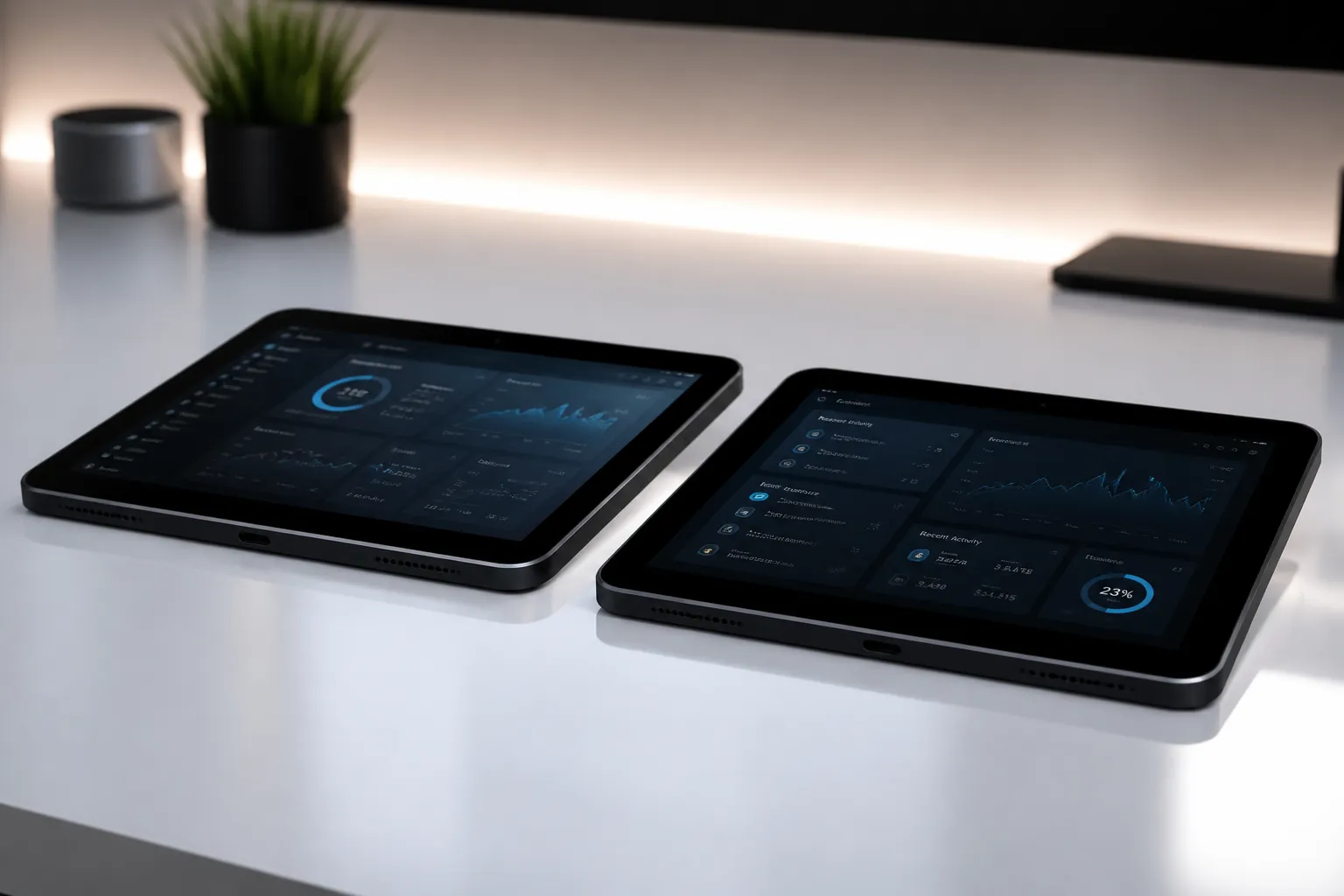
The announcement deliberately skipped a standard 11‑inch model, signalling a clear focus on users who demand the highest level of performance, display quality and durability. Both devices boast OLED panels with adaptive 120‑Hz refresh rates. The Plus model carries a 12.4‑inch Dynamic AMOLED screen, while the Ultra offers a 14.6‑inch panel that can reach up to 3,000 nits peak brightness and includes an anti‑reflective coating. The displays deliver vibrant colors, deep blacks and high contrast, making them ideal for 4K streaming, photo editing and gaming.
Under the hood, the tablets are powered by the MediaTek Dimensity 9500, a 3‑nanometer system‑on‑chip that incorporates an octa‑core CPU architecture: one 4.21‑GHz prime core, three 3.5‑GHz performance cores and four 2.7‑GHz efficiency cores, paired with a Mali GPU. The chipset is engineered for faster performance, improved energy efficiency and AI‑driven features.
Standard configurations include 12 GB of RAM and 256 GB of internal storage, with a microSD slot for expandable storage. Samsung has also reported that the Ultra model may be offered with 16 GB of RAM and up to 1 TB of storage, though those figures remain unconfirmed.
Battery capacity is a key selling point. The Plus model is equipped with a 10,500‑to‑10,600‑mAh battery, while the Ultra model carries a larger capacity. Both tablets support 45‑W wired charging; rumors suggest the Ultra may support up to 80 W, but this has not been officially confirmed.
Camera specifications include a single 12‑MP front‑facing sensor capable of 4K video, and dual rear cameras consisting of a 13‑MP main sensor and an 8‑MP ultra‑wide sensor. The Ultra model is rumored to have dual front cameras (wide and ultra‑wide) under‑display, but Samsung has not released official details.
Samsung has added several premium features to the tablets. An in‑display fingerprint scanner provides secure unlocking, while full S Pen support caters to artists and note‑takers. The devices are IP68 dust‑ and water‑resistant, and feature a quad‑speaker system with Dolby Atmos for immersive audio.
Connectivity options include Wi‑Fi 7, Bluetooth 6.0, 5G support and a USB 3.2 Type‑C port. The tablets ship with Android 17 and Samsung’s One UI 9.0 interface.
One of the most significant commitments from Samsung is a seven‑year Android OS and security update cycle. The company has stated that the Galaxy Tab S12 series will receive updates for seven years, a duration that exceeds the typical three‑ to five‑year support window of many competitors.
Industry observers note that Samsung’s move to focus exclusively on high‑end tablets aligns with the growing demand for devices that can compete with Apple’s iPad Pro line. The combination of OLED displays, a 3‑nm chipset, extensive software support and premium build quality positions the Galaxy Tab S12 Plus and Ultra as strong contenders in the premium tablet market.
The launch also highlights Samsung’s broader strategy to shift away from lower‑tier tablet models. By concentrating resources on flagship devices, the company aims to strengthen its brand perception among professional users and tech enthusiasts.
As the release date approaches, analysts will be watching how the Galaxy Tab S12 series performs in real‑world benchmarks, battery endurance tests and software stability reviews. The extended update promise may also influence purchasing decisions for users who prioritize long‑term device viability.
In summary, Samsung’s Galaxy Tab S12 Plus and Ultra bring OLED displays, a 3‑nm MediaTek Dimensity 9500 processor, generous memory and storage options, robust battery life, premium build features and a seven‑year update commitment. The devices are slated for availability in September 2026, marking Samsung’s next step in the premium tablet arena.
The announcement deliberately skipped a standard 11‑inch model, signalling a clear focus on users who demand the highest level of performance, display quality and durability. Both devices boast OLED panels with adaptive 120‑Hz refresh rates. The Plus model carries a 12.4‑inch Dynamic AMOLED screen, while the Ultra offers a 14.6‑inch panel that can reach up to 3,000 nits peak brightness and includes an anti‑reflective coating. The displays deliver vibrant colors, deep blacks and high contrast, making them ideal for 4K streaming, photo editing and gaming.
Under the hood, the tablets are powered by the MediaTek Dimensity 9500, a 3‑nanometer system‑on‑chip that incorporates an octa‑core CPU architecture: one 4.21‑GHz prime core, three 3.5‑GHz performance cores and four 2.7‑GHz efficiency cores, paired with a Mali GPU. The chipset is engineered for faster performance, improved energy efficiency and AI‑driven features.
Standard configurations include 12 GB of RAM and 256 GB of internal storage, with a microSD slot for expandable storage. Samsung has also reported that the Ultra model may be offered with 16 GB of RAM and up to 1 TB of storage, though those figures remain unconfirmed.
Battery capacity is a key selling point. The Plus model is equipped with a 10,500‑to‑10,600‑mAh battery, while the Ultra model carries a larger capacity. Both tablets support 45‑W wired charging; rumors suggest the Ultra may support up to 80 W, but this has not been officially confirmed.
Camera specifications include a single 12‑MP front‑facing sensor capable of 4K video, and dual rear cameras consisting of a 13‑MP main sensor and an 8‑MP ultra‑wide sensor. The Ultra model is rumored to have dual front cameras (wide and ultra‑wide) under‑display, but Samsung has not released official details.
Samsung has added several premium features to the tablets. An in‑display fingerprint scanner provides secure unlocking, while full S Pen support caters to artists and note‑takers. The devices are IP68 dust‑ and water‑resistant, and feature a quad‑speaker system with Dolby Atmos for immersive audio.
Connectivity options include Wi‑Fi 7, Bluetooth 6.0, 5G support and a USB 3.2 Type‑C port. The tablets ship with Android 17 and Samsung’s One UI 9.0 interface.
One of the most significant commitments from Samsung is a seven‑year Android OS and security update cycle. The company has stated that the Galaxy Tab S12 series will receive updates for seven years, a duration that exceeds the typical three‑ to five‑year support window of many competitors.
Industry observers note that Samsung’s move to focus exclusively on high‑end tablets aligns with the growing demand for devices that can compete with Apple’s iPad Pro line. The combination of OLED displays, a 3‑nm chipset, extensive software support and premium build quality positions the Galaxy Tab S12 Plus and Ultra as strong contenders in the premium tablet market.
The launch also highlights Samsung’s broader strategy to shift away from lower‑tier tablet models. By concentrating resources on flagship devices, the company aims to strengthen its brand perception among professional users and tech enthusiasts.
As the release date approaches, analysts will be watching how the Galaxy Tab S12 series performs in real‑world benchmarks, battery endurance tests and software stability reviews. The extended update promise may also influence purchasing decisions for users who prioritize long‑term device viability.
In summary, Samsung’s Galaxy Tab S12 Plus and Ultra bring OLED displays, a 3‑nm MediaTek Dimensity 9500 processor, generous memory and storage options, robust battery life, premium build features and a seven‑year update commitment. The devices are slated for availability in September 2026, marking Samsung’s next step in the premium tablet arena.