Blab Tech
Iranian Parliament Speakers Bloomberg Terminal Tweet Sparks Sanctions-Evasion Speculation
On April 19, 2026, Mohammad Bagher Ghalibaf, the speaker of Iran’s parliament, posted a short message on X that included the string “EUCRBRDT Index GP.” The text was a Bloomberg Terminal command that, when entered on a terminal, pulls up a chart of the Brent crude spot price. The tweet, which also mocked the oil market against the bond market, drew attention because it suggests that a senior Iranian official, who is under U.S. Treasury sanctions, has access to Bloomberg’s closed financial platform.
The EUCRBRDT ticker is the European Central Bank’s official identifier for the Brent‑forties, Oseberg, and Ekofisk crude oil spot price. According to the ECB data portal, the ticker is used as a benchmark for global oil pricing. The command “GP” is a Bloomberg function that displays a price graph. Together, the command would display a real‑time Brent price chart on a Bloomberg Terminal.
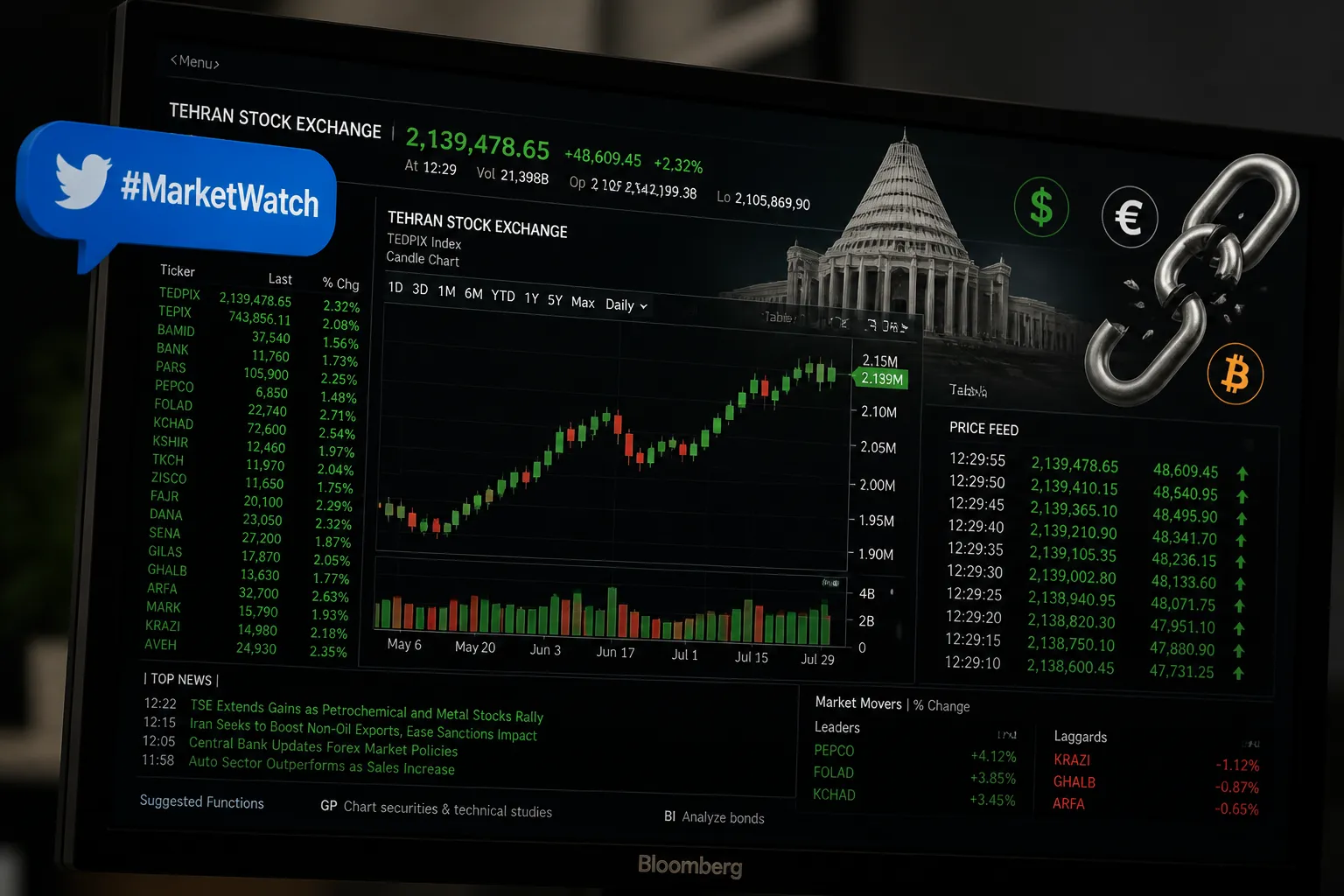
Bloomberg Terminals are subscription‑based workstations that provide real‑time market data, news, analytics, messaging, and order execution. Bloomberg L.P. charges about $31,980 per seat per year in 2026, with multi‑seat contracts lowering the cost to $28,320. The cost includes a dedicated keyboard, installation fees, and optional data add‑ons, bringing the first‑year expense to roughly $34,000–$35,500 per seat.
The terminal’s dominance stems from more than data. Bloomberg’s platform hosts a proprietary messaging network, IB chat, that functions as a social network for traders. A trade quoted in IB chat can become a binding order, and liquidity flows through the chat rooms. The platform also offers the Bloomberg Aggregate Bond Index, a benchmark used by asset managers worldwide. Switching away from the terminal would require rewriting thousands of contracts and prospectuses.
Bloomberg has maintained its user base despite the rise of cheaper alternatives such as FactSet, LSEG’s Eikon, and the AI‑native Godel Terminal. The terminal’s learning curve is steep; it offers more than 30,000 functions, each identified by a short code. Mastery of these functions can take years, creating a lock‑in that is difficult to overcome.
In 2023, Bloomberg announced BloombergGPT, a 50‑billion‑parameter language model trained on 363 billion tokens from Bloomberg’s own financial documents and an additional 345 billion tokens from other sources. The model is integrated into the terminal, providing features such as earnings‑call summaries and document‑analysis tools. Bloomberg’s AI strategy emphasizes protection, transparency, reproducibility, and robustness.
The Ghalibaf tweet illustrates the reach of Bloomberg’s infrastructure. Even a sanctioned official appears to have used the terminal’s command syntax, implying that the platform remains the lingua franca of global finance. The incident has raised concerns about potential sanctions evasion, though no formal investigation has been announced.
Bloomberg’s continued relevance is tied to its network of users, benchmark indices, and proprietary data. The platform’s high cost is offset by the value of its integrated services and the difficulty of switching. As the financial industry explores AI and alternative data sources, Bloomberg’s strategy of embedding AI within its existing ecosystem may preserve its moat.
The situation remains under observation. No regulatory action has been taken against Ghalibaf or Bloomberg, and Bloomberg has not issued a statement regarding the tweet. The incident underscores the continued importance of Bloomberg Terminal as a central hub for market data and trading, even as the industry moves toward newer technologies.
The EUCRBRDT ticker is the European Central Bank’s official identifier for the Brent‑forties, Oseberg, and Ekofisk crude oil spot price. According to the ECB data portal, the ticker is used as a benchmark for global oil pricing. The command “GP” is a Bloomberg function that displays a price graph. Together, the command would display a real‑time Brent price chart on a Bloomberg Terminal.
Bloomberg Terminals are subscription‑based workstations that provide real‑time market data, news, analytics, messaging, and order execution. Bloomberg L.P. charges about $31,980 per seat per year in 2026, with multi‑seat contracts lowering the cost to $28,320. The cost includes a dedicated keyboard, installation fees, and optional data add‑ons, bringing the first‑year expense to roughly $34,000–$35,500 per seat.
The terminal’s dominance stems from more than data. Bloomberg’s platform hosts a proprietary messaging network, IB chat, that functions as a social network for traders. A trade quoted in IB chat can become a binding order, and liquidity flows through the chat rooms. The platform also offers the Bloomberg Aggregate Bond Index, a benchmark used by asset managers worldwide. Switching away from the terminal would require rewriting thousands of contracts and prospectuses.
Bloomberg has maintained its user base despite the rise of cheaper alternatives such as FactSet, LSEG’s Eikon, and the AI‑native Godel Terminal. The terminal’s learning curve is steep; it offers more than 30,000 functions, each identified by a short code. Mastery of these functions can take years, creating a lock‑in that is difficult to overcome.
In 2023, Bloomberg announced BloombergGPT, a 50‑billion‑parameter language model trained on 363 billion tokens from Bloomberg’s own financial documents and an additional 345 billion tokens from other sources. The model is integrated into the terminal, providing features such as earnings‑call summaries and document‑analysis tools. Bloomberg’s AI strategy emphasizes protection, transparency, reproducibility, and robustness.
The Ghalibaf tweet illustrates the reach of Bloomberg’s infrastructure. Even a sanctioned official appears to have used the terminal’s command syntax, implying that the platform remains the lingua franca of global finance. The incident has raised concerns about potential sanctions evasion, though no formal investigation has been announced.
Bloomberg’s continued relevance is tied to its network of users, benchmark indices, and proprietary data. The platform’s high cost is offset by the value of its integrated services and the difficulty of switching. As the financial industry explores AI and alternative data sources, Bloomberg’s strategy of embedding AI within its existing ecosystem may preserve its moat.
The situation remains under observation. No regulatory action has been taken against Ghalibaf or Bloomberg, and Bloomberg has not issued a statement regarding the tweet. The incident underscores the continued importance of Bloomberg Terminal as a central hub for market data and trading, even as the industry moves toward newer technologies.








