Blab Tech
Indian Space Startup Pixxel Secures First NASA Contract for Hyperspectral Earth-Observation Data
In early July 2026, Bengaluru‑based Pixxel Space Technologies made history by becoming the first Indian private startup to land a formal contract with NASA for hyperspectral Earth‑observation data. The deal follows Pixxel’s rapid ascent, marked by nine satellite launches and a ₹960‑crore investment from private investors and government sources.
Pixxel’s journey began in the quiet village of Aldur near Chikkamagaluru, Karnataka. Founder and CEO Awais Ahmed remembers his father, Nadeem Ahmed, buying science encyclopedias for him long before the internet reached their hometown. Those books, spanning topics from planets to black holes, sparked Ahmed’s fascination with space and set him on a path that would later cross paths with NASA.
Ahmed’s academic trail took him from Akshara Public School in Aldur to Purna Prajna School in Sangameshwar Pete, then to a pre‑university course in Mangaluru. He earned a degree in mathematics and manufacturing engineering at BITS Pilani, Rajasthan, where he joined a student satellite programme that collaborated with ISRO scientists on satellite design and construction.
A pivotal moment came in 2017 when Ahmed served as engineering lead for Hyperloop India, a student team that built a pod for the SpaceX Hyperloop Competition. The team was one of twenty finalists invited to Los Angeles, where Ahmed met Elon Musk, toured SpaceX’s rocket facilities, and witnessed the scale of private spaceflight. The experience cemented his conviction that a career in space technology was the right path.
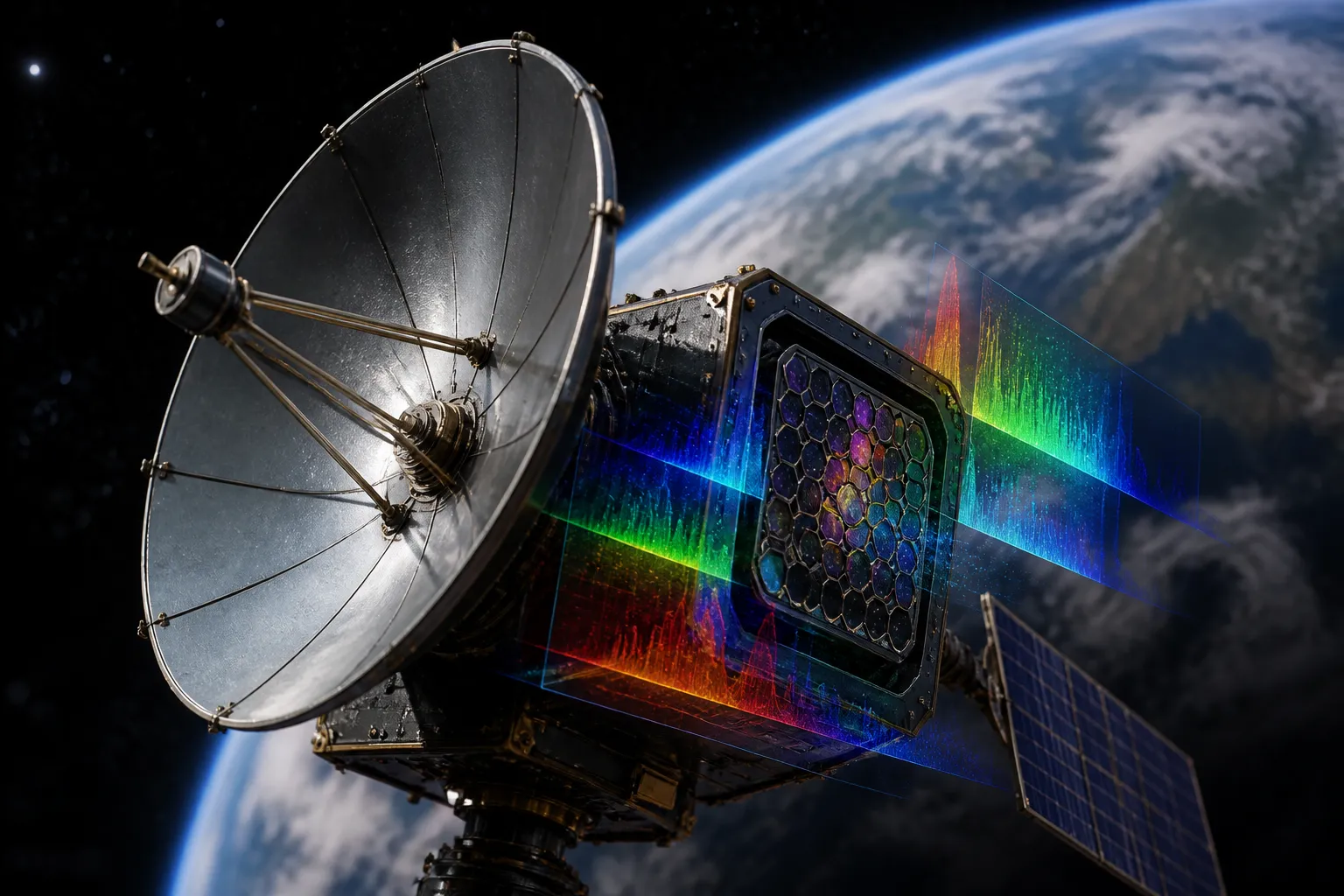
Shortly before graduating in 2019, Ahmed founded Pixxel Space Technologies. The company specializes in hyperspectral imaging satellites that capture data across many narrow spectral bands, enabling the identification of materials and chemical properties. Pixxel’s data serves energy, agriculture, and environmental monitoring sectors, providing insights into soil quality, crop disease, and resource exploration.
To date, Pixxel has launched nine hyperspectral satellites. Six of those launches occurred in 2025, and the company plans additional missions through 2026. Its workforce totals 275 employees, with 240 based in India and the remainder in the United States and Europe. Pixxel maintains an office in the United States to support its international operations.
The ₹960‑crore funding reflects a mix of Indian government support and private investment. According to reports, the opening of India’s space sector to private players and the formulation of a national space policy created a favorable environment for Pixxel’s growth. Domestic testing facilities also enabled the company to develop and qualify its satellites.
NASA’s Earth‑observation program relies on high‑resolution, multispectral data to monitor climate, natural resources, and environmental changes. Pixxel’s hyperspectral data will complement existing NASA assets and expand the agency’s ability to track Earth’s surface with finer spectral detail. The contract marks the first time an Indian private startup has been awarded a formal agreement to deliver hyperspectral data to the U.S. space agency.
Ahmed’s personal background underscores the company’s story. His father, a pharmacist who ran a medical shop in Aldur, invested heavily in Ahmed’s education, taking out an education loan and pledging gold to finance his studies. In October 2025, Nadeem purchased a house in Aldur before Ahmed’s marriage. Ahmed is married to a doctor.
Pixxel’s trajectory mirrors the rapid expansion of India’s private space industry. Since the sector opened to private companies in 2020, more than 300 startups have engaged in satellite manufacturing, launch vehicle development, and related services. By 2025, India had launched 434 satellites for foreign customers.
The NASA contract positions Pixxel as a key player in the global hyperspectral imaging market and signals growing confidence in Indian private space capabilities. It also provides a platform for further collaboration between Indian and U.S. space agencies, potentially leading to joint missions or data‑sharing initiatives.
At present, NASA will receive hyperspectral data from Pixxel’s upcoming satellite missions. Pixxel plans to continue launching additional satellites through 2026 and to expand its data services to other sectors. While specific timelines for future launches remain undisclosed, the company is actively securing new contracts and expanding its workforce.
In summary, Pixxel Space Technologies has secured a landmark NASA contract, launched nine hyperspectral satellites, and raised substantial investment. The company’s growth reflects both the maturation of India’s private space sector and the increasing demand for high‑resolution Earth‑observation data worldwide.
Pixxel’s journey began in the quiet village of Aldur near Chikkamagaluru, Karnataka. Founder and CEO Awais Ahmed remembers his father, Nadeem Ahmed, buying science encyclopedias for him long before the internet reached their hometown. Those books, spanning topics from planets to black holes, sparked Ahmed’s fascination with space and set him on a path that would later cross paths with NASA.
Ahmed’s academic trail took him from Akshara Public School in Aldur to Purna Prajna School in Sangameshwar Pete, then to a pre‑university course in Mangaluru. He earned a degree in mathematics and manufacturing engineering at BITS Pilani, Rajasthan, where he joined a student satellite programme that collaborated with ISRO scientists on satellite design and construction.
A pivotal moment came in 2017 when Ahmed served as engineering lead for Hyperloop India, a student team that built a pod for the SpaceX Hyperloop Competition. The team was one of twenty finalists invited to Los Angeles, where Ahmed met Elon Musk, toured SpaceX’s rocket facilities, and witnessed the scale of private spaceflight. The experience cemented his conviction that a career in space technology was the right path.
Shortly before graduating in 2019, Ahmed founded Pixxel Space Technologies. The company specializes in hyperspectral imaging satellites that capture data across many narrow spectral bands, enabling the identification of materials and chemical properties. Pixxel’s data serves energy, agriculture, and environmental monitoring sectors, providing insights into soil quality, crop disease, and resource exploration.
To date, Pixxel has launched nine hyperspectral satellites. Six of those launches occurred in 2025, and the company plans additional missions through 2026. Its workforce totals 275 employees, with 240 based in India and the remainder in the United States and Europe. Pixxel maintains an office in the United States to support its international operations.
The ₹960‑crore funding reflects a mix of Indian government support and private investment. According to reports, the opening of India’s space sector to private players and the formulation of a national space policy created a favorable environment for Pixxel’s growth. Domestic testing facilities also enabled the company to develop and qualify its satellites.
NASA’s Earth‑observation program relies on high‑resolution, multispectral data to monitor climate, natural resources, and environmental changes. Pixxel’s hyperspectral data will complement existing NASA assets and expand the agency’s ability to track Earth’s surface with finer spectral detail. The contract marks the first time an Indian private startup has been awarded a formal agreement to deliver hyperspectral data to the U.S. space agency.
Ahmed’s personal background underscores the company’s story. His father, a pharmacist who ran a medical shop in Aldur, invested heavily in Ahmed’s education, taking out an education loan and pledging gold to finance his studies. In October 2025, Nadeem purchased a house in Aldur before Ahmed’s marriage. Ahmed is married to a doctor.
Pixxel’s trajectory mirrors the rapid expansion of India’s private space industry. Since the sector opened to private companies in 2020, more than 300 startups have engaged in satellite manufacturing, launch vehicle development, and related services. By 2025, India had launched 434 satellites for foreign customers.
The NASA contract positions Pixxel as a key player in the global hyperspectral imaging market and signals growing confidence in Indian private space capabilities. It also provides a platform for further collaboration between Indian and U.S. space agencies, potentially leading to joint missions or data‑sharing initiatives.
At present, NASA will receive hyperspectral data from Pixxel’s upcoming satellite missions. Pixxel plans to continue launching additional satellites through 2026 and to expand its data services to other sectors. While specific timelines for future launches remain undisclosed, the company is actively securing new contracts and expanding its workforce.
In summary, Pixxel Space Technologies has secured a landmark NASA contract, launched nine hyperspectral satellites, and raised substantial investment. The company’s growth reflects both the maturation of India’s private space sector and the increasing demand for high‑resolution Earth‑observation data worldwide.








