Blab Tech
FIFAs Connected Ball Tech Disallows Croatias Late Goal in Portugal Match
A late burst of hope for Croatia was snatched away in Toronto, not by a referee’s whistle but by a tiny sensor inside the ball. On July 2, 2026, at BMO Field, Portugal edged Croatia 2‑1 in a round‑of‑32 World Cup clash. The decisive moment came when Josko Gvardiol’s header seemed to beat the defense, only to be ruled offside after the ball’s inertial measurement unit recorded a brief touch by Igor Matanovic. The VAR decision, backed by data from the Adidas Trionda ball, ignited a flurry of debate and underscored how connected ball technology is reshaping football officiating.
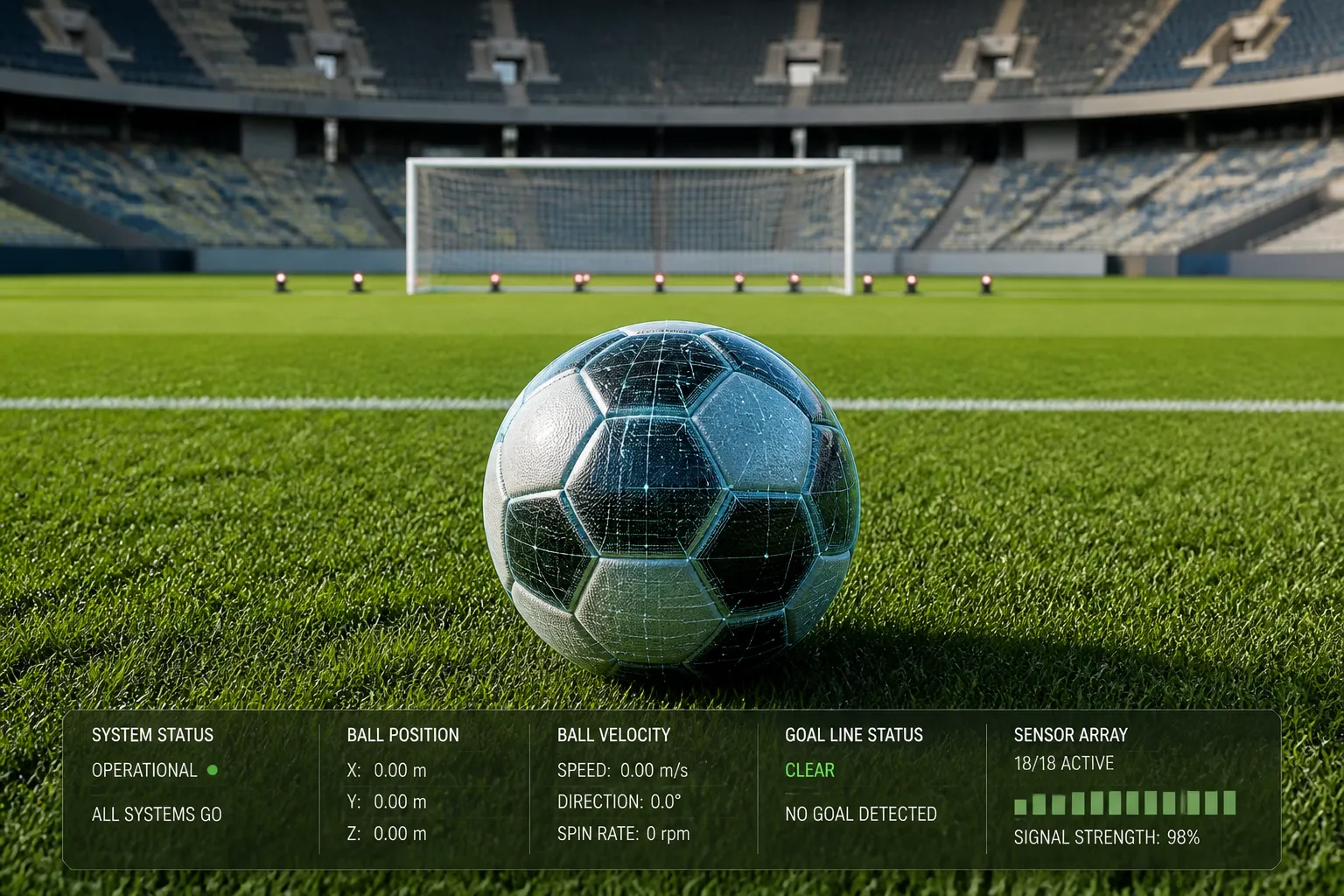
The Trionda ball carries a 500‑Hz IMU that logs acceleration and position in three dimensions. FIFA says the unit can pinpoint the exact instant a player contacts the ball. In the match, the sensor’s readings were streamed live to stadium cameras and the VAR room, where they appeared as a “heartbeat graphic” that flashes the contact moment. By overlaying this data with camera footage, officials could confirm that Matanovic’s head had made a subtle touch before the ball crossed the line, triggering the offside call.
The play began with Ivan Perišić’s cross, which ricocheted off a Portugal defender before finding Mario Pašalić. Pašalić’s volley appeared to be a clean finish, but the sensor spike revealed that Matanovic had brushed the ball with his head just before it left the striker’s foot. Because Pašalić was in an offside position, the goal was annulled. Slow‑motion replays from multiple angles failed to provide a clear picture, but the ball’s data supplied the decisive evidence that led to the VAR review.
The Trionda ball made its debut as the official match ball for the 2026 World Cup in October 2025. It follows earlier connected balls used at the 2022 World Cup and the 2024 European Championship, where similar technology helped adjudicate a handball that earned Germany a penalty. Between 2020 and 2022, the ball was tested in competitions such as the Arab Cup and the Club World Cup. FIFA claims the system offers “unprecedented” accuracy for offside, handball and penalty decisions. The ball is thermally bonded from four panels, the smallest number yet for a World Cup ball.
Reactions to the technology were mixed. Denmark coach Kasper Hjulmand and Croatia coach Zlatko Dalić both voiced disappointment, arguing that the sensors had stripped the game of its “joy.” In contrast, Professor Manos Tentzeris of Georgia Tech praised the ball’s precision, noting that it can locate a player’s position to the tip of a shoe with 99.99 % accuracy. FIFA stressed that the sensor’s fine‑tuned detection of slight contacts is essential for swift, reliable calls.
The incident highlights the growing reliance on data‑driven tools in high‑stakes matches. While the technology can reduce human error, it also raises questions about the role of human judgment and the risk of over‑reliance on sensors. FIFA has said it will continue to use the Trionda ball in future tournaments and is monitoring its performance to refine the system.
As the 2026 World Cup unfolds, teams, officials and fans will keep weighing the balance between technological precision and the traditional flow of the game. FIFA’s confirmation that the sensor correctly identified Matanovic’s contact underscores the system’s accuracy, but the debate over its impact on football remains alive.
The Trionda ball carries a 500‑Hz IMU that logs acceleration and position in three dimensions. FIFA says the unit can pinpoint the exact instant a player contacts the ball. In the match, the sensor’s readings were streamed live to stadium cameras and the VAR room, where they appeared as a “heartbeat graphic” that flashes the contact moment. By overlaying this data with camera footage, officials could confirm that Matanovic’s head had made a subtle touch before the ball crossed the line, triggering the offside call.
The play began with Ivan Perišić’s cross, which ricocheted off a Portugal defender before finding Mario Pašalić. Pašalić’s volley appeared to be a clean finish, but the sensor spike revealed that Matanovic had brushed the ball with his head just before it left the striker’s foot. Because Pašalić was in an offside position, the goal was annulled. Slow‑motion replays from multiple angles failed to provide a clear picture, but the ball’s data supplied the decisive evidence that led to the VAR review.
The Trionda ball made its debut as the official match ball for the 2026 World Cup in October 2025. It follows earlier connected balls used at the 2022 World Cup and the 2024 European Championship, where similar technology helped adjudicate a handball that earned Germany a penalty. Between 2020 and 2022, the ball was tested in competitions such as the Arab Cup and the Club World Cup. FIFA claims the system offers “unprecedented” accuracy for offside, handball and penalty decisions. The ball is thermally bonded from four panels, the smallest number yet for a World Cup ball.
Reactions to the technology were mixed. Denmark coach Kasper Hjulmand and Croatia coach Zlatko Dalić both voiced disappointment, arguing that the sensors had stripped the game of its “joy.” In contrast, Professor Manos Tentzeris of Georgia Tech praised the ball’s precision, noting that it can locate a player’s position to the tip of a shoe with 99.99 % accuracy. FIFA stressed that the sensor’s fine‑tuned detection of slight contacts is essential for swift, reliable calls.
The incident highlights the growing reliance on data‑driven tools in high‑stakes matches. While the technology can reduce human error, it also raises questions about the role of human judgment and the risk of over‑reliance on sensors. FIFA has said it will continue to use the Trionda ball in future tournaments and is monitoring its performance to refine the system.
As the 2026 World Cup unfolds, teams, officials and fans will keep weighing the balance between technological precision and the traditional flow of the game. FIFA’s confirmation that the sensor correctly identified Matanovic’s contact underscores the system’s accuracy, but the debate over its impact on football remains alive.