Blab Tech
FAA Moves to Lift 1973 Supersonic Flight Ban with New Noise Standards
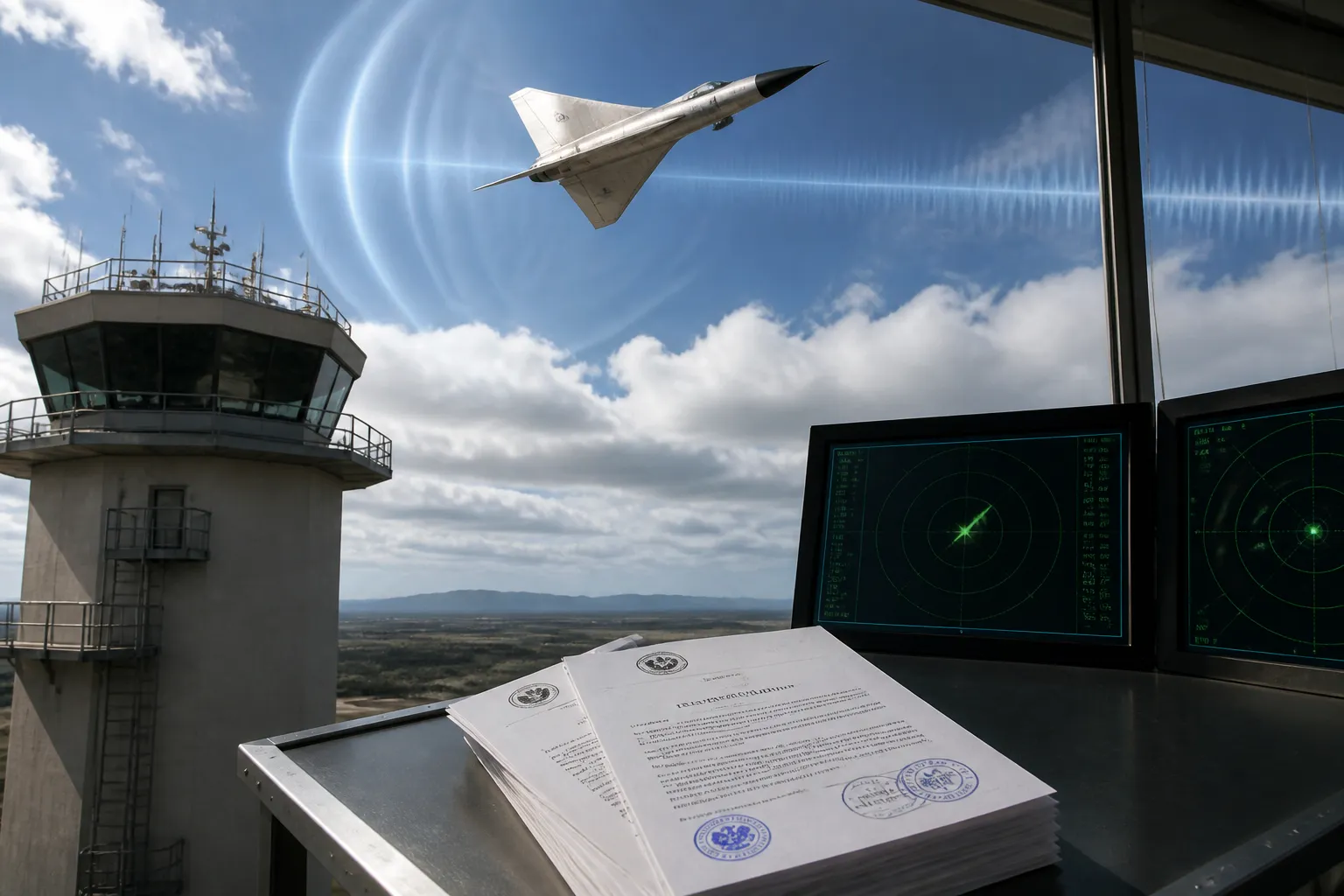
Sound, speed, and the sky have long been at odds. On Tuesday, the Federal Aviation Administration (FAA) unveiled a proposal that could finally tilt the balance in favor of supersonic flight over U.S. land. The agency said it will begin dismantling the 1973 prohibition that has barred non‑military aircraft from exceeding the speed of sound across the continental United States. Rather than a blanket ban, the new framework will shift the focus to noise limits, allowing manufacturers to design aircraft that meet strict sonic‑boom thresholds while staying within acceptable performance envelopes.
The proposal is a direct follow‑up to a 2025 executive order issued by former President Donald J. Trump. Titled Leading the World in Supersonic Flight, the order instructed the FAA to repeal the overland supersonic flight prohibition, establish an interim noise‑based certification standard, and eliminate other regulatory hurdles that have slowed the development of civilian supersonic technology. The order was published in the Federal Register on June 11, 2025, and the current FAA proposal seeks to build on that mandate with a concrete, performance‑based approach.
According to FAA officials, advances in aircraft design and noise‑reduction technology have changed the calculus. The agency plans to issue a second rule later this year that will set specific noise standards for takeoff and landing, giving manufacturers a clear target to design around. Central to the proposal is the concept of a Mach cutoff: if a supersonic aircraft can maintain a Mach number just above one while staying above a certain altitude, the shock waves will bend upward and never reach the ground. In that case, the aircraft can avoid producing a ground‑level sonic boom that would otherwise be disruptive.
Boom Supersonic, a joint venture backed by United, American, and Japan Airlines, is developing the Overture, a 60‑to‑80‑seat jet that it claims can cruise at speeds up to Mach 1.7 while staying within the Mach‑cutoff envelope. The company has already demonstrated similar capabilities with its XB‑1 demonstrator, which flew at Mach 1.0 without generating an audible boom. The Overture is designed to meet the FAA’s proposed noise limits, which would cap any sonic boom that reaches the ground at a maximum overpressure of 0.11 pounds per square foot (psf). Meanwhile, NASA’s X‑59 Quiet Supersonic Technology Demonstrator—capable of Mach 1.4—has shown that a “thump” rather than a traditional boom can be produced, easing community concerns about noise.
The 1973 ban stemmed from the experience of the Concorde and the Tupolev Tu‑144, the only two civilian supersonic airliners that ever entered service. Both aircraft were confined to transoceanic routes because sonic booms over land caused public disturbance and, in some cases, structural damage. Concorde’s final round‑trip ticket price, when adjusted for inflation, exceeded $22,000 in today’s dollars, underscoring the high cost of supersonic travel. Industry analysts say the FAA’s proposal could open the door to a new generation of commercial supersonic aircraft that are quieter, more efficient, and less expensive than the Concorde. Yet the economic viability of such aircraft remains uncertain, and the FAA’s rulemaking process will include a public comment period during which technical data from manufacturers and research institutions will be evaluated.
The FAA’s proposal is slated to take effect in the middle of next year, subject to the outcome of the rulemaking process. The agency has emphasized that it will continue to engage stakeholders—including airlines, manufacturers, and environmental groups—to refine the noise criteria and ensure that any new supersonic aircraft can operate safely and with minimal impact on communities. In sum, the FAA’s proposed rule marks a significant shift from a blanket speed restriction to a noise‑based certification framework for civil supersonic flight over land, building on recent technological advances such as Mach‑cutoff design and quieter sonic boom profiles demonstrated by Boom Supersonic and NASA’s X‑59. The next steps will involve public comment, technical review, and eventual adoption of the new standards, which could finally bring commercial supersonic travel back to U.S. skies.
The proposal is a direct follow‑up to a 2025 executive order issued by former President Donald J. Trump. Titled Leading the World in Supersonic Flight, the order instructed the FAA to repeal the overland supersonic flight prohibition, establish an interim noise‑based certification standard, and eliminate other regulatory hurdles that have slowed the development of civilian supersonic technology. The order was published in the Federal Register on June 11, 2025, and the current FAA proposal seeks to build on that mandate with a concrete, performance‑based approach.
According to FAA officials, advances in aircraft design and noise‑reduction technology have changed the calculus. The agency plans to issue a second rule later this year that will set specific noise standards for takeoff and landing, giving manufacturers a clear target to design around. Central to the proposal is the concept of a Mach cutoff: if a supersonic aircraft can maintain a Mach number just above one while staying above a certain altitude, the shock waves will bend upward and never reach the ground. In that case, the aircraft can avoid producing a ground‑level sonic boom that would otherwise be disruptive.
Boom Supersonic, a joint venture backed by United, American, and Japan Airlines, is developing the Overture, a 60‑to‑80‑seat jet that it claims can cruise at speeds up to Mach 1.7 while staying within the Mach‑cutoff envelope. The company has already demonstrated similar capabilities with its XB‑1 demonstrator, which flew at Mach 1.0 without generating an audible boom. The Overture is designed to meet the FAA’s proposed noise limits, which would cap any sonic boom that reaches the ground at a maximum overpressure of 0.11 pounds per square foot (psf). Meanwhile, NASA’s X‑59 Quiet Supersonic Technology Demonstrator—capable of Mach 1.4—has shown that a “thump” rather than a traditional boom can be produced, easing community concerns about noise.
The 1973 ban stemmed from the experience of the Concorde and the Tupolev Tu‑144, the only two civilian supersonic airliners that ever entered service. Both aircraft were confined to transoceanic routes because sonic booms over land caused public disturbance and, in some cases, structural damage. Concorde’s final round‑trip ticket price, when adjusted for inflation, exceeded $22,000 in today’s dollars, underscoring the high cost of supersonic travel. Industry analysts say the FAA’s proposal could open the door to a new generation of commercial supersonic aircraft that are quieter, more efficient, and less expensive than the Concorde. Yet the economic viability of such aircraft remains uncertain, and the FAA’s rulemaking process will include a public comment period during which technical data from manufacturers and research institutions will be evaluated.
The FAA’s proposal is slated to take effect in the middle of next year, subject to the outcome of the rulemaking process. The agency has emphasized that it will continue to engage stakeholders—including airlines, manufacturers, and environmental groups—to refine the noise criteria and ensure that any new supersonic aircraft can operate safely and with minimal impact on communities. In sum, the FAA’s proposed rule marks a significant shift from a blanket speed restriction to a noise‑based certification framework for civil supersonic flight over land, building on recent technological advances such as Mach‑cutoff design and quieter sonic boom profiles demonstrated by Boom Supersonic and NASA’s X‑59. The next steps will involve public comment, technical review, and eventual adoption of the new standards, which could finally bring commercial supersonic travel back to U.S. skies.








