Blab Tech
South Korea Launches 1.43 TWh Hydrogen Power Auction with Clean and General Tracks
On 9 June 2026, Seoul announced a new hydrogen‑powered electricity auction that will cover 1.43 TWh of output under long‑term contracts. The program divides the volume into a 500 GWh clean‑hydrogen track and a 930 GWh general‑hydrogen track, signaling the government’s intent to prioritize low‑carbon sources while still allowing higher‑emission options.
The clean‑hydrogen track is limited to power generated with hydrogen that meets the Ministry of Climate, Energy and Environment’s certification standard of 4 kg CO₂eq per kilogram of hydrogen. Projects that qualify receive higher greenhouse‑gas intensity scores, giving them a competitive advantage in the bidding process. By contrast, the general track accepts a broader range of fuels—including grey hydrogen and ammonia blends—but does not benefit from the same policy incentives.
This auction follows the Hydrogen Economy Promotion and Hydrogen Safety Management Act, which created the first clean‑hydrogen power bidding market in 2024. After an initial surge in volume, regulators noted that premiums for clean hydrogen were high relative to wholesale electricity prices. In response, the ministry cut total auction volume by roughly 30 % and tightened eligibility rules through the Korea Power Exchange. One of the most significant changes was the removal of coal‑ammonia co‑firing from the clean track, a measure aimed at preventing greenwashing.
For developers, the new structure offers both opportunities and challenges. Clean‑hydrogen offtake agreements can provide a stable revenue stream that supports project financing, but the reduced volume means competition for the 500 GWh allocation is intense. Companies with proven green‑hydrogen supply chains and fuel‑cell technology are likely to be favored, while those relying on grey hydrogen or untested ammonia carriers may face difficulty securing funding.
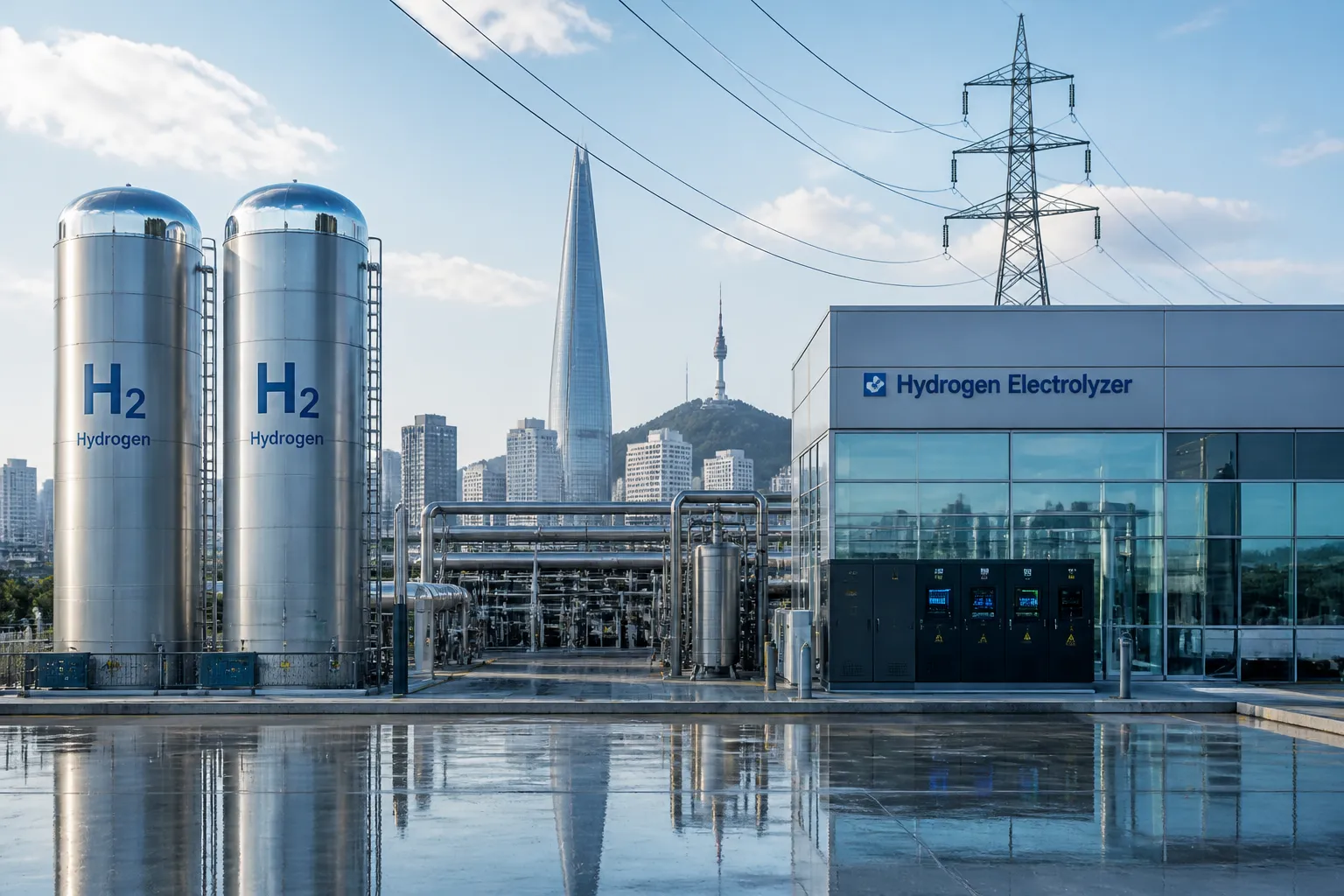
The auction also reflects South Korea’s broader energy strategy. The country’s centralized grid and heavy industrial base make it well positioned to integrate hydrogen power into its decarbonisation plans. By awarding contracts only to genuinely low‑carbon producers, the government hopes to reduce the power sector’s carbon footprint and stimulate domestic electrolysis capacity, which in turn would support hydrogen storage, transport, and distribution.
Technology pathways are also affected. The clean track will likely see projects that use pure hydrogen turbines or fuel cells powered by certified green hydrogen. These systems are efficient and can be paired with variable renewable generation, especially as developers explore advanced hydrogen storage to balance supply. The general track may still accommodate ammonia‑blending projects, but the exclusion of coal‑ammonia blends limits the options for high‑emission pathways.
Looking ahead, analysts expect the general‑hydrogen allocation to shrink further in future rounds, while the clean‑hydrogen volume could stabilize or expand if green‑hydrogen production ramps up. The auction is a test of whether South Korea can translate its policy vision into bankable projects that build a robust hydrogen infrastructure.
In summary, the 1.43 TWh auction marks a decisive step in South Korea’s hydrogen strategy. By allocating a significant portion of the market to certified low‑carbon hydrogen and tightening eligibility rules, the government is pushing the industry toward cleaner supply chains while still maintaining a transitional pathway for higher‑emission projects. The outcome of the bidding will determine how quickly the country can expand its hydrogen power capacity and whether the market can support the investment needed for a low‑carbon future.
The clean‑hydrogen track is limited to power generated with hydrogen that meets the Ministry of Climate, Energy and Environment’s certification standard of 4 kg CO₂eq per kilogram of hydrogen. Projects that qualify receive higher greenhouse‑gas intensity scores, giving them a competitive advantage in the bidding process. By contrast, the general track accepts a broader range of fuels—including grey hydrogen and ammonia blends—but does not benefit from the same policy incentives.
This auction follows the Hydrogen Economy Promotion and Hydrogen Safety Management Act, which created the first clean‑hydrogen power bidding market in 2024. After an initial surge in volume, regulators noted that premiums for clean hydrogen were high relative to wholesale electricity prices. In response, the ministry cut total auction volume by roughly 30 % and tightened eligibility rules through the Korea Power Exchange. One of the most significant changes was the removal of coal‑ammonia co‑firing from the clean track, a measure aimed at preventing greenwashing.
For developers, the new structure offers both opportunities and challenges. Clean‑hydrogen offtake agreements can provide a stable revenue stream that supports project financing, but the reduced volume means competition for the 500 GWh allocation is intense. Companies with proven green‑hydrogen supply chains and fuel‑cell technology are likely to be favored, while those relying on grey hydrogen or untested ammonia carriers may face difficulty securing funding.
The auction also reflects South Korea’s broader energy strategy. The country’s centralized grid and heavy industrial base make it well positioned to integrate hydrogen power into its decarbonisation plans. By awarding contracts only to genuinely low‑carbon producers, the government hopes to reduce the power sector’s carbon footprint and stimulate domestic electrolysis capacity, which in turn would support hydrogen storage, transport, and distribution.
Technology pathways are also affected. The clean track will likely see projects that use pure hydrogen turbines or fuel cells powered by certified green hydrogen. These systems are efficient and can be paired with variable renewable generation, especially as developers explore advanced hydrogen storage to balance supply. The general track may still accommodate ammonia‑blending projects, but the exclusion of coal‑ammonia blends limits the options for high‑emission pathways.
Looking ahead, analysts expect the general‑hydrogen allocation to shrink further in future rounds, while the clean‑hydrogen volume could stabilize or expand if green‑hydrogen production ramps up. The auction is a test of whether South Korea can translate its policy vision into bankable projects that build a robust hydrogen infrastructure.
In summary, the 1.43 TWh auction marks a decisive step in South Korea’s hydrogen strategy. By allocating a significant portion of the market to certified low‑carbon hydrogen and tightening eligibility rules, the government is pushing the industry toward cleaner supply chains while still maintaining a transitional pathway for higher‑emission projects. The outcome of the bidding will determine how quickly the country can expand its hydrogen power capacity and whether the market can support the investment needed for a low‑carbon future.